

Alyssa Schatz, DrPH, discusses the new NCCN Advocacy Academy program for oncology fellows and junior faculty.
Alyssa Schatz, DrPH, discusses the new NCCN Advocacy Academy program for oncology fellows and junior faculty.
Peter Enzinger, MD, discusses diagnostic pathways, the role of surgery, and ongoing trials of interest in esophageal cancer in this clinician-focused FAQ.

A data monitoring committee recommended halting the phase 3 FLASH2 trial investigating HyBryte in CTCL due to futility.
iSCIB1+ has received fast track designation from the regulatory agency as a potential therapeutic options for patients with advanced melanoma.

The investigational pan-RAS inhibitor generated robust responses across 2 phase 1 dose-escalation studies that numerically exceeded historical benchmarks.


The regulatory agency has set a PDUFA action date of February 27, 2027, for zipalertinib in locally advanced or metastatic NSCLC with EGFR exon 20 insertion mutations.
The FDA has granted breakthrough therapy designation to TERN-701 for the treatment of Ph-positive chronic myeloid leukemia in chronic phase.

Rena D. Callahan, MD, discusses questions regarding treatment sequencing with CDK4/6 inhibitors and ADCs in hormone receptor–positive breast cancer.

Stefan K. Barta, MD, MS, discusses the CTCL subtype mycosis fungoides, common adverse effects, and optimal treatment approaches.

QLS5132 led to a 50% ORR and manageable safety in PROC, supporting CLDN6 as a promising ADC target in early-phase clinical development.

Tovecimig plus paclitaxel improved PFS vs paclitaxel alone in COMPANION-002, though crossover effects complicated OS outcomes.
Dana-Farber Cancer Institute announced a gift to support cancer prevention and establish the Larry and Susan Marx Chair for Early Detection.

The agency has set a target action date of August 25, 2026, for the sBLA, which is supported by data from the phase 3 HERIZON-GEA-01 trial.
Frontline treatment with zovegalisib, atirmociclib, and fulvestrant yielded responses in pretreated, PI3Kα-mutated HR-positive metastatic breast cancer.
Mina M. Fam, MD, and Bradley McGregor, MD, discuss the treatment landscape of testicular cancer during Testicular Cancer Awareness Month.

Breast cancer experts discuss nuances of using CDK4/6 inhibitors to treat patients with high-risk hormone receptor–positive, HER2-negative early disease.
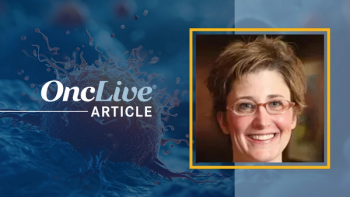
In her latest OncologyFellows column, Jill Gilbert, MD, discusses how oncologists can influence large health care decisions and policy.

The top 5 OncLive TV videos of the week cover insights in head and neck cancer, esophageal cancer, renal cell carcinoma, and breast cancer.
Rena D. Callahan, MD, discusses clinical considerations for CDK4/6 inhibitor–based regimens and oral SERDs in hormone receptor–positive breast cancer.

The FDA grants priority review to enfortumab vedotin-ejfv sBLAs in MIBC, the review period for subcutaneous isatuximab BLA in myeloma has been extended, and more.
Data from a real-world analysis demonstrated the efficacy and safety of CAR T-cell therapy in primary mediastinal B-cell lymphoma.

Translational analyses from NEOPRISM-CRC also link ctDNA clearance/kinetics and TCR clonality with pCRs, supporting biomarker-guided treatment selection.

Fecal microbiota transplantation extended median PFS with first-line pembrolizumab plus axitinib in metastatic RCC.

Ris-rez plus adebrelimab led to an approximate 50% response rate and durable disease control in pretreated nonsquamous NSCLC without actionable mutations.

Researchers at Roswell Park Comprehensive Cancer Center developed a two‑step therapeutic strategy designed to selectively eliminate tumors driven by TP53 mutations.
Did you catch all of this week's top oncology news? Test your knowledge with OncLive's Weekly News Quiz.

Darlifarnib plus cabozantinib showed preliminary activity and safety across dose levels in cabozantinib-treated ccRCC.
With approximately 3 years of follow-up, TKI-naive patients with ROS1+ NSCLC experienced long-term benefits with taletrectinib.
Phase 1/2 data from 2 separate studies have shown signals of improved survival and safety with the agent, supporting its evaluation in a phase 3 trial.