
Marlise Luskin, MD, MSCE, discusses the treatment paradigm for relapsed/refractory ALL and research seeking to integrate agents into the frontline setting
Marlise Luskin, MD, MSCE, discusses the treatment paradigm for relapsed/refractory ALL and research seeking to integrate agents into the frontline setting

Ian Krop, MD, PhD, spotlights emerging HER2-directed agents of interest for pretreated patients with HER2-positive breast cancer.

Findings will help identify patients with breast, ovarian, pancreatic, or prostate cancer who may benefit from targeted therapies.

Treatment with synthetic hypericin for up to 12 months produced responses in early-stage cutaneous T-cell lymphoma.

Savolitinib has received full NMPA approval for locally advanced/metastatic non–small cell lung cancer with MET exon 14 skipping alterations.

Yousef Zakharia, MD, discusses the evolving use of checkpoint inhibitors and emerging triplet regimens in clear cell renal cell carcinoma.
Pedro Barata, MD, details factors affecting treatment selection with biomarker-based approvals and highlights questions regarding genetic testing.

Adjuvant nivolumab plus chemoradiotherapy improved disease-free survival in resected, locally advanced head and neck squamous cell carcinoma.

China’s NMPA has approved isatuximab plus pomalidomide and dexamethasone in adult patients with pretreated multiple myeloma.

Roxana S. Dronca, MD, discusses the FDA approval of subcutaneous nivolumab across solid tumor indications.

The FDA has set the PDUFA date for the 3-month, 21-mg variation of leuprolide mesylate in advanced prostate cancer for August 29, 2025.

Research from the Icahn School of Medicine at Mount Sinai provides new insights into acute myeloid leukemia (AML) and its resistance to a common treatment.

The BLA for Dato-DXd in locally advanced or metastatic EGFR-mutated NSCLC has been accepted and granted priority review by the FDA.
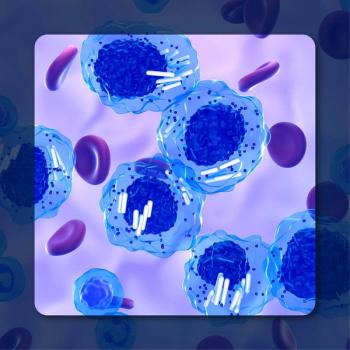
Adjuvant therapy with cemiplimab improved DFS vs placebo in patients with high-risk cutaneous squamous cell carcinoma after surgery.

Patients with treatment-naive CLL who received the BOVen regimen had an increased likelihood of achieving uMRD levels in peripheral blood and bone marrow.
Erica L. Mayer, MD, MPH, responses with preoperative niraparib plus dostarlimab in patients with BRCA-mutant, ER-positive, HER2-negative breast cancer.

Naseema Gangat, MBBS, discusses the role of rusfertide for decreasing phlebotomy needs and the potential future for disease-modifying PV management.
Michael T. Tees, MD, MPH, describes how BTK degraders represent a promising class of agents, highlighting the agent AC676 that is currently under evaluation.

Sunvozertinib gets priority review in EGFR-mutated NSCLC, iparomlimab/tuvonralimab combination elicits responses in cervical cancer, and more.

An orphan medicinal product designation was granted to elraglusib by the EMA for patients with advanced pancreatic ductal adenocarcinoma.

Emiltatug ledadotin produced positive initial phase 1 data in breast, ovarian, and endometrial cancer, as well as adenoid cystic carcinoma type 1.
Data from a phase 2 trial demonstrated that abenacianine is a safe investigational tumor-targeted fluorescent imaging agent for tumors in the lung.
Christopher Graham, MD, details how axatilimab has changed the care of cGVHD and highlights considerations with axatilimab, belumosudil, and ruxolitinib.

Lucio Miele, MD, PhD of LSU has been appointed as director of the LSU-LCMC Health Cancer Center.

The NCCN Guidelines for B-Cell Lymphomas were updated to include ctDNA testing for MRD assessment for patients with PET-positive DLBCL at end of treatment.

Sasanlimab plus BCG improved event-free survival in BCG-naive, high-risk non–muscle-invasive bladder cancer.
BBO-8520 has received FDA fast track designation in previously treated KRAS G12C–mutated metastatic non–small cell lung cancer.
Naseema Gangat, MBBS, discusses clinical factors that she uses to choose the optimal JAK inhibitors for individual patients with myelofibrosis.

The FDA has granted breakthrough therapy designation to GSK5764227 for the treatment of relapsed/refractory osteosarcoma.

Frontline belzutifan plus cabozantinib elicited durable responses and was tolerable in patients with treatment-naive advanced ccRCC.