

Luis Raez, MD, details several potential lung cancer biomarkers under investigation including the plasma proteomics–based PROphet test.
Luis Raez, MD, details several potential lung cancer biomarkers under investigation including the plasma proteomics–based PROphet test.
Joshua K. Sabari, MD, discusses the significance of the FDA approval of first-line amivantamab plus lazertinib for patients with EGFR-mutant NSCLC.
Neoadjuvant pembrolizumab plus chemotherapy led to greater pathologic regression vs placebo plus chemotherapy in early-stage non–small cell lung cancer.
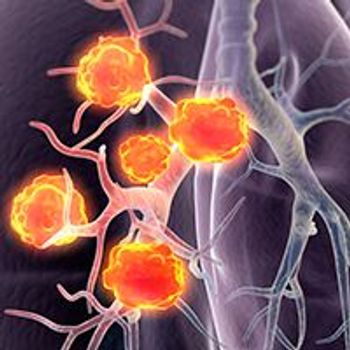
The combination of osimertinib/savolitinib demonstrated a significant improvement in ORR in de novo MET-aberrant, EGFR-mutant advanced NSCLC.

Treatment with firmonertinib was safe and effective for patients with EGFR P-loop and αC-helix compressing-mutated non–small cell lung cancer.

Treatment with aumolertinib led to an improvement in progression-free survival in unresectable, stage III, EGFR-mutated non–small cell lung cancer.
Zanubrutinib was associated with lower treatment switching rates vs acalabrutinib and ibrutinib in real-world chronic lymphocytic leukemia.
Zongertinib demonstrated clinically meaningful efficacy in previously treated HER2-mutated non–small cell lung cancer.

BAY 2927088 demonstrated durable response rates for patients with pretreated HER2-mutant non–small cell lung cancer.

Treatment with sacituzumab govitecan in the second-line setting yielded antitumor activity in patients with extensive-stage small cell lung cancer.
Dato-DXd did not significantly improve overall survival compared with docetaxel for patients with non–small cell lung cancer.
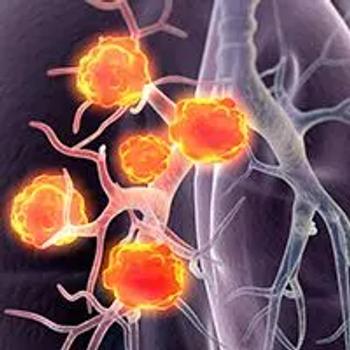
HS-20093 produced responses in extensive-stage small cell lung cancer after prior platinum-based chemotherapy with or without prior immunotherapy.

Elraglusib plus chemotherapy generated early signals of antitumor activity in pediatric patients with relapsed/refractory Ewing and Ewing-related sarcomas.

RLY-2608 plus fulvestrant generated clinically meaningful PFS outcomes in PI3Kα-mutated, HR-positive, HER2-negative advanced or metastatic breast cancer.
The TruSight Oncology Comprehensive Assay has been approved by the FDA with companion diagnostic claims in NSCLC and NTRK-positive solid tumors.
The study alters the existing paradigm that CDK1-Cyclin B1 is the only CDK-cyclin complex essential for all stages of mitosis.
R. Lor Randall, MD, FACS, highlights key findings from the pivotal MOTION trial of vimseltinib in patients with TGCT.
A CD44 and total protein level detecting oral rinse-based test showed promise in identifying disease recurrence for patients with head and neck cancer.

Radhika Bansal, MBBS, discusses data showing the safety and feasibility of outpatient CAR T-cell infusion in relapsed/refractory non-Hodgkin lymphoma.
When compared with osimertinib, amivantamab plus lazertinib showed a trend toward favorable overall survival in patients with EGFR-mutant advanced NSCLC.

An exploratory analysis from the TROPION-Lung 01 study shows that positivity for TROP2 normalized membrane ratio can be predictive for improved efficacy in patients with non–small cell lung cancer treated with datopotamab deruxtecan.
Event-free survival improved with perioperative nivolumab vs neoadjuvant nivolumab plus chemotherapy in resectable NSCLC, according to a comparison of 2 trials.
Several novel combinations yielded high pCR and mPR rates in patients with resectable non–small cell lung cancer, according to data from the 2024 IASLC conference.
Ivonescimab produced a significant improvement in PFS vs pembrolizumab as frontline therapy in patients with PD-L1–positive advanced NSCLC.
Global surveys from 2018 and 2024 demonstrated barriers to optimizing biomarker testing for patients with early- or late-stage lung cancer.
A 12-mg/kg dose of ifinatamab deruxtecan improved efficacy compared with an 8-mg/kg dose in heavily pretreated patients with extensive-stage small cell lung cancer.

Brentuximab vedotin plus lenalidomide/rituximab significantly improved outcomes vs lenalidomide/rituximab alone in relapsed/refractory DLBCL.

Golcadomide given at 0.4 mg plus R-CHOP elicited a high rate of metabolic responses in patients with previously untreated aggressive B-cell lymphoma.

This list features a snapshot of key August FDA oncology decisions, efforts to integrate health equity into guideline development, and more.
Neha Mehta-Shah, MD, MSCI, discusses unmet needs and future developments in the treatment of patients with peripheral T-cell lymphoma.