

Encorafenib plus cetuximab and fluorouracil-based chemotherapy has received traditional FDA approval for BRAF V600E–mutant metastatic colorectal cancer.
Encorafenib plus cetuximab and fluorouracil-based chemotherapy has received traditional FDA approval for BRAF V600E–mutant metastatic colorectal cancer.

Mayo Clinic has installed the first magnetic nanoparticle-mediated hyperthermia machine for cancer research in the US.

R. Lor Randall, MD, FACS, discusses a report on factors predicting local recurrence in nonmetastatic Ewing sarcoma from the phase 3 AEWS1031 trial.

Ashkan Emadi, MD, PhD, discusses how subcutaneous blinatumomab may represent a treatment approach in mixed phenotype acute leukemia.

Novel pembrolizumab-based combination regimens showed similar efficacy to the reference regimen in first-line ccRCC.

An analysis showed the manufacturing and distribution of Orca-T was consistent for patients with hematologic malignancies.
Real-world data show liso-cel drives high responses in relapsed/refractory CLL, with an 85% ORR, a 44% CR rate, and manageable safety.

Huntsman Cancer Institute will soon become the first academic medical center in the US to manufacture a new prostate cancer imaging drug.
Sophia O’Brien, MD, discusses the role of nuclear medicine in lobular breast cancer diagnosis and staging, as well as use criteria for FES-PET/CT.

The top 5 OncLive TV videos of the week cover insights in genitourinary cancers, hematologic malignancies, colorectal cancer, and sarcoma.
Data from the phase 2 SWOG S1512 trial showed a high pCR and durable survival outcomes with neoadjuvant pembrolizumab in resectable desmoplastic melanoma.

Five-year data from CheckMate 274 continued to show a durable DFS benefit with adjuvant nivolumab in high-risk MIUC.

The FDA approved a frontline acalabrutinib regimen in CLL/SLL and a simplified dosing schedule for Rybrevant Faspro in EGFR+ NSCLC and will review NDAs in PCNSL and breast cancer.

The new facility doubles Sylvester’s research footprint, breaking down barriers between scientific research and patient care.
Will the FDA approve giredestrant plus everolimus for ESR1-mutated, ER-positive, HER2-negative advanced breast cancer after prior endocrine therapy?

Subcutaneous amivantamab monotherapy received breakthrough therapy designation from the FDA for recurrent or metastatic, HPV-unrelated HNSCC.

Luspatercept generated favorable efficacy and safety outcomes in the treatment of anemia in patients with transfusion-dependent, lower-risk MDS.

Martha Welman, MD, discusses the value of personalized patient relationships over technology, especially for populations with limited access to resources.
The FDA has approved acalabrutinib plus venetoclax for the treatment of adult patients with chronic lymphocytic leukemia and small lymphocytic lymphoma.

At the OncLive National Fellows Forum during SABCS 2025, notable data were presented on ethnic differences in early HR+ breast cancer and genomic insights in women post partum.
Dual CD19- and CD20-targeting CAR T-cell therapy was effective and had a unique safety profile in patients with relapsed/refractory CLL.

Mayo Clinic researchers identified a previously unrecognized way lung tumors weaken the immune system.

Deirdre J. Cohen, MD, MS, discusses key considerations when navigating first-line chemotherapy selection in metastatic pancreatic cancer.

Mario Sznol, MD, discusses how the field is balancing dual checkpoint blockade and novel combinations in melanoma, plus unmet needs and emerging strategies.
Obinutuzumab in combination with venetoclax yielded responses in chronic lymphocytic leukemia and small lymphocytic leukemia.

David Rimm, MD, PhD, discusses ways that the use of ADCs in breast cancer might adapt to reflect emerging categories of detectable HER2 expression levels.
The European Commission has approved nogapendekin alfa inbakicept plus BCG in BCG-unresponsive NMIBC with CIS, with or without papillary tumors.
A WVU Cancer Institute team investigated the efficacy of subcutaneous blinatumomab in treating one of the rarest and most aggressive forms of leukemia.
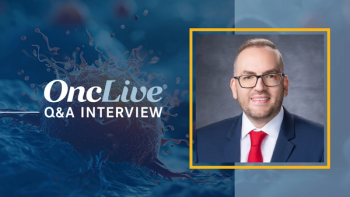
Jason Aboudi Mouabbi, MD, discusses challenges associated with diagnosing lobular breast cancer and the promising predictive value of FES-PET/CT imaging.

An ML-NMR analysis associated zanubrutinib with PFS improvements vs ibrutinib or acalabrutinib in relapsed/refractory chronic lymphocytic leukemia.