

Brian S. Henick, MD, discusses the importance of expanding on the current knowledge of biomarkers and the tumor microenvironment to enhance treatment approaches for patients with non–small cell lung cancer.
Brian S. Henick, MD, discusses the importance of expanding on the current knowledge of biomarkers and the tumor microenvironment to enhance treatment approaches for patients with non–small cell lung cancer.

Sunitinib demonstrated synergistic activity with the BET inhibitors JQ1 and NHWD-870 in melanoma cell lines.

press release
Cleveland Clinic has opened a new state-of-the-art cancer facility, named the Fatima bint Mubarak Center, at Cleveland Clinic Abu Dhabi.
Frontline treatments that achieve transfusion independence are of paramount importance for patients with lower-risk myelodysplastic syndrome.

Kevin Kalinsky, MD, MS, discusses genetic sequencing in triple-negative breast cancer, the significance of breast cancer tumor board discussions for informing further research and optimizing patient care, and how future directions in breast cancer treatment are building off the current benefits of drugs classes like antibody-drug conjugates.

The addition of zolbetuximab to CAPOX led to a statistically significant improvement in progression-free survival and overall survival compared with placebo plus CAPOX for patients with Claudin-18.2–positive/HER2-negative, unresectable, locally advanced or metastatic gastric or gastroesophageal junction adenocarcinoma.

Siamak Daneshmand, MD, shed light on the phase 2 THOR-2 study evaluating different cohorts of patients with recurrent NMIBC, key findings from cohorts 2 and 3, and how ongoing research seeks to move the needle forward with novel drug delivery methods.

Hematologists and oncologists are uniquely poised to aid in the identification of patients with hereditary hemorrhagic telangiectasia and assist in their care, and it is important for the practicing clinician to familiarize oneself with the symptoms of hereditary hemorrhagic telangiectasia to avoid overlooking the diagnosis.
The FDA has approved retifanlimab-dlwr (Zynyz) for the treatment of adults with metastatic or recurrent locally advanced Merkel cell carcinoma.
A television commercial produced by Florida Cancer Specialists & Research Institute, LLC has been recognized with a Silver ADDY® by the American Advertising Awards, which honors excellence in advertising as judged by creative industry professionals around the world.
Living in a socioeconomically disadvantaged neighborhood or living with modifiable chronic health conditions were associated with an increased risk for death 5 years of more following diagnosis among survivors of childhood cancer, according to findings from a cohort study.
Although the first FDA approval for CAR T-cell therapy in multiple myeloma was 2 years ago, unfortunately, the treatment remains out of reach for too many patients.

The addition of MEDI9253 to sequential or concurrent treatment with durvalumab failed to elicit more than 1 partial response although proving feasible and safe in patients with advanced or metastatic solid tumors, according to findings from a phase 1 trial.
A new drug application seeking the approval of Lumisight, an optical imaging agent that detects cancerous tissue during initial lumpectomy to allow for a more complete resection, has been submitted to the FDA.

Axicabtagene ciloleucel produced a statistically significant improvement in overall survival compared with standard-of-caretherapy in patients with relapsed/refractory large B-cell lymphoma, according to data from the ZUMA-7 trial.

Luis Paz-Ares, MD, PhD, highlight adverse events to monitor with pembrolizumab in this setting as well as its role in the treatment landscape.

Press Release
Varghese, known for his innovative research in perioperative care and mentorship to physician-scientists, will become SUS President in February 2024.

The FDA has granted an orphan drug designation to ISB 1442, the first-in-class biparatopic 2+1 BEAT® bispecific antibody targeting CD38 and CD47 for the treatment of patients with relapsed/refractory multiple myeloma.

The FDA has granted an orphan drug designation to FORE8394 for the treatment of primary brain and central nervous system malignancies.

Roadblocks such as PARP inhibitor resistance have resulted in an unmet need and uncertain optimal identification concerning patients who would elicit the most benefit from homologous recombination deficiency–directed therapies.

A real-world analysis exploring the outcomes of inpatient vs outpatient administration of CAR T-cell therapy in patients with mantle cell lymphoma and follicular lymphoma demonstrated both similarities and some differences between the 2 patient populations.
VTP-200 generated immunogenic responses and tolerability in patients with human papillomavirus–positive cervical lesions.
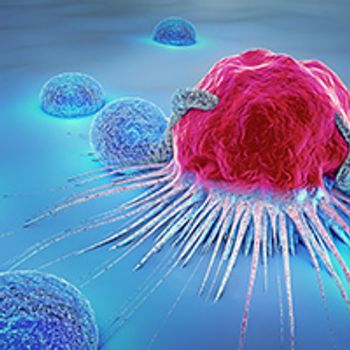
The phase 1/2 trial evaluating the addition of Allocetra to standard chemotherapy administered via pressurized intraperitoneal aerosol chemotherapy received regulatory clearance to continue evaluation and launch the dose-escalation cohort in patients with advanced-stage peritoneal metastasis arising from solid tumors following the completion of an interim data review by an Independent Data and Safety Monitoring Board and the Israeli Ministry of Health.

Lucy Gilbert, MD, MSc, discusses the favorable safety profile of dostarlimab as well as how it compares with the current standard of care in mismatch repair deficient advanced endometrial cancer.

Patritumab deruxtecan elicited responses in previously treated patients with EGFR-mutated metastatic or unresectable non–small cell lung cancer and patients with HER3-expressing metastatic breast cancer.

Consolidative autologous stem cell transplant was associated with a statistically significant lower overall mortality risk and higher overall survival probability in patients with mantle cell lymphoma vs those who did not receive consolidation.

press release
Jennifer Hatcher, PhD, RN, MPH, has been appointed as associate director of Inclusivity, Diversity, Equity and Accessibility for the University of Arizona Cancer Center.

The first-line standard of care for patients with HER2-postive metastatic breast cancer has long been held by the combination of pertuzumab, trastuzumab, and a taxane established with the publication of data from the CLEOPATRA trial.

Updated data from key trials in non–small cell lung cancer continue to demonstrate the superiority of immunotherapy and targeted therapy regimens for non–small cell lung cancer treatment, but the optimal use of these agents in the adjuvant vs neoadjuvant settings is still contested.
First-line consolidative autologous stem cell transplant following first complete remission, with or without maintenance rituximab, did not result in improved overall survival for patients with mantle cell lymphoma.