

A study from Sylvester Cancer Center suggests that blocking p300 may help resensitize cancer cells to chemotherapy.

Your AI-Trained Oncology Knowledge Connection!
A study from Sylvester Cancer Center suggests that blocking p300 may help resensitize cancer cells to chemotherapy.

An sNDA has been filed with the FDA for aminolevulinic acid topical gel plus RhodoLED red light lamps in superficial basal cell carcinoma.

Experts highlight key RCC studies at the 2026 Genitourinary Cancers Symposium, with a focus on combination-based strategies and patient-reported outcomes.
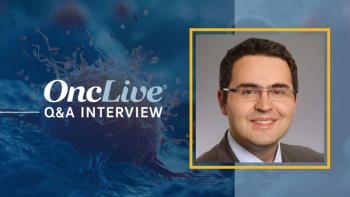
Mehmet Bilen, MD, discusses a retrospective analysis of patients receiving apalutamide vs darolutamide for metastatic castration-sensitive prostate cancer.

The FDA has approved pembrolizumab plus paclitaxel with/without bevacizumab for PD-L1–positive platinum-resistant ovarian cancer.

Experts break down the FDA’s draft guidance on the use of MRD end points to support accelerated drug approvals in multiple myeloma.

Manish A. Shah, MD, and Raji Shameem, MD, discuss potentially paradigm-shifting results from the HERIZON-GEA-01 study.

A Mayo Clinic study demonstrated how treatment sequencing may affect survival in early-stage pancreatic cancer.

Sunandana Chandra, MD, MS, discusses how resectability, anatomy, prior therapy, and patient fitness guide multidisciplinary treatment decisions in CSCC.
Here is your cheat sheet to all therapeutic options that were cleared by the FDA in January 2025 spanning tumor types.

Orca-T was associated with OS, RFS, and NRM improvements in patients with hematologic malignancies who also received myeloablative conditioning.

Data from the phase 3 LU005 trial found no OS benefit and high immune-related toxicity with concurrent/adjuvant atezolizumab and chemoradiation in LS-SCLC.

Age was correlated with worse survival among those undergoing allogenic hematopoietic cell transplantation for acute lymphoblastic leukemia.

Researchers at Yale School of Medicine have identified biological markers for a rare, aggressive eye cancer that predicts secondary tumors in the liver.

Deborah J. Wong, MD, PhD, discusses data with ficerafusp alfa plus pembrolizumab in HPV-negative HNSCC.

Neoadjuvant pembrolizumab plus docetaxel and cisplatin produced a high ORR and a high OS rate in resectable HNSCC.

The top 5 OncLive TV videos of the week cover insights in acute lymphoblastic leukemia, breast cancer, urothelial cancer, ovarian cancer, and follicular lymphoma.

The FDA granted priority review to Dato-DXd in triple-negative breast cancer, accepted an NDA for zanzalintinib plus atezolizumab in mCRC, and more.

CARTITUDE-4 data show heterogeneous outcomes with cilta-cel after progression on bridging therapy in relapsed/refractory multiple myeloma.
Real-world data show over an 40% response rate for lifileucel TIL therapy, for previously treated advanced melanoma.
Only a proportion of patients with advanced melanoma proceeded to TIL therapy following referral in a real-world setting.

Cilta-cel was linked with low progression events and a potential cure fraction in relapsed/refractory multiple myeloma.

Philippos Costa, MD, and Hari Deshpande, MD, discuss chondrosarcoma staging, diagnosis, surgery, and future research avenues in this clinician-focused FAQ.
Adoptive cell therapy elicited MRD-negative responses with low rates of GVHD and neurotoxicities in adult patients with high-risk B-ALL.
The FDA updated axi-cel labeling to remove the limitation of use for patients with relapsed or refractory primary central nervous system lymphoma.

Johannes R. Kratz, MD, has been named as the inaugural Chief of UCSF’s Division of Thoracic Surgery.

OS Therapies began a rolling submission of a BLA for OST-HER2 in fully resected pulmonary metastatic osteosarcoma.

A real-world cilta-cel study revealed a link between high lymphocyte peaks and failed bridging to parkinsonism and nonrelapse mortality, potentially guiding early intervention.

EMA CHMP recommends first-line retifanlimab plus carboplatin/paclitaxel for advanced anal cancer, backed by phase 3 P0D1UM-303 data.

With an additional 16.1 months of follow-up, the dual HER2-targeted, chemotherapy-free regimen maintained efficacy and safety in HER2-positive mCRC.