

Mezigdomide, tazemetostat, and dexamethasone demonstrated early efficacy signals in patients with refractory multiple myeloma.

Your AI-Trained Oncology Knowledge Connection!
Mezigdomide, tazemetostat, and dexamethasone demonstrated early efficacy signals in patients with refractory multiple myeloma.
A sBLA has been submitted to the FDA for subcutaneous daratumumab plus VRd in ASCT-ineligible or -deferred multiple myeloma.

Sonrotoclax plus dexamethasone was well tolerated and produced early, durable responses in patients with myeloma harboring t(11:14).

Treatment with bosutinib led to high response rates with a manageable safety profile in patients with CML who had previously received a TKI.

Daniel J. George, MD, discusses ongoing research with radioligand therapy in prostate cancer and its potential role in novel settings and combinations.

Belantamab mafodotin plus KRd was associated with a manageable safety profile and deep responses in pretreated patients with multiple myeloma.

Bertram Yuh, MD, discusses the value of genetic testing, long-term disease management, and raising awareness during Prostate Cancer Awareness Month.

Treatment with P-BCMA-ALLO1 demonstrated clinical activity and a manageable safety profile in heavily pretreated, relapsed/refractory multiple myeloma.

Cadonilimab plus chemotherapy has been approved in China for first-line locally advanced or metastatic gastric/GEJ adenocarcinoma.
All patients with relapsed/refractory multiple myeloma experienced a response when treated with anitocabtagene autoleucel in a phase 1 trial.

Durcabtagene autoleucel generated responses with a tolerable safety profile in relapsed/refractory multiple myeloma.

Mayo Clinic researchers mined the molecular foundations of cancer and uncovered a new reason CAR-T cell therapy fails in some patients.
Angeles Secord, MD, MHSc, discusses data with mirvetuximab soravtansine in heavily pretreated FRα-positive recurrent, platinum-sensitive ovarian cancer.

The FDA’s ODAC votes against the risk:benefit profile of frontline PD-1 inhibitors in select tumor types, osimertinib gains approval for select NSCLC, and more this week from OncLive.

Saro H. Armenian, DO, MPH, raises awareness for childhood-related cancer interventions during Childhood Cancer Awareness Month.

Daratumumab plus VRd improved MRD-negativity rates in transplant-ineligible or -deferred, newly diagnosed multiple myeloma.

Daratumumab/lenalidomide maintenance increased MRD-negative conversion rates vs lenalidomide alone in newly diagnosed multiple myeloma after transplant.

Patients with newly diagnosed, transplant-eligible multiple myeloma achieved deep responses and MRD negativity with isa-KRd induction therapy.
The FDA has granted traditional approval to selpercatinib (Retevmo) for advanced or metastatic medullary thyroid cancer with a RET mutation.

Talquetamab plus daratumumab yields improved patient outcomes in patients with relapsed/refractory multiple myeloma.

Domenica Lorusso, MD, PhD, discusses the investigation of the glucocorticoid receptor modulator relacorilant plus nab-paclitaxel in ovarian cancer.

Terence Friedlander, MD, spotlights emerging agents of interest in advanced bladder cancer, including the Nectin-4–targeted therapy zelenectide pevedotin.
The MEK inhibitor PAS-004 is safe, tolerable, and generated early efficacy signals in patients with MAPK pathway–driven advanced cancers.
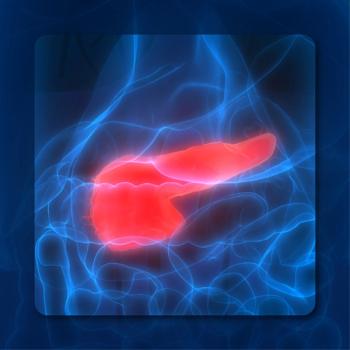
MesoPher cell therapy led to a 2-year recurrence-free survival rate of 64% and low-grade AEs in resected pancreatic cancer following chemotherapy.

Combining talquetamab with teclistamab demonstrated responses even among those with extramedullary disease in the RedirecTT-1 trial.

Arielle S. Weiss, MD, has joined Fox Chase Cancer Center as an assistant professor in the Division of Gynecologic Oncology in the Department of Surgery.

Radium-223 prior to docetaxel improved quality of life and tolerability in patients with metastatic castration-resistant prostate cancer according to data from the RAPSON trial.

Shyam A. Patel, MD, PhD, discusses findings from a meta-analysis of the effect of clonal hematopoiesis on outcomes for hematopoietic stem cell transplant.
The FDA’s ODAC voted against the risk:benefit profile of anti–PD-1 therapy in first-line metastatic ESCC with a PD-L1 of less than 1.

The addition of SHR-1701 to the HER2-negative gastric/GEJ cancer treatment paradigm may enhance the efficacy of current treatments for this population.