

Treatment with VP-315 led to reductions in tumor size in patients with basal cell carcinoma.

Your AI-Trained Oncology Knowledge Connection!
Treatment with VP-315 led to reductions in tumor size in patients with basal cell carcinoma.

Durvalumab plus chemotherapy, then durvalumab with or without olaparib, was approved in Europe for select advanced/recurrent endometrial cancer.
AC699 has won fast track designation from the FDA for select patients with ER-positive, HER2-negative, ESR1-mutated breast cancer.

A new drug application has been submitted to the FDA for UGN-102 inlow-grade, intermediate-risk non–muscle-invasive bladder cancer.

The acceleration of targeted therapy drug development has led investigators to home in on RAS mutations as agents are approved in colorectal cancer.

Cannabis-related disorder was associated with the development of head and neck cancer in adults.

ASCO has released a research statement outlining 4 recommendations to decentralize clinical trials and improve patient access to these studies.

Linda T. Vahdat, MD, discusses the use of ADCs in metastatic TNBC and how neoadjuvant immunotherapy performs in patients with early-stage TNBC.

Mohamad Mohty, MD, PhD, discusses real-world data for elranatamab in relapsed/refractory multiple myeloma in the French compassionate use program.

Fox Chase Cancer Center announces Aitziber Buque Martinez, PhD, as an assistant professor in the Cancer Signaling and Microenvironment Research Program.

Enrollment will discontinue for the SELECT-AML-1 trial of tamibarotene/venetoclax/azacitidine in newly diagnosed, RARA-positive acute myeloid leukemia.

Trastuzumab deruxtecan earned conditional approval in China for HER2-positive gastric/gastroesophageal junction cancer after at least 2 lines of therapy.

Vebreltinib demonstrated preliminary activity in patients with non–central nervous system solid tumors harboring MET fusions.

Clinicians specializing in caring for patients with lung cancer discussed clinical trial updates on agents in stage III NSCLC.

Manali Kamdar, MD, discusses responses with liso-cel according to prior lines of therapy and BTK inhibitor exposure in mantle cell lymphoma.
A sNDA seeking the approval of toripalimab for frontline use in patients with unresectable or metastatic melanoma is under review by the NMPA.
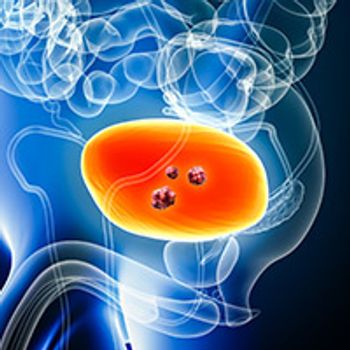
The Nectin-4–directed antibody-drug conjugate 9MW2821 has received breakthrough therapy designation in China for pretreated, advanced urothelial carcinoma.
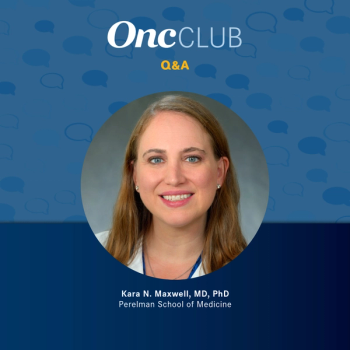
Kara N. Maxwell, MD, PhD, discusses the need to improve genetic testing rates for BRCA mutations in the male population.

Wearable-captured physiological metrics and electronic patient reported outcomes were practical and generated knowledge in Waldenström macroglobulinemia.

Atezolizumab plus bevacizumab showed efficacy in patients with hepatocellular carcinoma who had Child-Pugh B7 liver function.
Rhenium obisbemeda proved feasible and safe for patients with leptomeningeal metastases in an interim analysis of the phase 1 ReSPECT-LM trial.

At the Allegheny Health Network Cancer Institute, specialists are turning the tide on pancreatic cancer through early intervention and collaboration.

Devimistat and modified fluorouracil, oxaliplatin, irinotecan, and leucovorin did not significantly improve short- or long-term outcomes over standard-dose FFX in metastatic pancreatic adenocarcinoma

Experts provide insights on the first-in-human phase 1 ReDiscovertrial trial, evaluating the mutant-selective PI3Kα inhibitor RLY-2608, which is currently enrolling patients.

Stephen Opat, MBBS, discusses data for sonrotoclax plus zanubrutinib in relapsed/refractory chronic lymphocytic leukemia and small lymphocytic lymphoma.

Sarah Sammons, MD, discusses treating beyond progression and novel research on PI3K inhibitors in HR-positive, HER2-negative metastatic breast cancer.

Trastuzumab deruxtecan elicited responses in patients with HER2-positive biliary tract cancer, according to data from a single-arm, phase 2 trial.

Erika P. Hamilton, MD, discusses the implications of the DESTINY-Breast06 trial for patients with HER2-low and -ultralow breast cancer.

High pCR rates were observed for patients with uncommon breast cancer subtypes who received response-predictive subtype–optimized therapy.

Tilak Sundaresan, MD, and Nicole S. Evans, MD, discuss the implications of a study evaluating reasons for non-treatment among patients with PDAC.