

EO-3021 was safe and led to responses in advanced, unresectable or metastatic solid tumors likely to express Claudin 18.2.

Your AI-Trained Oncology Knowledge Connection!
EO-3021 was safe and led to responses in advanced, unresectable or metastatic solid tumors likely to express Claudin 18.2.

Pirtobrutinib generated responses in BTK inhibitor–naive relapsed/refractory chronic lymphocytic leukemia and small lymphocytic lymphoma.

The European Medicines Agency has granted orphan drug designation to SLS009 for relapsed/refractory peripheral T-cell lymphoma

The FDA has accepted a supplemental new drug application for cabozantinib in advanced pancreatic and extra-pancreatic neuroendocrine tumors.

Sara M. Tolaney, MD, MPH, discusses the HER2-positive breast cancer treatment paradigm and how standard agents may be optimized to improve outcomes.

Praful Ravi, MB, BChir, MRCP, discusses an analysis measuring residual cancer burden in localized prostate cancer after neoadjuvant therapy and surgery.
UV1 plus pembrolizumab did not improve progression-free survival or overall survival in patients with metastatic or recurrent head and neck cancer.

Subcutaneous epcoritamab demonstrated safety when given in the outpatient setting in relapsed/refractory diffuse large B-cell and follicular lymphoma.
Julie M. Vose, MD, MBA, discusses results with epcoritamab from the follicular lymphoma cycle 1 optimization cohort of the phase 1/2 EPCORE NHL-1 trial.

Alexey Danilov, MD, PhD, highlights non-chemotherapy options for the treatment of mantle cell lymphoma and expands on ongoing research in hematologic malignancies.

The FDA is requiring an additional trial demonstrating an OS benefit with Iomab-B to support the planned filing of the biologics license application for the agent.

LSU Health New Orleans is proud to announce the publication of a groundbreaking study led by Giulia Monticone PhD in the prestigious journal EMBO Reports.

LP-300 plus pemetrexed/carboplatin exhibited disease control in never-smokers with advanced NSCLC following progression on prior TKI treatment.

Kaushal Parikh, MBBS, highlights how PD-L1 expression affects treatment decision-making in the absence of other targetable mutations or prognostic indicators in non–small cell lung cancer.

A tumor-informed ctDNA assay showed high sensitivity and specificity as well as potential for ctDNA to be used as a prognostic biomarker during surveillance in Merkel cell carcinoma.

Suvemcitug plus chemotherapy improved progression-free survival in platinum-resistant ovarian cancer.

Ceralasertib plus olaparib demonstrated clinical activity in platinum-sensitive, recurrent, high-grade serous ovarian cancer, regardless of HRD status.

The FDA has granted de novo marketing authorization to the PGDx elio plasma focus Dx pan–solid tumor liquid biopsy test.
Kaushal Parikh, MBBS, discusses treatment advances in early-stage NSCLC including for patients with actionable mutations, and details considerations with adjuvant approaches.

Roger Li, MD, discusses the efficacy of bladder-sparing therapy after progression on pembrolizumab in patients with BCG-unresponsive, high-risk NMIBC.
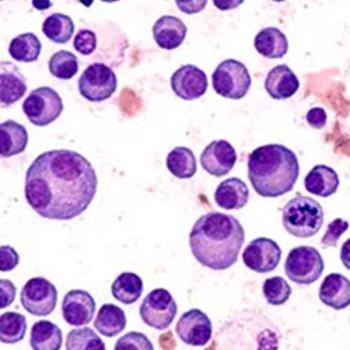
The BCMA/CD19–targeted CAR T-cell therapy GC012F was safe and produced favorable outcomes in newly diagnosed multiple myeloma after induction therapy.

Researchers at the Mayo Clinic found that patients with BCP-ALL who lacked the Philadelphia chromosome and were in remission showed higher survival rates with blinatumomab plus chemotherapy.

Alemtuzumab was FDA granted orphan drug designation as part of lymphodepletion prior to UCART22 in relapsed/refractory B-cell acute lymphoblastic leukemia.
Alexey Danilov, MD, PhD, highlights the evolution of targeting BTK, sharing new data on BTK degraders and more in chronic lymphocytic leukemia
The FDA has granted accelerated approval to afamitresgene autoleucel for select patients with pretreated unresectable or metastatic synovial sarcoma.

The FDA granted an orphan drug designation to the combination of avutometinib and defactinib for use as a potential therapeutic option in patients with pancreatic cancer.
The FDA has approved dostarlimab plus carboplatin and paclitaxel, followed by single-agent dostarlimab, for primary advanced or recurrent endometrial cancer.

ABBV-400 displayed efficacy and tolerability in microsatellite stable/mismatch repair–proficient advanced colorectal cancer.

The EMA has granted orphan medicinal product designation to rivoceranib plus camrelizumab in first-line unresectable hepatocellular carcinoma.

Teh Lin, PhD, DABR, FAAPM, of Fox Chase Cancer Center, has been named a Fellow of the American Association of Physicists in Medicine.