
Zanidatamab has received priority review from the FDA for the treatment of patients with HER2-positive metastatic biliary tract cancer.

Your AI-Trained Oncology Knowledge Connection!
Zanidatamab has received priority review from the FDA for the treatment of patients with HER2-positive metastatic biliary tract cancer.
Treatment with nivolumab plus cabozantinib yielded responses in patients with non-clear cell renal cell carcinoma.
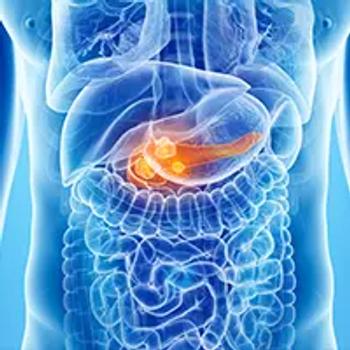
CT041 was safe and showcased early signals of antitumor activity in heavily pretreated patients with metastatic pancreatic cancer.

Sanjal Desai, MD, discusses the feasibility of venetoclax rechallenge following progression on BTK inhibitors in chronic lymphocytic leukemia.

Sarah ES Leary, MD, MS, details the significance of the FDA-approval of tovorafenib for patients with relapsed or refractory BRAF-positive pediatric low-grade glioma.

James Knight, MD, discusses a case study of a patient with brain metastases from prostate cancer and the importance of multidisciplinary, comprehensive care.
Sameer Patel, MD, FACS, of Fox Chase Cancer Center, was recently named Vice President of the Robert H. Ivy Society of Plastic Surgeons.

Perioperative pembrolizumab plus chemotherapy improved survival vs preoperative chemotherapy in high-risk, early-stage, triple-negative breast cancer.
Dato-DXd elicited a clinically meaningful but not statistically significant improvement in overall survival in pretreated, advanced non–small cell lung cancer.

The FDA has received a new drug application for the use of TLX007-CDx in the preparation of PSMA PET imaging of prostate cancer.
Muhamed Baljevic, MD, FACP, discusses the investigation of frontline quadruplet therapies in transplant-ineligible multiple myeloma.

From barely escaping a life under communism in a Russia-occupied Latvia to overcoming a family health crisis, Robert F. Ozols, MD, PhD, knows a thing or two about beating the odds.
Two clinical trials for AML or MDS are open and enrolling at Siteman Cancer Center and Washington University School of Medicine in St. Louis.

Positive PD-L1 expression was associated with worse survival in metastatic papillary renal cell carcinoma.

Janet Abrahm, MD, FACP, FAAHPM, reviews the standing of the role of integrative therapies in cancer care.
The FDA granted priority review to the sBLA for isatuximab plus bortezomib/lenalidomide/dexamethasone for newly diagnosed, transplant-ineligible myeloma.
David L. Porter, MD, discusses CAR T-cell therapy in chronic lymphocytic leukemia and looks towards improvements and unmet needs that remain.
Muhamed Baljevic, MD, FACP, discusses the evolution of quadruplet combination therapies in frontline multiple myeloma.
Sanjal Desai, MD, expands on the safety, efficacy, and sequencing of BTK inhibitors and venetoclax-based regimens in chronic lymphocytic leukemia.
James Ignatz-Hoover, MD, PhD, discusses the evolving use of CAR T-cell therapies and bispecific antibodies in multiple myeloma.

Ribociclib plus endocrine therapy bested combination chemotherapy in terms of progression-free survival in HR-positive, HER2-negative advanced breast cancer.
Stephen V. Liu, MD, details the phase 1/2 ARROS-1 study evaluating the selective ROS1 inhibitor zidesamtinib in patients with ROS1 fusion–positive non–small cell lung cancer.

Press Release
Eating more fruits, nuts and vegetables each day – along with fewer animal products – is associated with a nearly 50% reduction in the risk of prostate cancer progression.

The FDA’s Medical Devices Advisory Committee recommends the approval of the Shield blood test for CRC screening in adults at average risk for CRC.

Marketing authorization applications for the denosumab biosimilar HLX14 have been validated by the EMA.

An artificial intelligence-based smartphone app used by primary care physicians showed high diagnostic accuracy in detecting cutaneous melanoma.

Katie S. Gatwood, PharmD, BCOP, explains next steps with novel agents in the hematologic oncology field that have the potential to change practice.

Most women who attempted to conceive following treatment for stage I to III breast cancer were able to become pregnant at least once.
Patients under the age of 40 who received HPV vaccines were associated with lower rates of HPV-related cancer vs unvaccinated patients.

An artificial intelligence-based navigation tool may be used to call patients who previously missed their colonoscopy appointment with the goal that they will reschedule and attend the new appointment.