
With multiple antibody drug conjugate options now available for patients with HER2-negative metastatic breast cancer, clinicians must consider a variety of factors when selecting and sequencing therapies.

Your AI-Trained Oncology Knowledge Connection!
With multiple antibody drug conjugate options now available for patients with HER2-negative metastatic breast cancer, clinicians must consider a variety of factors when selecting and sequencing therapies.
The FDA has granted clearance for an investigational new drug application for a phase 1/2 safety lead-in trial investigating the engineered tumor-infiltrating lymphocyte KSQ-001EX in patients with melanoma, head and neck squamous cell carcinoma, and non–small cell lung cancer.

Nadofaragene firadenovec-vncg led to encouraging rates of high-grade recurrence-free survival and overall survival in patients with high-risk, BCG-unresponsive non–muscle invasive bladder cancer with carcinoma in situ with or without papillary tumors.
Biagio Ricciuti, MD, discusses the need to improve the identification of patients with advanced non–small cell lung cancer that benefit most from immune checkpoint inhibition.

Perioperative enfortumab vedotin elicited responses in cisplatin-eligible patients with muscle-invasive bladder cancer.
Florida Cancer Specialists & Research Institute, LLC is pleased to announce that Bradley Monk, MD will join the statewide practice as Medical Director of Late-Phase Research, effective January 1, 2024.

Telisotuzumab vedotin produced meaningful response rates and other clinically relevant outcomes in patients with c-Met protein overexpressed, EGFR wild-type, advanced or metastatic nonsquamous non–small cell lung cancer.

Reena J. Salgia, MD, discusses the advantages of utilizing an atezolizumab plus bevacizumab backbone as standard frontline therapy in unresectable HCC; how factors such as Child-Pugh B score, bleeding, and other high-risk features impact treatment selection; and the unmet needs that still need to be addressed for this patient population.

The combination comprised of camrelizumab and famitinib showcased improved efficacy with a manageable safety profile vs camrelizumab monotherapy or investigator’s choice of chemotherapy in patients with recurrent or metastatic cervical cancer.

The Center for Drug Evaluation of China’s National Medical Products Administration has accepted and granted priority review to the new drug application for IBI351 in the treatment of patients with advanced, KRAS G12C–mutant NSCLC who have received at least 1 prior systemic therapy.
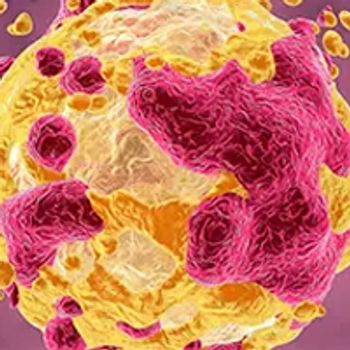
Nimotuzumab given concurrently with chemoradiotherapy demonstrated efficacy and favorable tolerability in patients with locally advanced cervical squamous cell carcinoma, according to data from a randomized, controlled, open-label, multicenter study.

Retifanlimab-dlwr continued to elicit responses with acceptable tolerability in patients with recurrent microsatellite instability–high or mismatch–repair deficient endometrial cancer, according to final findings from cohort H of the phase 1 POD1UM-101 trial.
Benjamin Philip Levy, MD, discusses the current landscape of emerging antibody-drug conjugates (ADCs) and their early activity in advanced lung cancer, the potential utility of oncogene-directed ADCs for patients with driver mutations, and more.

EG12014, a biosimilar of the anti-HER2 monoclonal antibody trastuzumab, has received a marketing authorization from the European Commission for use in the European Union for the treatment of patients with HER2-positive breast and metastatic gastric cancer; these are the same indications that trastuzumab holds in the EU.
New Cleveland Clinic research reveals how BRCA1 and BRCA2 gene mutations may impact cell communication in breast tissue, furthering the understanding of how cancer develops.

The frontline combination of cadonilimab and platinum-based chemotherapy with or without bevacizumab provided a progression-free survival benefit in patients with recurrent or metastatic cervical cancer.
Ehab L. Atallah, MD, highlights updates in chronic lymphocytic leukemia, emphasizing the importance of understanding the plethora of options that are present for oncologists treating patients within this population.
The FDA has approved nirogacestat (Ogsiveo) for adult patients with progressing desmoid tumors who require systemic treatment.

The European Medicines Agency has validated a type II application for the investigational T-cell engaging bispecific antibody epcoritamab-bysp for patients with relapsed/refractory follicular lymphoma following at least 2 prior lines of therapy
Despite previous unsuccessful attempts to target p53, investigators have continued to try to develop novel therapeutics directed at the tumor suppressor gene with the goal of restoring p53 wild-type activity.

The Brain Tumour Charity awarded a Junior Fellows grants of £600,000 over four years - the first of its kind - to Dana-Farber Research Fellow Tyler Miller, MD, PhD.
A biologics license application seeking the approval of obecabtagene autoleucel for the treatment of adult patients with relapsed/refractory B-cell acute lymphoblastic leukemia has been submitted to the FDA.
Belantamab mafodotin plus bortezomib and dexamethasone significantly improved progression-free survival compared with daratumumab plus B-Vd in the second-line treatment of patients with relapsed or refractory multiple myeloma, meeting the primary end point of the phase 3 DREAMM-7 trial.
Subgroup analyses from non–small cell lung cancer clinical trials, such as the phase 3 POSEIDON and FLAURA2 trials, can help personalize treatment decisions with immunotherapy and targeted therapy based on individual mutational profiles.
Marc J. Braunstein, MD, PhD, discusses the current role of autologous stem cell transplant for patients with multiple myeloma, highlighted the key factors used to determine patient eligibility, and detailed ongoing research centered around autologous stem cell transplant.
Edna “Eti” Cukierman, PhD, Co-Director of the Marvin & Concetta Greenberg Pancreatic Cancer Institute and Co-Leader of the Cancer Signaling and Microenvironment Research Program at Fox Chase Cancer Center, was recently awarded the American Cancer Society’s Wilmott Family Professorship in Pancreatic Cancer.

Aumolertinib plus anlotinib resulted in intracranial efficacy when used in the first-line treatment of patients with EGFR-mutant non–small cell lung cancer who have brain metastases.

The Network continues its strong growth trajectory and its mission to enhance community-based cancer care.
The American Oncology Network has started trading on Nasdaq with the goal of continuing the growth of the organization.

Elizabeth Plimack, MD, MS, Deputy Director and Professor in the Department of Hematology/Oncology at Fox Chase Cancer Center, was recently recognized as a new fellow of the American Society of Clinical Oncology.