

Incorporating AI into daily workflows may allow oncology professionals to save time on insurance denial claims and re-allocate time back into patient care.
Incorporating AI into daily workflows may allow oncology professionals to save time on insurance denial claims and re-allocate time back into patient care.

Long-term data reveal deep remissions with eque-cel, suggesting durable disease control with BCMA-directed CAR T-cell therapy in relapsed multiple myeloma.

Erika P. Hamilton, MD, discusses initial efficacy and safety data with the TROP2-targeted ADC DB-1305/BNT325 in pretreated metastatic TNBC.

Daniel J. George, MD, discusses the role of lutetium Lu 177 vipivotide tetraxetan in metastatic CRPC and patient selection considerations.
Jose Tinajero, PharmD, BCOP, discusses the role of the pharmacist in treatment planning and management in chronic myeloid leukemia.

The NCCN has released their updated Clinical Practice Guidelines in Oncology for NSCLC.

The phase 3 PEAK trial met its primary PFS end point with bezuclastinib plus sunitinib in imatinib-resistant/intolerant gastrointestinal stromal tumors.
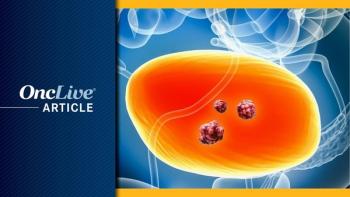
UCSF clinicians present research at SurgeWest 2025, on an RNA biomarker for prostate cancer and opioid prescribing patterns after urologic surgery.
Kevin Kalinsky, MD, MS, FASCO, discusses treatments and targeted therapies in the post–CDK4/6 inhibitor setting of HR+ breast cancer.
Anwar Saeed, MD, discusses findings of zanzalintinib plus atezolizumab in previously treated metastatic colorectal cancer.

The top 5 OncLive TV videos of the week cover insights in breast cancer and ovarian cancer.

STK-012 plus pembrolizumab and chemotherapy showed early efficacy and manageable safety in PD-L1–negative NSCLC.
Jennifer Chan, MD, MPH, discusses dose escalation and interval shortening with somatostatin analogs for GEP-NETs and how SORENTO may shape treatment.

The FDA clears subcutaneous daratumumab in smoldering myeloma, adds REMS guidelines for pexidartinib in TGCT, and more.

Use of camizestrant plus a CDK4/6 inhibitor at the emergence of an ESR1 mutation did not significantly worsen visual symptoms in HR-positive breast cancer.
Erica L. Mayer, MD, MPH, discusses data with giredestrant and how the evERA trial shows the potential for SERD-based regimens in ER-positive breast cancer.

Protein METTL7A plays key role in resistance to drugs targeting EGFR-mutant lung adenocarcinoma.
The phase 3 ASCENT-07 trial did not meet its primary PFS end point with first-line sacituzumab govitecan in hormone receptor–positive, HER2-negative breast cancer.

The FDA has approved generic dasatinib tablets for select patients with chronic myeloid leukemia and acute lymphoblastic leukemia.

Marlana Orloff, MD, discusses data for the combination of darovasertib and crizotinib in metastatic uveal melanoma.

Surbhi Sidana, MD, and Joshua Richter, MD, discuss the FDA approval of BVd for relapsed/refractory myeloma after at least 2 prior lines of therapy.
The FDA has approved daratumumab and hyaluronidase-fihj for the treatment of adult patients with high-risk smoldering multiple myeloma.

GFH375 produced responses and tumor shrinkage in heavily pretreated pancreatic ductal adenocarcinoma harboring KRAS G12D mutations.

Researchers conducted the largest, most comprehensive molecular analysis of RMC, leading to the identification of TROP2 as a promising therapeutic target.

Treatment with adjuvant durvalumab plus tremelimumab resulted in a DFS benefit vs active monitoring in RCC, particularly in the higher-risk population.

UGN-103 produced a 77.8% 3-month CR rate in patients with low-grade, intermediate-risk NMIBC.

Justin Taylor, MD, discusses findings from a study that evaluated the ability of ChatGPT to offer specific information in hematologic malignancies.

Oncology Fellows reports recent hematology/oncology fellows grant and award winners and looks ahead to upcoming grants.

Daniel P. Petrylak, MD, discusses key data in MIBC presented during the 2025 ESMO Congress and previews the 19th Annual New York GU Cancers Congress.

Treatment with 177Lu-edotreotide was linked to improvements in PFS and ORR across subgroups of patients with SSTR-positive GEP-NETs.