

Although there has been dramatic progress in the treatment landscape for metastatic melanoma over the past decade, many patients whose tumors harbor NRAS mutations have not shared in the improved outcomes.

Your AI-Trained Oncology Knowledge Connection!
Although there has been dramatic progress in the treatment landscape for metastatic melanoma over the past decade, many patients whose tumors harbor NRAS mutations have not shared in the improved outcomes.
Paul Lawrence Baron, MD, discussed best practices for determining a patient’s risk of developing breast cancer, the significance of targeting HER2 in patients with early-stage and metastatic disease, and remaining questions with radiation therapy in the field.
Salma K. Jabbour, MD, discusses the validity and clinical implications of using pembrolizumab plus platinum chemoradiation in patients with stage III non–small cell lung cancer.

The FDA has extended the Prescription Drug User Fee Act target date for the biologics license application seeking the approval of the CAR T-cell therapy ciltacabtagene autoleucel for use in adult patients with relapsed and/or refractory multiple myeloma.
Maher Albitar, MD, discusses the unmet needs with genomic testing that served as the impetus to start GTC, the process of becoming a partner with the organization, and the importance of genomic profiling for all patients with cancer.

Sanaz Memarzadeh, MD, PhD, discusses the potential for frontline combination therapy regimens in ovarian cancer.
John V. Heymach, MD, PhD, discusses the background of the Impower010 trial, the benefit for patients with PD-L1 levels of at least 1%, and the exciting direction adjuvant therapy in NSCLC is heading.

Sesen Bio met with the FDA to discuss questions related to the Chemistry, Manufacturing, and Controls that were raised in the complete response letter previously issued by the regulatory agency regarding the biologics license application for Vicineum as a potential treatment for patients with Bacillus Calmette-Guérin–unresponsive non–muscle invasive bladder cancer.
There is significant clinical, pathological, and outcome heterogeneity in myoepithelial tumors and prognoses for these tumors cannot be determined by a single pathological feature, but rather, several patient and tumor characteristics.
The Association of Community Cancer Centers in collaboration with AstraZeneca, a global, science-led biopharmaceutical company, has announced the findings of a national quality care initiative for patients with stage III and stage IV non-small cell lung cancer.
Standard chemotherapy has historically been the mainstay of treatment for patients with diagnoses of early-stage TNBC, but there remains an unmet need to identify novel therapies that improve outcomes and, equally important, to discern which patients may benefit from a given treatment.
Adjuvant pembrolizumab continued to showcase improved relapse-free survival over placebo in patients with resected high-risk stage II melanoma with 6 months of additional follow-up.
Sequential radiotherapy demonstrated preliminary efficacy and safety as a potential alternative to systemic therapy in patients with oligometastatic renal cell carcinoma.
The FDA has accepted for review a biologics license application for the use of toripalimab in combination with gemcitabine and cisplatin in the frontline treatment of patients with advanced recurrent or metastatic nasopharyngeal carcinoma, and for use as a single agent in the second- or later-line treatment of patients with recurrent or metastatic nasopharyngeal carcinoma following platinum-containing chemotherapy.
Men carrying MSH2 and MSH6 pathogenic variants, which are associated with Lynch syndrome, were found to have a higher incidence of prostate cancer compared with age-matched non-carrier individuals, supporting the value of annual, targeted prostate-specific antigen screening from age 40 to identify men with clinically significant prostate cancer.
The FDA has accepted a new drug application for the PI3Kδ inhibitor parsaclisib for use in the treatment of patients with relapsed or refractory follicular lymphoma, marginal zone lymphoma, and mantle cell lymphoma.

The FGFR inhibitor infigratinib demonstrated promising clinical activity and a manageable safety profile in previously treated patients with locally advanced or metastatic cholangiocarcinoma whose tumors harbor FGFR2 gene fusions or rearrangement.

Jamie Smith, EdD, MLS, has joined the cancer center as Chief Academic Officer, Senior Vice President of Education and Dean of the Roswell Park Graduate Division of the University at Buffalo.
Diego Adrianzen Herrera, MD, shares his experience with a cyberattack at the University of Vermont Health Network and its effect on inpatient and outpatient care delivery.
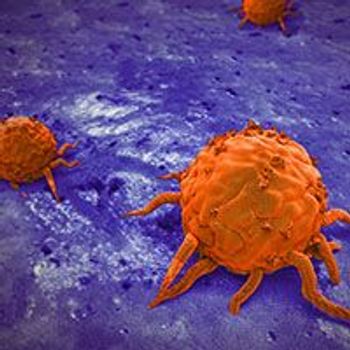
Incidence of pancreatic cancer incidence rose overall from 2000 to 2018, with a significant increase in women younger than 55 years, especially those aged 15 to 35 years.
Jessica J. Lin, MD, discussed the impact of larotrectinib in patients with NTRK fusion–positive lung cancer, and the importance of further understanding mechanism of resistance to targeted therapies.

The Cancer Dormancy and Tumor Microenvironment Institute, which has recently been launched at Albert Einstein Cancer Center, will focus on taking the tumor microenvironment research being done at the center to the next level and to develop novel technologies that can better identify dormant cancer as well as prevent and control recurrent disease.

Devimistat, which is being evaluated in combination with modified FOLFIRINOX in the frontline treatment of patients with metastatic adenocarcinoma of the pancreas, failed to meet the primary end point of overall survival in the phase 3 AVENGER 500 trial.
The FDA has granted an accelerated approval to asciminib for patients with Philadelphia chromosome (Ph)–positive chronic myeloid leukemia (CML) in chronic phase who have previously been treated with 2 or more TKIs, and for those with Ph-positive CML in chronic phase with a T315I mutation.

Routine computed tomography-based imaging scans identified abnormal ground-glass opacities and infiltrates indicative of COVID-19 in patients with lung cancer undergoing radiation therapy, enabling earlier diagnosis, treatment, and risk reducing measures.

MUSC Hollings Cancer Center researcher and radiation oncologist Graham Warren, MD, PhD, published a new study in the Journal of Thoracic Oncology detailing new findings and early markers of COVID-19 in lung cancer patients.
The clinical-stage immunotherapy company PDS Biotechnology Corporation has announced the temporary suspension of recruitment to the National Cancer Institute–led phase 2 trial, which is evaluating a novel triplet combination comprised of PDS0101 and 2 immunomodulating agents in patients with advanced human papillomavirus cancers.
Bijal Shah, MD, MS, discusses the evolving role of BTK inhibitors in MCL, how to choose among the variety of agents, and the safety concerns that affect treatment decisions.

Melissa Johnson, MD, discusses highlights from the 2021 ESMO Congress.

As the armamentarium continues expanding for the treatment of patients with chronic graft-vs-host disease, research is ongoing to determine whether earlier integration of novel therapies, such as ruxolitinib, could yield better response rates for patients.