
DeLLpro-300 data provide preliminary evidence for the safety and activity of tarlatamab in DLL3-positive neuroendocrine prostate cancer.

Your AI-Trained Oncology Knowledge Connection!
DeLLpro-300 data provide preliminary evidence for the safety and activity of tarlatamab in DLL3-positive neuroendocrine prostate cancer.
Kevin Elias, MD, discusses the role of olaparib in the management of ovarian cancer.
Preview the top lung, breast, GI, GU, gynecologic, and hematologic oncology abstracts and topics ahead of the 2025 ESMO Congress.
Joshua Richter, MD, discusses the use of next-generation CELMoDs to boost T-cell responses with bispecific antibodies or CAR T-cell therapy in myeloma.
Roswell Park Comprehensive Cancer Center endorsed a statement urging health care systems and professionals to choose HPV vaccination for cancer prevention.
The FDA granted breakthrough therapy designation to ficerafusp alfa plus pembrolizumab for metastatic/recurrent head and neck squamous cell carcinoma.
The FDA granted breakthrough therapy designation to sonrotoclax for relapsed/refractory mantle cell lymphoma.
Real-world MCL treatment with zanubrutinib generated longer treatment durations and higher treatment adherence rates vs acalabrutinib and ibrutinib.
Abemaciclib was safe and active for the treatment of patients with HIV-associated and -negative Kaposi sarcoma.

The top 5 OncLive TV videos of the week cover insights in uterine leiomyosarcoma, myelofibrosis, polycythemia vera, breast cancer, and multiple myeloma.

J. Thaddeus Beck, MD, FACP, discusses the FDA approval of subcutaneous pembrolizumab in solid tumors.

The FDA approved adjuvant cemiplimab in cutaneous squamous cell carcinoma, issued a CRL to dasatinib in chronic myeloid leukemia, and more.
Perioperative serplulimab plus chemotherapy significantly prolonged EFS vs placebo plus chemotherapy in gastric cancer.
The removal of REMS programs for approved CAR T-cell therapies could enable improved access and streamlined management of hematologic malignancies.
Check out this September recap of OncLive’s coverage of the top news and expert insights renal cell carcinoma.
Three experts share their perspectives on the complementary relationship between randomized clinical trials and real-world evidence in colorectal cancer.
Ibrutinib plus rituximab showed a progression-free survival benefit vs standard chemoimmunotherapy in older patients with untreated mantle cell lymphoma.
The regulatory agency has granted orphan drug designation to cintredekin besudotox for the treatment of patients with glioblastoma.
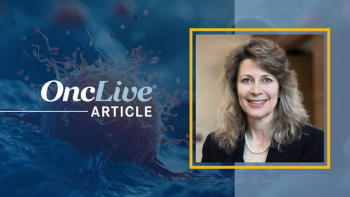
Neli Ulrich, PhD, MS, has been elected by the members of the Association of American Cancer Institutes to serve as vice president/president-elect of the AACI Board of Directors.
OST-HER2 produced a potential overall survival benefit at 2 years in recurrent, fully resected, pulmonary metastatic osteosarcoma.
See poll results highlighting the top gastrointestinal oncology abstracts and subtypes to watch at the 2025 ESMO Congress.
See poll results highlighting the top gynecologic oncology abstracts and subtypes to watch at the 2025 ESMO Congress.
Kanwal P.S. Raghav, MBBS, MD, discusses the role of fruquintinib for the treatment of patients with later-line colorectal cancer.
Check out this September recap of OncLive’s coverage of the top news and expert insights in myeloproliferative neoplasms.
Daratumumab plus lenalidomide, with reduced exposure to dexamethasone, led to a PFS improvement in frail, newly diagnosed multiple myeloma.

Philip J. Kranzusch, PhD, was one of three scientists awarded top honors at the 2025 Blavatnik National Awards for Young Scientists.
ONO-4578 plus nivolumab and chemotherapy improved PFS in HER2-negative advanced gastric cancer.
The FDA granted fast track designation to ADCE-D01 for the treatment of soft tissue sarcoma.
Ahead of the 2025 ESMO Congress, GI cancer experts share the gastric cancer and CRC research they’re most looking forward to seeing at the meeting.

Patients with MCL who relapsed after brexu-cel had poor survival outcomes, underscoring the need for effective post–CAR T-cell therapy strategies.