

Michael J. Mauro, MD, discusses the evolution of TKIs for CML, factors for TKI selection, and ways that genetic mutations influence treatment efficacy.

Your AI-Trained Oncology Knowledge Connection!
Michael J. Mauro, MD, discusses the evolution of TKIs for CML, factors for TKI selection, and ways that genetic mutations influence treatment efficacy.
Samir Parekh, MD, discusses managing a rare T-cell lymphoma post BCMA CAR T-cell therapy and how CCR4-targeted treatment achieved durable remission.
The Northwell Cancer Institute unveiled its Center for Women's Cancer at the R.J. Zuckerberg Cancer Center.
The FDA has received a BLA seeking the approval of pivekimab sunirine for the treatment of patients with blastic plasmacytoid dendritic cell neoplasm.

The in vivo CAR T-cell therapy UB-VV111 has received fast track designation from the FDA for the management of relapsed/refractory LBCL and CLL.
Higher response rates were shown with second-line ropeginterferon alfa-2b compared with anagrelide in patients with high-risk essential thrombocythemia.
A preview of the hematologic oncology abstracts and presentations to watch at the 2025 ESMO Congress in Berlin.
Although clinical trials are considered a “gold standard” in identifying the efficacy of treatments, real-world data help address unmet needs in colorectal cancer.

Kashyap Patel MD, ABIM, BCMAS, discusses the present challenges with integrating AI tools into community practice.

Crofelemer may receive ODD for diarrhea treatment in patients with breast cancer and brain metastases receiving targeted therapy with/without chemotherapy.
Acute GVHD was shown to be a risk factor for chronic GVHD, but factors such as organ involvement showed no correlation with long-term outcomes.

The Guardant360 CDx liquid biopsy test has been approved to identify patients with ESR1-mutated breast cancer who are eligible to receive imlunestrant.
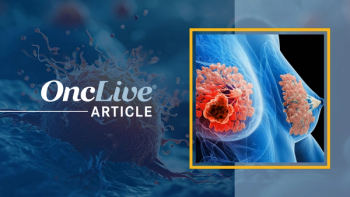
Trastuzumab deruxtecan demonstrated a statistically significant and clinically meaningful improvement in invasive disease-free survival vs trastuzumab emtansine in HER2-positive early breast cancer.

Maurie Markman, MD, discusses the evolution of surgical oncology, from radical resections to multidisciplinary, minimally invasive, and neoadjuvant approaches.

Jim Chen, MD, discusses how artificial intelligence can aid community oncologists in providing optimal care.

Brian P. Mulherin, MD, discusses how artificial intelligence is helping shape smarter cancer care.

AI-powered clinical decision support systems can help oncologists manage rising information demands without forfeiting autonomy in care delivery.

The top 5 OncLive TV videos of the week cover insights in solid tumors, breast cancer, pancreatic cancer, and multiple myeloma.

Lalan Wilfong, MD, discusses the patient- and provider-facing implications that may result from renewed focus on improving care navigation in oncology.

Doug Flora, MD, FACC, LSSBB, explains how AI is transforming cancer care, urging oncologists to engage and guide its responsible use.

Imlunestrant joins the treatment arsenal for ESR1-mutated metastatic breast cancer, T-DXd doublet gets priority review in HER2+ breast cancer, and more.
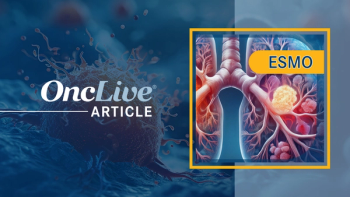
OncLive social media polls reveal which lung cancer abstracts are generating excitement ahead of the 2025 ESMO Congress.
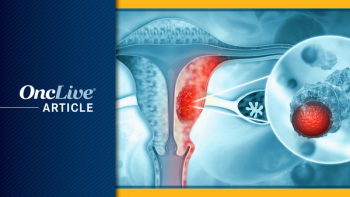
Ramez N. Eskander, MD, discusses prior data supporting the ongoing investigation of sacituzumab govitecan as monotherapy in endometrial cancer.
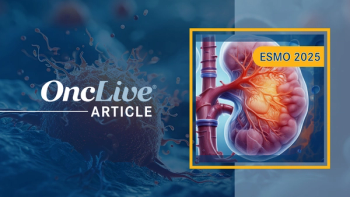
OncLive social media polls reveal which prostate, kidney, and bladder cancer abstracts are generating excitement ahead of the 2025 ESMO Congress.

Five new faculty members join network; three at St. Joseph’s Health in Syracuse as it launches new services.
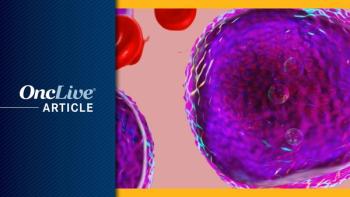
The NCCN has issued a category 2A recommendation for revumenib in relapsed/refractory acute myeloid leukemia harboring an NPM1 mutation.
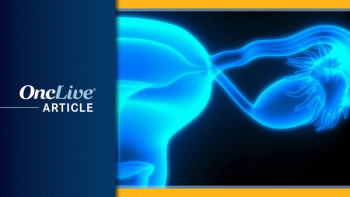
Stenoparib monotherapy generated long-term clinical benefit in patients with platinum-resistant and -refractory advanced ovarian cancer.
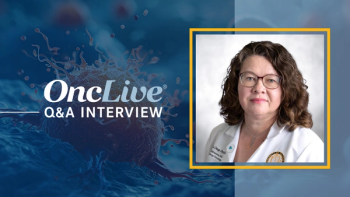
Lyudmila A. Bazhenova, MD, discusses the FDA approval of sunvozertinib (Zegfrovy) in patients with EGFR exon 20–mutant non–small cell lung cancer.