
The European Commission has approved the combination of avelumab and axitinib for the frontline treatment of adult patients with advanced renal cell carcinoma.

Your AI-Trained Oncology Knowledge Connection!
The European Commission has approved the combination of avelumab and axitinib for the frontline treatment of adult patients with advanced renal cell carcinoma.

Treatment with iodine-131 apamistamab led to a high bone marrow transplant rate compared with salvage chemotherapy in elderly patients with relapsed/refractory acute myeloid leukemia.
Liza C. Villaruz, MD, discusses the data with immunotherapy in squamous non–small cell lung cancer.

The FDA has informed Blueprint Medicines that it intends to split the proposed indications for its agent avapritinib into two separate new drug applications for patients with gastrointestinal stromal tumor (GIST): one for patients with PDGFRA exon 18–mutant disease regardless of prior therapy, and one for fourth-line GIST.

MCLA-128, an investigational bispecific HER2/HER3 antibody, demonstrated radiological and clinical responses in patients with metastatic pancreatic ductal adenocarcinoma and metastatic non–small cell lung cancer who have NRG1 fusions.

Benjamin Weinberg, MD, discusses the treatment options available for the various subpopulations in metastatic colorectal cancer.
Heather H. Cheng, MD, PhD, discusses the GENTleMEN trial and the widening role of genetic testing for patients with prostate cancer.
Scott Gottlieb, MD, discusses facets of biosimilar development as well as commercial and policy changes that could have the greatest impact on the use of these products in the field of oncology.
An updated biologics license application has been submitted to the FDA for eflapegrastim for the management of chemotherapy-induced neutropenia.

The European Commission has approved gilteritinib as a single agent for the treatment of relapsed/refractory patients with FLT3-mutant acute myeloid leukemia.

Eileen M. O’Reilly, MD, discusses emerging strategies in pancreatic cancer.

Daniela Molena, MD, discusses the role of screening and the implementation of minimally invasive surgical techniques in early-stage lung cancer.

The combination of ublituximab and ibrutinib improved progression-free survival, as determined by an Independent Review Committee, compared with ibrutinib alone in patients with relapsed/refractory high-risk chronic lymphocytic leukemia.

William G. Wierda, MD, PhD, discusses the evolving treatment paradigm in chronic lymphocytic leukemia and ongoing trials looking at novel approaches.

The European Commission has approved nivolumab at a flat dosing schedule of either 240 mg over 30 minutes every 2 weeks, or 480 mg infused over 60 minutes every 4 weeks, for the adjuvant treatment of patients with melanoma who have involvement of lymph nodes or metastatic disease who have undergone complete resection.

In an effort to improve colorectal cancer screening rates via a less invasive method, the registrational ECLIPSE is evaluating the performance of the LUNAR-2 blood test in detecting colorectal cancer in average-risk adults.
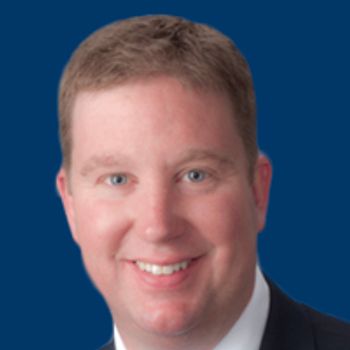
Timothy F. Burns, MD, PhD, discusses the frontline standards of care in EGFR-, ALK-, and ROS1-positive non–small cell lung cancer, optimal sequencing strategies, and the nuances of tissue- and plasma-based sequencing.

The combination of margetuximab and chemotherapy induced a 1.8-month median overall survival increase in patients with pretreated HER2-positive metastatic breast cancer compared with trastuzumab (Herceptin) and chemotherapy.
The FDA has approved niraparib (Zejula) for the treatment of patients with advanced ovarian, fallopian tube, or primary peritoneal cancer who have been treated with ≥3 prior chemotherapy regimens, and whose cancer is associated with homologous recombination deficiency–positive status.
The FDA has issued a draft guidance to propose labeling recommendations, including a boxed warning, to breast implant manufacturers in an effort to help patients understand the benefits and risks of these devices.

Barry Paul Sleckman, MD, PhD, has been named director of the O’Neal Comprehensive Cancer Center at the University of Alabama at Birmingham.

Neeraj Agarwal, MD, discusses the TITAN trial and the implications in prostate cancer treatment.

David H. Ilson, MD, PhD, discusses current treatment options for patients with gastric cancer, the challenges with the KEYNOTE-062 trial, and other immunotherapy agents coming down the pipeline.

Thomas Powles, MD, MBBS, MRCP, discusses the rationale for the BISCAY trial and what questions still need to be answered. 

Daniel J. George, MD, discusses staples of treatment in metastatic prostate cancer as well as novel therapies and emerging strategies in the field.
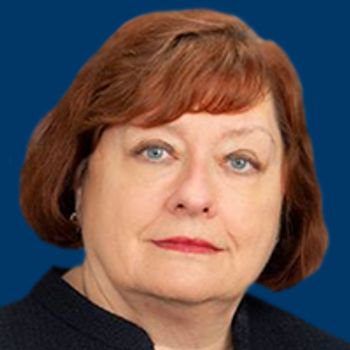
Antoinette Wozniak, MD, FACP, FASCO, discusses the promise of immunotherapy in lung cancer and shared ongoing research efforts further exploring this approach.
The FDA has expanded the approval of aprepitant (Cinvanti) injectable emulsion for intravenous use to include the 130-mg single-dose regimen for patients receiving moderately epigenetic chemotherapy.
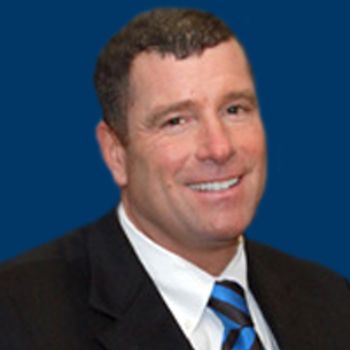
R. Lor Randall, MD, FACS, discusses ongoing studies and treatment options in the orthopedic oncology landscape.
The first-line combination of nivolumab (Opdivo) plus low-dose ipilimumab (Yervoy) given concomitantly with 2 cycles of chemotherapy showed superior overall survival compared with up to 4 cycles of chemotherapy alone followed by optional maintenance treatment in patients with advanced non–small cell lung cancer.
Vincent Y. Ng, MD, discusses what implications the NEXIS study could have in soft tissue sarcoma treatment and the next steps going forward.