

JAVELIN Bladder Medley data show PFS improvement with avelumab plus sacituzumab govitecan as first-line maintenance vs avelumab alone in urothelial cancer.

Your AI-Trained Oncology Knowledge Connection!
JAVELIN Bladder Medley data show PFS improvement with avelumab plus sacituzumab govitecan as first-line maintenance vs avelumab alone in urothelial cancer.

Rakesh Popat, MBBS, MRCP, FRCPath, PhD, details the rationale for evaluating the trispecific antibody JNJ-5322 in relapsed/refractory multiple myeloma.
Research shows that blocking CXCR2 receptor reduced tumor growth and improved survival; clinical trial underway.

The FDA has granted breakthrough therapy designation to ifinatamab deruxtecan for the treatment of patients with extensive-stage small cell lung cancer.
Izalontamab brengitecan earned FDA breakthrough therapy designation for EGFR-mutated locally advanced or metastatic NSCLC.
The European Commission approved nirogacestat for the treatment of progressing desmoid tumors requiring systemic treatment.

Four expert hematologists discuss the FDA’s decision to remove REMS programs for CD19- and BCMA-directed CAR T-cell therapies in hematologic malignancies.

Adjuvant atezolizumab improved DFS and OS after a positive Signatera MRD test in muscle-invasive bladder cancer.
Hematology/oncology fellows shared insights on notable presentations given during the OncLive Fellows Forum on Thoracic Oncology.

Kevin Harrington, MBBS, MRCP, FRCR, FRCP, PhD, DIC, discusses ficerafusp alfa for the treatment of patients with HPV-negative head and neck cancer.

The top 5 OncLive videos of the week cover insights in MCL, prostate cancer, plexiform neurofibromas, breast cancer, and follicular lymphoma.
PLD plus ifosfamide produced an ORR of 33% and a DCR of 83% in advanced soft tissue sarcoma, with manageable toxicity.
Vepdegestrant NDA under FDA review in ESR1-mutated breast cancer, Oncomine Dx Target Test gets greenlit as zongertinib companion diagnostic in NSCLC.
Ashish Saxena, MD, PhD, discusses how fellows can make the discussion of an initial cancer diagnosis as productive as possible for patients.

Neoadjuvant olaparib plus carboplatin led to a high RCB 0/1 rate in BRCA1/2-mutated, HRD+ TNBC.
TAR-200 was found to be highly effective in treating select patients with bladder cancer whose tumors were previously unresponsive to therapy.

Bortezomib plus mitoxantrone hydrochloride liposome and dexamethasone produced responses with manageable safety in relapsed/refractory myeloma
Nemvaleukin alfa produced a disease control rate of 50% in advanced melanoma and RCC.
The development of SGR-2921 in relapsed/refractory AML and higher-risk MDS was discontinued followed by 2 patient deaths.
Early data showing tolerability and improved OS with roginolisib in metastatic uveal melanoma support its ongoing evaluation in the phase 2 OCULE-01 trial.
Matthew Hadfield, DO, discusses how hematology/oncology fellows should approach the interpretation of clinical trial data.
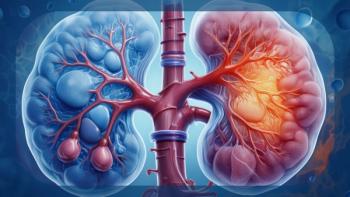
David A. Braun, MD, PhD, discusses the need for more tailored treatments that improve tumor-specific T-cell infiltration in chromophobe RCC.
Retrospective data showed CAR T-cell therapy is feasible in patients with aggressive lymphomas and active autoimmune diseases.

The antibody-drug conjugate SHR-A1811 demonstrated a comparable pCR rate to SHR-A1811/pyrotinib and PCbHP in HER2-positive breast cancer.
Ruby Arora, MD, discusses an analysis of SEER data on the declining MCL incidence and disparities that persist in Hispanic and American Indian patients.
Neoadjuvant vidutolimod plus pembrolizumab showed promising activity in stage III resectable melanoma.
HLD-0915 has received fast track designation from the FDA, allowing for more frequent communication with the agency regarding the drug’s candidacy for approval.
Huntsman Cancer Institute is expanding its proton therapy center, enhancing access to advanced cancer treatment for patients in the Mountain West region.
Sonam Puri, MD, discusses advances in small cell lung cancer that have expanded treatment options across disease stages.
David A. Braun, MD, PhD, outlines differences in the tumor biology and immune phenotypes of chromophobe and clear cell renal cell carcinoma.