

The FDA provided feedback on next steps of development for eftilagimod alfa in PD-L1–negative recurrent/metastatic head and neck squamous cell carcinoma.

Your AI-Trained Oncology Knowledge Connection!
The FDA provided feedback on next steps of development for eftilagimod alfa in PD-L1–negative recurrent/metastatic head and neck squamous cell carcinoma.

Matching grant from Weill family creates collaborative research hub, uniting scientists from UCSF and Stanford Medicine to transform cancer care within a decade.

Neoadjuvant pembrolizumab could represent an avenue for organ preservation in nonmetastatic, unresectable, dMMR colorectal cancer.
The FDA granted priority review to a supplemental biologics license application for lisocabtagene maraleucel in relapsed/refractory marginal zone lymphoma.
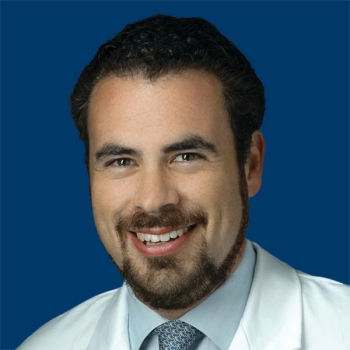
Benjamin A. Weinberg, MD, FACP, discusses the potential role of BXCL701 plus pembrolizumab in advanced pancreatic ductal adenocarcinoma.
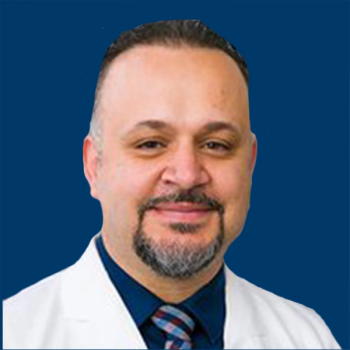
Waddah Arafat, MD, discusses the treatment paradigm for MIBC and questions regarding the benefit seen with neoadjuvant chemoimmunotherapy in this setting.

The phase 1/2 CaRe Prostate trial examining INKmune in patients with metastatic CRPC has met its primary and secondary end points.

Northwell Cancer Institute appointed Geraldine O’Sullivan Coyne, MD, to The START Center for Cancer Research to bring trials to the community setting.
The BTK degrader BGB-16673 has received PRIME designation from the EMA for the treatment of patients with Waldenström macroglobulinemia.

Fludarabine plus cyclophosphamide lymphodepletion will be used in the phase 2 ALPHA3 trial of first-line consolidation cema-cel in patients with LBCL.
A retrospective study showed immune checkpoint inhibitors may be an option in appropriate indications for patients with neurologic autoimmune disorders.
Rana R. McKay, MD, FASCO, discusses findings from the ARC-20 trial of casdatifan plus cabozantinib in pretreated clear cell renal cell carcinoma.
Rana R. McKay, MD, expands on key updates and knowledge gaps in prostate cancer management discussed at the Bridging the Gaps in Prostate Cancer meeting.

The top 5 OncLive videos of the week cover insights in lung cancer, myelofibrosis, and mantle cell lymphoma.

mRNA‑2416, alone or with durvalumab, was well tolerated and biologically active in advanced solid tumors and ovarian cancer.
Perioperative durvalumab sBLA gets priority review in gastric/GEJ cancer, acalabrutinib combination sNDA under review in CLL, and more.

Nuvisertib has received orphan drug designation from the EMA for patients with myelofibrosis.
Joseph Jacob, MD, MCR, discusses how TAR‑200 could represent a new treatment avenue in BCG‑unresponsive, high-risk NMIBC.
Linda Duska, MD, MPH, discusses final results of KEYNOTE A18 for pembrolizumab plus chemoradiotherapy in high risk, locally advanced cervical cancer.
Katherine C. Ansley, MD, discusses the role of oral SERDs and PI3K and AKT inhibitors for the treatment of metastatic breast cancer.
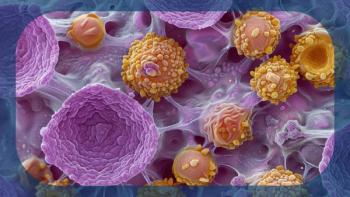
Researchers are leading the nation in using powerful and precise radioactive drugs to treat people with complex cancers.

A supplemental application has been submitted to Brazil’s health regulatory agency, seeking the approval of tafasitamab for follicular lymphoma.

The first-in-class TEAD autopalmitoylation inhibitor VT3989 has received FDA orphan drug designation for the treatment of patients with mesothelioma.
Here is your guide to all therapeutic options that were approved by the FDA in July 2025 spanning tumor types.
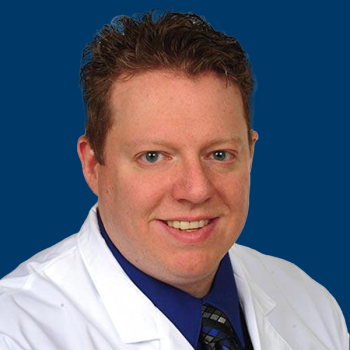
Geoffrey B. Pelz, MD, discusses the evolution of thoracic surgical oncology, along with newer minimally invasive approaches to surgery in lung cancer.
The FDA has issued a complete response letter for odronextamab in relapsed or refractory follicular lymphoma.

Ivonescimab plus chemotherapy is under review in China for the frontline treatment of patients with advanced squamous non–small cell lung cancer.
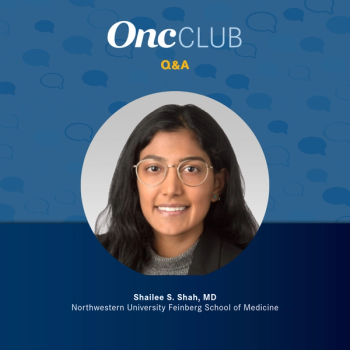
Shailee S. Shah, MD, discusses the frequency and severity of neurologic autoimmune disorder exacerbation in patients with cancer receiving ICIs.
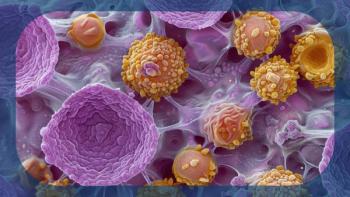
The first-in-class, allogeneic stem cell–loaded oncolytic virus CLD-201 was granted FDA fast track designation for the treatment of soft tissue sarcoma.

A New York cancer center appears on list for second consecutive year, based on anonymous employee surveys