

Cholangiocarcinoma care begins with an evaluation by a multidisciplinary team. Mayo Clinic team members work together to review cases as a tumor board.

Your AI-Trained Oncology Knowledge Connection!
Cholangiocarcinoma care begins with an evaluation by a multidisciplinary team. Mayo Clinic team members work together to review cases as a tumor board.
The FDA has granted accelerated approval to linvoseltamab-gcpt (Lynozyfic) for use in patients with relapsed/refractory multiple myeloma.

Denbrayce was approved in Europe for the treatment of skeletal-related events in advanced malignancies involving the bone and giant cell tumor of the bone.

The EMA’s CHMP has issued a positive opinion for the use of MRD-negative CR as an end point for regulatory clinical trials for patients with myeloma.
A research fellow from Dana-Farber Cancer Institute shares post hoc findings from the phase 3 JAVELIN Renal 101 trial.
Sam Klempner, MD, discusses the ongoing evaluation of domvanalimab plus zimberelimab and chemotherapy in upper GI cancers.

Ajai Chari, MD, expands on areas of uncertainty in multiple myeloma after his presentation at the Bridging the Gaps in Leukemia, Lymphoma, and Multiple Myeloma Conference.
Here is your guide to all therapeutic options that were cleared by the FDA in June 2025 spanning tumor types.

Premal Thaker, MD, discusses findings for IMNN-001 plus perioperative chemotherapy in up-front, advanced ovarian cancer.
Read a recap of the episodes of OncLive On Air that debuted in June 2025.

A team of researchers at Yale developed and tested a new AI tool to help better characterize the diversity of individual tumor cells.

Long-term survival signals with Temferon in 2 patients with newly diagnosed glioblastoma multiforme suggest potential mediation of disease progression.

Zanidatamab has become the first HER2-targeted agent to gain conditional approval for HER2-positive biliary tract cancer in the European Union.

Experts in the fields of lung, head and neck, HER2+ breast, and hematologic cancers discuss notable updates for fellows from the 2025 AACR Annual Meeting.

First-line bemarituzumab plus chemotherapy improved overall survival in advanced gastric/GEJ cancer with FGFR2b overexpression.
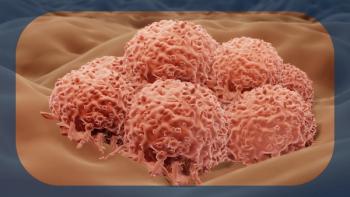
Phase 2 findings from NAUTILUS supported the potential combinatorial activity of binimetinib plus bocodepsin in NRAS-mutant melanoma.
Ajai Chari, MD, highlighted key areas of debate in smoldering myeloma from the Bridging the Gaps in Leukemia, Lymphoma, and Multiple Myeloma Conference.

The combination of zelenectide pevedotin and pembrolizumab was safe and produced antitumor activity in cisplatin-ineligible urothelial cancer.

Kohei Shitara, MD, discusses the investigation of domvanalimab plus zimberelimab and chemotherapy in patients with gastric/GEJ/esophageal cancers.

Renier Brentjens, MD, PhD, invited to address Damon Runyon Foundation, New York Academy of Sciences

Gedatolisib generated clinical activity in metastatic castration-resistant prostate cancer and HER2-positive breast cancer.

China’s NMPA approved savolitinib plus osimertinib for EGFR-mutant NSCLC with MET amplification after progression on prior EGFR TKI therapy.

OncLive® showcases 13 cancer care pioneers, who have won the 2025 Giants of Cancer Care award.
The FDA has eliminated REMS programs for BCMA- and CD19-directed autologous CAR T-cell therapies approved for multiple myeloma and select types of lymphoma/leukemia.

Treatment with KN026 plus KN046 demonstrated durable responses and a manageable safety profile in previously treated HER2-positive breast cancer.

The top 5 OncLive videos of the week cover insights in myelofibrosis, lung cancer, ovarian cancer, breast cancer, and melanoma.
Daraxonrasib earned FDA breakthrough therapy designation for previously treated metastatic PDAC harboring KRAS G12X mutations.
The FDA grants approval to Dato-DXd in EGFR+ NSCLC, revumenib sNDA is under priority review for NPM1-mutant AML, and more from OncLive this week.
IBI354 continued to demonstrate tolerability and was active in pretreated, HER2-positive advanced breast cancer.

Data from the first stage of a phase 2a study suggest that tigilanol tiglate reduced tumor volume in patients with soft tissue sarcoma.