

Belrestotug plus dostarlimab did not improve PFS vs dostarlimab monotherapy in PD-L1–high NSCLC, supporting the termination of belrestotug development.

Your AI-Trained Oncology Knowledge Connection!
Belrestotug plus dostarlimab did not improve PFS vs dostarlimab monotherapy in PD-L1–high NSCLC, supporting the termination of belrestotug development.

Switzerland has approved piflufolastat (18F) as an imaging agent to detect PSMA-positive lesions in prostate cancer.

Capecitabine/bevacizumab had favorable efficacy and safety profiles among older patients with metastatic colorectal cancer.

Patients with MCL and large clonal hematopoiesis clones experienced shortened PFS and OS vs those without clones.

CX-2051 elicited an overall response rate of 28% with manageable safety in heavily pretreated colorectal cancer.

THE001, a doxorubicin-encapsulating thermosensitive liposome therapy, has been granted FDA orphan drug designation for soft tissue sarcoma.

Belzutifan was safe and effective in patients with von Hippel-Lindau–associated RCC and other neoplasms.
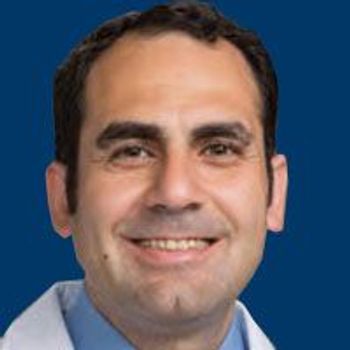
Amer Zeidan, MBBS, discusses evolutions in the myelodysplastic syndrome treatment paradigm and ongoing research seeking to improve treatment efficacy.

The ongoing phase 2B SURVIVE clinical trial of SurVaxM in glioblastoma will continue following an interim analysis of trial data.

Disitamab vedotin plus toripalimab improved PFS and OS vs chemotherapy in HER2-expressing metastatic urothelial carcinoma.

Renier Brentjens, MD, PhD, discusses the current landscape of CAR T-cell agents in patients with solid tumors.

The allogeneic CAR T-cell therapy CT0596 was safe with clinical activity in relapsed/refractory multiple myeloma.

Bradley Monk, MD, FACOG, FACS, discusses the FDA approval of avutometinib plus defactinib for KRAS-mutated recurrent low-grade serous ovarian cancer.

The FDA granted fast track designation to ADRX-0706 for locally advanced or metastatic squamous cell cervical cancer.

BTK mutations occurred at low rates in patients with CLL who had disease progression after receiving zanubrutinib or ibrutinib in the phase 3 ALPINE study.

The top 5 OncLive videos of the week cover insights in myelodysplastic syndrome, lung cancer, hepatocellular carcinoma, colorectal cancer, and ovarian cancer.

A doublet is approved for KRAS-mutated ovarian cancer, T-DXd followed by THP improves pCR rates in HER2+ breast cancer, and more from OncLive.

Brad S. Kahl, MD, details the evaluation of induction BR plus bortezomib with rituximab/lenalidomide maintenance in mantle cell lymphoma.

Poll results highlighted key lung cancer abstracts of interest from the upcoming ASCO Annual Meeting on OncLive’s social media.

Neoadjuvant dostarlimab led to an 82% clinical complete response and a 92% 2-year RFS rate, supporting nonoperative management in early-stage dMMR tumors.

Nicole Lamanna, MD, discusses pirtobrutinib decision-making in the relapsed/refractory CLL setting and ongoing earlier-line research with the agent.

Researchers at Mayo Clinic’s Center for Individualized Medicine are evaluating the role of the microbiome in cancer treatment.

The Czech Republic’s State Institute for Drug Control has approved the Illuccix PSMA-PET imaging kit in adult patients with prostate cancer.

Durvalumab plus BCG induction and maintenance improved DFS vs BCG in these settings alone in patients with high-risk non–muscle-invasive bladder cancer.

The STAT3 inhibitor TT1-101 generated confirmed partial responses among patients with relapsed/refractory HCC and other solid tumors.

Challenges may arise as there could be unintended consequences on oncologic drug development, access, and innovation.

Joseph C. Murray, MD, highlights positive treatment shifts that have shaped the BRAF V600E–mutant non–small cell lung cancer treatment paradigm.

Evan T. Hall, MD, MPhil, discusses the limited potential for immunotherapy rechallenge in patients with RCC and challenges with later-line RCC management.

Justin Moser, MD, discusses efforts to develop a broader range of immunotherapy approaches for advanced melanoma after PD-1 inhibition.

Adavosertib monotherapy demonstrated signs of antitumor activity in uterine serous carcinoma; however, the phase 2 starting dose was not well tolerated.