
An IDMC recommended continuing a phase 2 minimal residual disease study of IMNN-001 without modification following a favorable safety review.
An IDMC recommended continuing a phase 2 minimal residual disease study of IMNN-001 without modification following a favorable safety review.

Shailender Bhatia, MD, discusses next steps for adjuvant therapy research in light of the phase 3 ADAM trial data and broader implications for Merkel cell carcinoma.

Clinicians and researchers are set to gather for the UCSF-cosponsored International Invasive Lobular Carcinoma Symposium.

SOT106 now holds both orphan drug and fast track designations across soft tissue sarcoma and osteosarcoma ahead of a first-in-human trial.

Shailender Bhatia, MD, discusses ADAM trial design, key efficacy and safety findings, and treatment implications in Merkel cell carcinoma.

Read a refresh of breast cancer FDA news from August 2026, including an sNDA application in PIK3CA-mutant disease and a fast track designation.

Lanreotide injection, a generic formulation referencing lanreotide, was approved by the FDA for GEP-NETs management.
The FDA granted final approval to Lutetium Lu 177 dotatate biosimilar for patients with SSTR-positive GEP-NETs.

The TrueBeam photon therapy system has been added to the Statesir Cancer Center at Atlantic Health CentraState Medical Center.
The addition of the β-catenin pathway inhibitor tegavivint to osimertinib produced deep responses in a phase 1b study in first-line EGFR-mutated NSCLC.
Updated NCCN guidelines now recommend rusfertide as a Category 1 option for both low- and high-risk polycythemia vera.
An observational analysis showed a long-term OS benefit with Orca-T in adult patients undergoing allogeneic transplantation for hematologic malignancies.
FDA has granted fast track designation to LYT-200 plus a hypomethylating agent in relapsed/refractory high-risk myelodysplastic syndromes.

Toon Van Gorp, MD, PhD, discusses key data with TUB-040 in platinum-resistant ovarian cancer and next steps for development.
Japan approved subcutaneous pembrolizumab and berahyaluronidase alfa across all indications for which intravenous pembrolizumab is approved in the country.
New research reveals how cancers carrying mutations in the p53 tumor-suppressor protein can hide those mutations from T cells.
Elise A. Chong, MD, discusses real-world liso-cel efficacy and safety, outpatient use, and future directions in relapsed/refractory mantle cell lymphoma.

Brad S. Kahl, MD, discusses TRIANGLE and EA4151 data reshaping ASCT use in frontline MCL, induction intensity, and high-risk disease strategies.
Mary Ann Anderson, MBBS, FRACP, FRCPA, PhD, discusses recent CLL approvals, BTK and BCL-2 inhibitor safety, and individualizing frontline therapy.

The top 5 OncLive TV videos of the week cover insights in NSCLC, large granular lymphocytic leukemia, ovarian cancer, and myelofibrosis.
Long-term data from the L-MOCA trial showed encouraging OS outcomes with olaparib maintenance in Asian patients with platinum-sensitive, relapsed ovarian cancer.

The FDA approved imlunestrant plus abemaciclib in breast cancer and photodynamic therapy in skin cancer, and more.

Did you catch all of this week's top oncology news? Test your knowledge with OncLive's Weekly News Quiz.

The phase 3 REZILIENT3 trial met its primary end point at a pre-specified interim analysis, with a median PFS of 14.5 months and a 65.0% ORR.
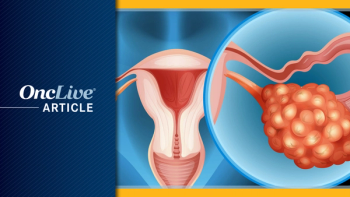
CHMP has recommended EU approval of senaparib for advanced ovarian cancer based on FLAMES data.
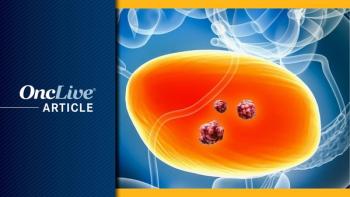
The CHMP recommended perioperative pembrolizumab plus enfortumab vedotin for resectable muscle-invasive bladder cancer.

The FDA approved imlunestrant/abemaciclib for ER-positive, HER2-negative, ESR1-mutated advanced breast cancer after progression on endocrine therapy.
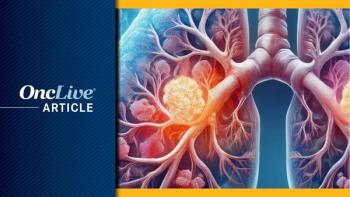
Roswell Park Comprehensive Cancer Center unveiled a new and more compact mobile lung cancer screening unit.
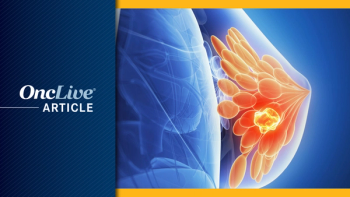
The CHMP recommended approval of adjuvant T-DXd for HER2-positive early breast cancer with residual invasive disease after neoadjuvant therapy.

Udai S. Kammula, MD, FACS, discusses TIL therapy outcomes, the UMIS biomarker, and treatment implications in metastatic uveal melanoma.