
Philip A. Philip, MD, discusses TTFields, the recent approval of this modality in pancreatic cancer, and phase 3 data in locally advanced disease.
Philip A. Philip, MD, discusses TTFields, the recent approval of this modality in pancreatic cancer, and phase 3 data in locally advanced disease.

Lab-grown dendritic cells dressed with a sample of a patient’s tumor might someday train the immune system to fight cancer, a study shows.

The zanidatamab-plus-chemotherapy arm met its overall survival end point at the second interim analysis of the phase 3 HERIZON-GEA-01 trial.

The combination met its primary end point in the phase 3 SANOVO trial, though full efficacy and safety data have not yet been reported.

The supplemental new drug application was submitted under the accelerated approval pathway with a request for priority review.
The FDA approved ropeginterferon alfa-2b for the treatment of essential thrombocythemia.

Focal therapy for prostate cancer has evolved over 2 decades, with advances in imaging, patient selection, treatment modalities, and clinical trials.

The top 5 OncLive TV videos of the week cover pancreatic cancer, gastric cancer, GIST, renal cell carcinoma, and chronic lymphocytic leukemia.

Charles E. Geyer, MD, discusses data from the DESTINY-Breast05 safety analysis evaluating ILD and radiation pneumonitis outcomes in HER2+ breast cancer.

The FDA approved daraxonrasib for pancreatic cancer, cleared zanidatamab-based regimens for HER2-positive gastric cancer, and more.

The selective ROCK2 inhibitor TDI01 generated organ-wide responses in previously treated moderate-to-severe chronic graft-versus-host disease, with the 400-mg dose performing best.
The FDA approved rusfertide for the treatment of patients with polycythemia vera.
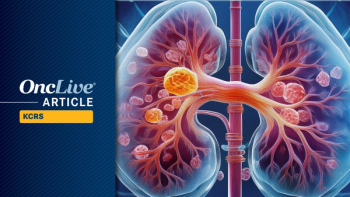
Patient-reported QOL and symptom outcomes were similar between belzutifan plus lenvatinib and cabozantinib in previously treated RCC.

The phase 3 DAWN-303 trial is evaluating the oral KRAS G12D inhibitor INCB161734 in previously untreated, KRAS G12D–mutated metastatic PDAC.
Richard K. and Nancy K. Lubin have made a $35 million gift to Dana-Farber Cancer Institute’s Future of Cancer Care Fund.

Dosing adjustments of ponatinib based on responses increased tolerability in patients with chronic myeloid leukemia according to OPTIC.

Did you catch all of this week's top oncology news? Test your knowledge with OncLive's Weekly News Quiz.

The conditional approval of fanregratinib is supported by pivotal phase 2 data showing a 42.5% objective response rate in pretreated FGFR2-altered intrahepatic cholangiocarcinoma.

The regulatory path to approval for RP1 plus nivolumab in anti–PD-1–pretreated melanoma ran through 3 BLAs, 2 CRLs, and a divided advisory committee vote.
Peter Voorhees, MD, discusses the integration of CAR T-cell therapy in early-relapsed myeloma and the importance of early T-cell–redirecting therapy use.

Peter WT Pisters, MD, MHCM, will retire as president of The University of Texas MD Anderson Cancer Center.

The FDA has granted fast track designation to varsetatug masetecan for relapsed/refractory metastatic colorectal cancer.
SYS6090, a first-in-class PD-1/IL-15 bispecific fusion protein, earned fast track status for MSS/pMMR metastatic colorectal cancer that has progressed on standard systemic therapy.

Cathy Eng, MD, FACP, FASCO, discusses how oncology fellows can navigate the journal submission and review process.

ASCO issued an alert regarding dwindling supplies of ifosfamide, which is used across testicular cancer and sarcoma regimens.

The WVU Heart and Vascular Institute and WVU Cancer Institute performed West Virginia’s first single-port robotic-assisted thoracoscopic lobectomy.
The FDA approval of daraxonrasib was based on data from the phase 3 RASolute 302 trial in previously treated metastatic pancreatic ductal adenocarcinoma.
SOT106 earned an FDA fast track designation for advanced or recurrent soft tissue sarcoma.

The sNDA is supported by VIKTORIA-1 Study 2 data showing that gedatolisib-based regimens approximately doubled median PFS vs alpelisib plus fulvestrant.

Ivonescimab plus chemotherapy significantly improved overall survival vs durvalumab plus chemotherapy in advanced biliary tract cancer.