

Divesiran significantly increased the proportion of clinical responders vs placebo in phlebotomy-dependent polycythemia vera.
Divesiran significantly increased the proportion of clinical responders vs placebo in phlebotomy-dependent polycythemia vera.
Leonard J. Appleman, MD, PhD, discusses prior data with SYNC-T Therapy SV-102 and the ongoing LEGION-100 study in prostate cancer.

In case you missed any, read a recap of the episodes of OncLive On Air that aired in July 2026.

The top 5 OncLive TV videos of the week cover insights in melanoma, prostate cancer, breast cancer, multiple myeloma, and small cell lung cancer.

The FDA approved RP1 plus nivolumab in advanced melanoma, granted olomorasib breakthrough status in KRAS G12C+ pancreatic cancer, and more.

Sonrotoclax monotherapy produced durable responses in Chinese patients with relapsed/refractory mantle cell lymphoma.
lan M. Thompson Jr, MD, discusses the potential role of 5-ARIs for the treatment of patients with prostate cancer.
Did you catch all of this week's top oncology news? Test your knowledge with OncLive's Weekly News Quiz.

UCSF Health’s Adam Blaisdell, MD, PhD, has been selected as an IGNITE fellow by the Cancer Research Institute.

BI-1808 combined with pembrolizumab elicited a 24% confirmed overall response rate in heavily pretreated, platinum-resistant recurrent ovarian cancer.
Eric K. Singhi, MD, and Kyle G. Mitchell, MD, MSc, discuss the present and future role of LCT in NSCLC.

Mariana C. Stern, PhD, discusses the biggest gaps identified in the 2026 AACR Cancer Disparities Progress Report and what oncologists can do to combat them.

Dostarlimab monotherapy produced a 27% response rate in PD-L1–positive recurrent/metastatic head and neck squamous cell carcinoma

Read a refresh of breast cancer FDA news from July, including the first approval of a pan-PI3K/mTOR inhibitor combination and a pegfilgrastim biosimilar.
The FDA granted accelerated approval to RP1 plus nivolumab in anti–PD-1 therapy–pretreated advanced melanoma.
Huntsman Cancer Institute received recent national honors, recognizing excellence in cancer care, research, nursing, and healing-centered facilities.
Marc S. Hoffmann, MD, discusses data for sonrotoclax plus zanubrutinib and unmet needs in the mantle cell lymphoma treatment paradigm.

PD-L1 IHC 22C3 pharmDx gained EU approval as a companion diagnostic for pembrolizumab in platinum-resistant epithelial ovarian cancer.

Early nivolumab responders sustained years-long treatment-free survival after treatment discontinuation.

Breast cancer experts share insights on how recently approved indications for 3 ADCs will affect clinical practice.

Durable outcomes were reported standard-dose tivozanib monotherapy in second- and third-line metastatic RCC.

Adding an IL-15 receptor superagonist to a vaccine plus bintrafusp alfa produced clinical responses in pMMR CRPC.

Colorectal cancer is not the only gastrointestinal cancer that doctors are diagnosing in patients below the age of 50.
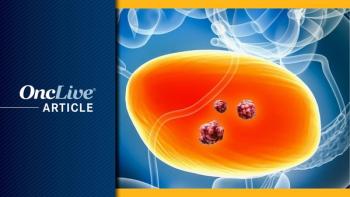
Natera has submitted Signatera to Japan's PMDA for approval as a companion diagnostic in muscle-invasive bladder cancer.
Docirbrutinib generated responses in patients with relapsed/refractory CLL/SLL, MCL, and other non-Hodgkin lymphomas.

Top experts discuss the most important takeaways and data in ovarian and endometrial cancer to come out of this year’s ASCO annual meeting.
Adam D. Cohen, MD, overviews phase 1 findings for cevostamab and outlines future research directions for the agent in relapsed/refractory multiple myeloma.

New insights on early detection, cancer biology and surgical innovation in head and neck cancer highlighted at international research meeting.
Millie Das, MD, outlines how maintenance tarlatamab and lurbinectedin may extend survival beyond current 3-year OS rates in ES-SCLC.
A rituximab biosimilar has been approved by the FDA.