

The Cellular, Tissue, and Gene Therapies Advisory Committee will review Replimune’s twice-rejected BLA for RP1 plus nivolumab in advanced melanoma.
The Cellular, Tissue, and Gene Therapies Advisory Committee will review Replimune’s twice-rejected BLA for RP1 plus nivolumab in advanced melanoma.
FDA has granted RMAT and fast track designations to cema-cel as a frontline consolidation in large B-cell lymphoma.
The CD70-targeting CAR T cell therapy, ALLO-316, demonstrated encouraging results in previously treated patients with advanced ccRCC.
Phase 3 data support EGFR and ALK inhibitors as adjuvant standards of care in resectable NSCLC.
Max Diehn, MD, PhD, breaks down how ctDNA testing for MRD is reshaping prognostic discussions in NSCLC.
Experts reveal their top picks for gastrointestinal oncology presentations from the 2026 ASCO Annual Meeting.
Five-year outcomes from neoadjuvant, adjuvant, and perioperative immunotherapy trials in resectable NSCLC clarify which patients benefit most.
A collaborative research initiative will unite two comprehensive inflammatory breast cancer clinics.
Ris-rez improved PFS vs chemotherapy in the ARTEMIS-011 trial for relapsed/refractory osteosarcoma.
Sanja Dacic, MD, PhD, outlines advances that are reshaping molecular profiling in advanced non–small cell lung cancer and how to navigate these changes.
Solange Peters, MD, PhD, outlines why docetaxel still anchors second-line therapy in NSCLC and where biomarker retesting could move the field.
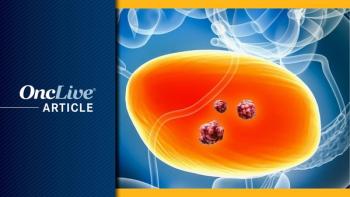
Phase 3 BOND-003 cohort C findings showed a 75.5% CR rate and durable bladder preservation in high-risk, BCG-unresponsive NMIBC.
The FDA issued final guidances on performance status, washout periods, and laboratory values aimed at expanding oncology trial participation.
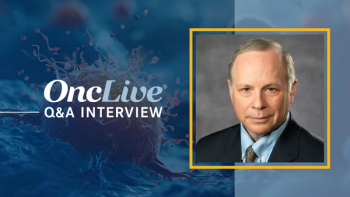
Laurence J. DiNardo, MD, FACS, discusses ctDNA testing in head and neck cancers, advancements in targeted therapies, and multidisciplinary collaboration.
Marina Chiara Garassino, MD, provided a review of AI-designed drugs, autonomous clinical agents, and prescreening devices.
Roswell Park Comprehensive Cancer Center received a grant to advance CAR T-cell therapy research in pediatric AML.
The FDA approved SimpleScreen CRC as a screening option for colorectal cancer in adults 45 years of age and older at average risk for the disease.

Sonesitatug vedotin improved overall survival in pretreated CLDN18.2-positive advanced gastric/GEJ cancers in the phase 3 CLARITY-Gastric01 trial.

Safusidenib produced a 51.9% confirmed ORR and a 79.1% 36-month PFS rate in chemotherapy- and radiotherapy-naive grade 2 IDH1-mutant glioma.
Faculty convened at an OncLive Scientific Interchange and Workshop to discuss individualizing ARPI-based therapy in advanced prostate cancer.

The top 5 OncLive TV videos of the week cover insights in pancreatic cancer, non–small cell lung cancer, the cost and value of immunotherapy, and bladder cancer.

The FDA accepted an NDA for daraxonrasib in metastatic pancreatic cancer, approved zidesamtinib in pretreated ROS1-positive NSCLC, and more.
New data on multiple targeted agents and evolving diagnostic frameworks highlight progress in classifying and treating EGFR PACC–mutated NSCLC.
Edward B. Garon, MD, MS, details how frontline therapy shapes sequencing in relapsed/refractory EGFR-mutated non–small cell lung cancer.
Five Huntsman Cancer Institute at the University of Utah colleagues earned endowed chair appointments, including new appointments.
The CHMP recommended EU approval of T-DXd plus pertuzumab as first-line therapy for HER2-positive metastatic breast cancer,
Did you catch all of this week's top oncology news? Test your knowledge with OncLive's Weekly News Quiz.
The CHMP has recommended the approval of sacituzumab govitecan/pembrolizumab for treatment-naive, PD-L1-positive metastatic TNBC in the European Union.
Overall survival was the sole US primary end point of the phase 3 EPCORE DLBCL-1 trial evaluating epcoritamab and was not met.
Watch a highlight reel of breast cancer data from ASCO 2026 that experts anticipate will have the biggest impact on the field.