

Informed by new clinical evidence, ASCO has issued updated guidance on the use of second-line hormonal therapy for chemotherapy-naïve patients with castration-resistant prostate cancer.

Your AI-Trained Oncology Knowledge Connection!
Informed by new clinical evidence, ASCO has issued updated guidance on the use of second-line hormonal therapy for chemotherapy-naïve patients with castration-resistant prostate cancer.

Amit Singal, MD, discusses the recent successes in the hepatocellular carcinoma treatment landscape and the challenges that still remain.

Barbara Burtness, MD, discusses her presentation on the current and emerging role of immunotherapy for patients with head and neck cancer.
Stephen M. Ansell, MD, PhD, discusses emerging combinations being investigated in patients with mantle cell lymphoma, the possible role of immunotherapy, and challenges oncologists are still struggling with in this population.

Edward B. Garon, MD discusses the challenges researchers are currently facing with immunotherapy in NSCLC and what the future likely holds for the pivotal agents.

Adding abemaciclib to letrozole or anastrozole improved progression-free survival compared with either aromatase inhibitor alone in women with HR+/HER2-negative breast cancer enrolled in the phase III MONARCH 3 study, according to Eli Lilly and Company, the manufacturer of the CDK4/6 inhibitor.
Shana Wingo, MD, discusses the advancements being made in the field of surgery for patients with gynecologic cancers.
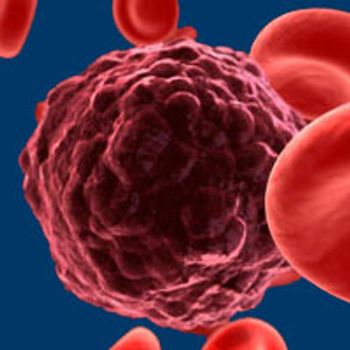
Achieving a complete response following ABVD chemotherapy offered the best chance for survival for patients with chronic lymphocytic leukemia who developed Hodgkin lymphoma following Richter transformation, according to a retrospective study published in the American Journal of Hematology.
Suzanne George, MD, discusses an exceptional responder to pembrolizumab in leiomyosarcoma and the significance of these findings for further immunotherapy advances in the field.
Leonard Gomella, MD, discusses the future of biomarkers in prostate cancer.
Results of a systematic literature search published online in Clinical Lymphoma, Myeloma & Leukemia showed that ibrutinib was associated with superior survival and fewer adverse events compared with bendamustine in patients with chronic lymphocytic leukemia.

Low disease burden prior to treatment with CD19-specific chimeric antigen receptor T-cell therapy appears to be a positive prognostic factor for long-term survival outcomes of patients with relapsed B-cell acute lymphoblastic leukemia.

A novel target, B-cell maturation antigen, has been identified for future therapeutic development as chimeric antigen receptor T-cell therapy for patients with multiple myeloma.
The real impetus for fueling the Cancer Moonshot is coming from community oncology practices, not large research institutions, according to the Community Oncology Alliance.
Veliparib failed to meet the primary endpoint in phase III non-small cell lung cancer and triple-negative breast cancer trials.
Matthew B. Yurgelun, MD, discusses a study that determined that nearly 10% of patients with colorectal cancer had germline cancer susceptibility gene mutations and its implications for patients and their families.

C. Kent Osborne, MD, sheds light on the current and future treatment of HER2-positive breast cancer.
Consolidation therapy with lenalidomide, bortezomib, and dexamethasone (RVD), when used in conjunction with stem cell transplantation, extended progression-free survival compared with RVD alone in patients with multiple myeloma.

Sophie Papa, MD, discusses the early-phase results and the logic behind studying CAR T-cell therapy in solid tumors, such as head and neck cancer.

There is no comprehensive, multidisciplinary guideline document for the screening, management, and long-term care of myeloma patients. The UK Myeloma Forum and the British Society for Haematology set out to address this need and published such a guideline in a recent issue of the British Journal of Hematology.
Patients with chronic lymphocytic leukemia who stopped treatment with ibrutinib (Imbruvica) for toxicities had longer survival than those who discontinued for other reasons, including progression and Richter transformation.
Julie R. Brahmer, MD, discusses the 5-year findings of nivolumab in non-small cell lung cancer, their significance, and expected next steps for this research.

The FDA has granted a breakthrough therapy designation to tisagenlecleucel-T (CTL019) for use as a treatment for adult patients with relapsed/refractory diffuse large B-cell lymphoma after the failure of at least 2 prior therapies.

The FDA has granted an accelerated approval to atezolizumab as a frontline treatment for cisplatin-ineligible patients with locally advanced or metastatic urothelial carcinoma.

The FDA has scheduled an Oncologic Drugs Advisory Committee hearing for May 24, 2017, to discuss a new drug application for neratinib as a treatment for patients with HER2-positive breast cancer following prior treatment with postoperative trastuzumab, according to a statement from the developer of the TKI, Puma Biotechnology.
Sukhmani Padda, MD discusses the status of ongoing clinical trials participating in this race to the frontline setting in lung cancer.
Steven H. Lin, MD, PhD discusses the benefits of advanced radiation technologies, including intensity-modulated radiation therapy and proton therapy, specifically for patients with esophageal cancer.
Lyndsay J. Willmott, MD, highlights the FDA-approved PARP inhibitors for ovarian cancer and how these approvals have impacted clinical practice.

Robert Dreicer, MD, highlights several emerging treatments for patients with metastatic castration-resistant prostate cancer.
Steven J. Katz, MD, discusses his study of patient reaction to surgeon recommendations about contralateral prophylactic mastectomy for patients with breast cancer.