Twelve weeks of neoadjuvant T-DM1 with or without endocrine therapy induced superior pathologic complete response compared with trastuzumab (Herceptin) plus endocrine therapy in patients with HER2-positive/HR-positive early breast cancer.

Your AI-Trained Oncology Knowledge Connection!
Twelve weeks of neoadjuvant T-DM1 with or without endocrine therapy induced superior pathologic complete response compared with trastuzumab (Herceptin) plus endocrine therapy in patients with HER2-positive/HR-positive early breast cancer.
Andrew Stephenson, MD, discusses the impact of various approaches—radiation, surgery, and active surveillance—on patients’ quality of life 2 years following treatment.
Georgina V. Long, BSc, PhD, MBBS, discusses recent data with the combination of dabrafenib (Tafinlar) plus trametinib (Mekinist) in patients with BRAF V600-mutant unresectable or metastatic melanoma.
Millie Das, MD, discusses the difficulties of the non-driver non-small cell lung cancer patient population, interesting clinical trials that could reshape therapeutic options, and her belief that these patients do have molecular targets that have yet to be identified.
Patients with high-volume, castration-naïve metastatic prostate cancer may have superior progression-free survival outcomes when treated with early docetaxel.
Arti Hurria, MD, discusses the unique challenges with treating elderly patients with breast cancer and the exciting opportunities she envisions for advancing care in this setting.
Patients with newly diagnosed mantle cell lymphoma assigned to frontline chemotherapy had a survival advantage when they were able to receiver higher dose intensities of bortezomib (Velcade).
Mark Pegram, MD, discusses emerging treatments in HER2-positive breast cancer and his vision for the future of the field.
Arthur Sung, MD, discusses interventional pulmonary techniques in non-small cell lung cancer.
Tushar Desai, MD, discusses his research in stem cells and why discovering which cells have the potential to form lung cancer is significant to the treatment paradigm.
Adding bevacizumab (Avastin) to chemotherapy improved overall survival for women with cervical cancer, according to final results from the phase III GOG 240 trial.
Nancy Y. Lee, MD, discusses the ongoing JAVELIN HEAD AND NECK 100 trial and the overall impact of immunotherapy for patients with head and neck cancer.
Joel Neal, MD, discusses the latest therapeutic changes to the ALK-positive NSCLC armamentarium.
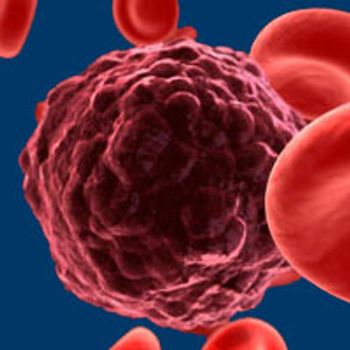
Researchers in China have concluded that mutation of the SF3B1 gene is “significantly associated” with poorer progression-free survival and overall survival in patients with chronic lymphocytic leukemia.
Douglas Levine, MD, provides his insight on some of the recent data with PARP inhibitors in ovarian cancer, as well as his predictions for the field in the next several years.
Long-term results from the Nordic MCL2 and MCL3 trials showed patients with mantle cell lymphoma who are positive for minimal residual disease following allogenic stem cell transplant had significantly shorter survival.

Julia A. Elvin, MD, PhD, discusses genomic research in ovarian cancer and how it could potentially impact treatment decisions for patients.

A group of researchers from several institutions in the US, including John Theurer Cancer Center, studied the development of a new, web-based intervention - Pep-Pal- to provide psychoeducation and skills for caregivers of cancer patients who are experiencing significant burden and distress including depression and anxiety.
John Theurer Cancer Center Oncology Nurses recently attended the 42nd Annual National Oncology Nursing Society’s (ONS) conference "Congress" in Denver, Colorado. Nurses in attendance presented projects they have been involved with in their area of expertise to the largest group of oncology nurses worldwide.
Watson for Oncology combined with real world data from Cota aims to help oncologists improve cancer treatment and reduce costs.
MedStar Georgetown University Hospital in Washington, D.C. in collaboration with John Theurer Cancer Center, part of Hackensack Meridian Health, Hackensack University Medical Center in Hackensack, N.J., announce the 100th blood stem cell transplant performed since the BMT program’s first patient was treated in September, 2013.
Neeta Somaiah, MD, discusses the efficacy of CMB305 in patients with synovial sarcoma or myxoid/round cell liposarcoma.
Heather Wakelee, MD, discusses the latest developments with EGFR inhibitors and immunotherapy agents in non-small cell lung cancer.
Peter Voorhees, MD, discusses treatments for both newly diagnosed and relapsed patients with multiple myeloma.
Toni Choueiri, MD, reflects on avelumab/axitinib results and other emerging combos in RCC.
The FDA has granted a priority review to a supplemental new drug application for alectinib (Alecensa) for the frontline treatment of patients with ALK-positive locally advanced or metastatic non–small cell lung cancer.
The FDA has approved CPX-351 for adult patients with newly diagnosed therapy-related acute myeloid leukemia or AML with myelodysplasia-related changes.
Jorge Garcia, MD, and Kim Chi, MD, share their insights on the LATITUDE trial in prostate cancer.
The FDA has granted a priority review to a new drug application for acalabrutinib for patients with previously-treated mantle cell lymphoma.
The FDA has approved ibrutinib for the treatment of adult patients with chronic graft versus host disease following the failure of 1 or more lines of systemic therapy. The BTK inhibitor is now the first FDA-approved therapy for the treatment of cGVHD.