scout

OncLive Peer Exchange®

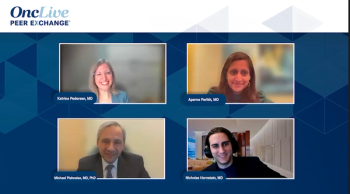
4 Experts are featured in this series

This program provides a comprehensive overview of the rapidly evolving landscape of colorectal cancer (CRC) care, highlighting recent advances in biomarkers, targeted therapies, and circulating tumor DNA (ctDNA) applications. Experts discuss the latest clinical trial data, including new therapeutic options in the refractory metastatic setting, offering insights into the nuances of efficacy, tolerability, and patient selection. The conversation also explores the expanding role of ctDNA in detecting minimal residual disease (MRD), guiding adjuvant therapy decisions, and informing surveillance strategies, while addressing the challenges of assay variability, interpretation, and clinical implementation. Throughout the program, the panel emphasizes the importance of individualized, data-driven decision-making, the evolving nature of clinical tools, and the potential for novel approaches to improve patient outcomes. Listeners gain both a detailed understanding of current evidence and a forward-looking perspective on innovations poised to shape CRC management.
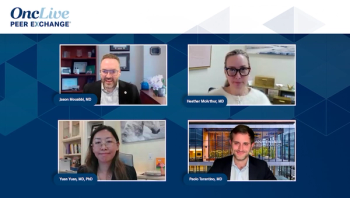
Experts featured in this series.

This OncLive Peer Exchange program features expert discussion on the evolving management of metastatic pancreatic ductal adenocarcinoma. Faculty compare Nalirifox and FOLFIRINOX using clinical trial and real world evidence, address practical considerations in treatment delivery and toxicity management, and explore sequencing strategies and future therapeutic approaches. The program provides actionable insights to support individualized, evidence based care in everyday oncology practice.

4 Experts are featured in this series

This educational activity covers important updates in triple-negative breast cancer (TNBC). Expert faculty discuss recent developments in both early-stage and metastatic TNBC. Clinical trial data with antibody-drug conjugates are explored by breast oncologists. Important takeaways from the clinical trials and how they will carry over into clinical practice are assessed.

2 experts are featured in this series

This OncLive Peer Exchange® program focuses on rapidly evolving treatment strategies for HER2-positive breast cancer across metastatic and curative settings. Dr. Joyce O’Shaughnessy and Dr. Ruta Rao review the long-standing CLEOPATRA regimen as the historical first-line standard while highlighting significant unmet needs, including CNS metastases, optimal sequencing, and long-term maintenance strategies. They discuss pivotal new data from DESTINY-Breast09, PATINA, HER2CLIMB-05, and multiple DESTINY trials that are reshaping practice by extending progression-free survival and improving outcomes in high-risk populations. The conversation explores how antibody-drug conjugates, CDK4/6 inhibitors, tyrosine kinase inhibitors, and endocrine therapy may be optimally integrated based on hormone receptor status, tumor burden, and molecular features such as PIK3CA mutations. In the curative setting, neoadjuvant and adjuvant data with trastuzumab deruxtecan demonstrate unprecedented pathologic complete response and disease-free survival rates. The program highlights a paradigm shift toward more personalized, biologically driven treatment and maintenance strategies that balance efficacy, toxicity, and quality of life.

6 experts are featured in this series

This comprehensive panel discussion explored contemporary and emerging treatment strategies for acute myeloid leukemia (AML), focusing on the expanding role of targeted therapies, optimized venetoclax-based regimens, menin inhibitors, triplet combinations, transplant sequencing, and real-world implementation challenges. Experts examined how genomic profiling, disease biology, and patient fitness increasingly dictate individualized therapy selection. They reviewed data from early-phase studies, retrospective analyses, and large cooperative group trials, highlighting how improved tolerability and deeper remissions are reshaping frontline and relapsed AML management. Special emphasis was placed on understanding how molecular subsets, such as KMT2A rearrangements, NPM1 mutations, TP53 mutations, RAS-pathway lesions, and secondary-type mutations, respond to novel agents. Discussions also addressed outpatient monitoring, mitigating toxicity, evolving measurable residual disease (MRD)-driven strategies, and ongoing phase 3 trials that could shift standards of care. Overall, the program discusses a rapidly accelerating transition toward biology-driven, less intensive regimens.