


Drs Camidge and Redman discuss Dr Redman's role as a biostatistician at Fred Hutch, outlining her work in designing clinical trials.
Drs Camidge and Redman discuss Dr Redman's role as a biostatistician at Fred Hutch, outlining her work in designing clinical trials.
Andre Goy, MD, discusses top hematologic oncology research from the 2024 ASH Annual Meeting.
Sagar D. Sardesai, MBBS, discusses the phase 3 ELAINE-3 trial evaluating lasofoxifene plus abemaciclib in ESR1-mutant, ER+/HER2- metastatic breast cancer.
Hear Chandler Park, MD and Stephen Liu, MD, explore advancements in EGFR-mutated NSCLC treatment, including TKI strategies, emerging therapies prioritizing a patient-centric approach.
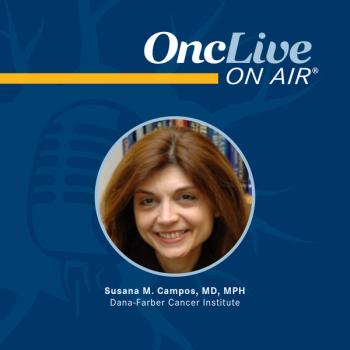
Dr Campos discusses clinical implications from the gynecologic cancer cohorts of DESTINY-PanTumor02 and considerations for managing adverse effects in patients receiving T-DXd.
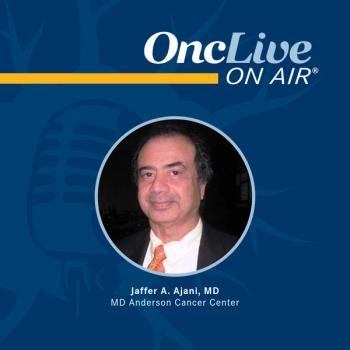
Dr Ajani discusses the FDA approval of frontline zolbetuximab plus chemo for unresectable or metastatic, HER2–, CLDN18.2+ gastric or GEJ adenocarcinoma.
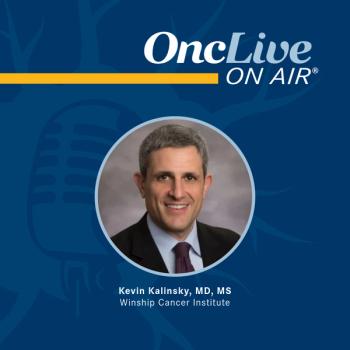
Kevin Kalinsky, MD, MS, discusses his top takeaways from the 2024 ASCO Annual Meeting and 2024 ESMO Congress, as well as where he sees the field of breast cancer evolving into the future.
In this Oncology Unplugged episode, Dr. Chandler Park and Dr. Vivek Subbiah discuss advancements in precision oncology, next-gen sequencing, and tissue-agnostic therapies.
Hear Alan P. Venook, MD, discuss recent updates to the National Comprehensive Cancer Network (NCCN) Clinical Practice Guidelines for gastrointestinal cancers.
Drs Park and Patil delve into the evolving SCLC treatment paradigm by examining data from recent studies and focus on treatment developments for patients with ALK-positive NSCLC.
Martin Dietrich, MD, PhD, discusses updated efficacy findings from the 18-month follow-up of the phase 2 VISION trial.
In case you missed any, read a recap of every episode of OncLive On Air that aired in September 2024.
Drs Park and Patil discuss the evolving small cell lung cancer treatment paradigm, focusing on PCI, immune checkpoint inhibitors, and recent study data.
Drs Thomas and Lukas discusses highlights in brain cancer research from the 2024 ASCO Annual Meeting.
In this episode, Drs Park and Patil discuss key updates from the 2024 ASCO Annual Meeting, including the significance of data from the phase 3 LAURA trial.
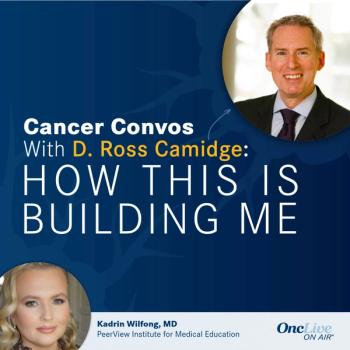
D. Ross Camidge, MD, PhD, and Kadrin Wilfong, MD discuss Wilfong's passion for continuing medical education (CME) and how CME events and resources can make a difference in the care of patients with cancer.
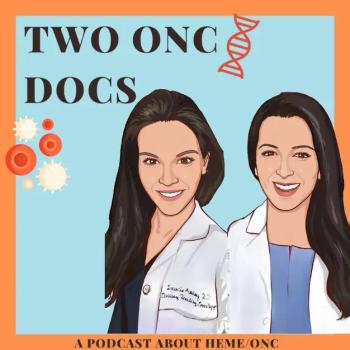
Drs Armstrong and Tawagi discuss high-yield oncology and hematology topics to focus on when studying for the 2024 oncology board exams.
Drs Park and Graff discuss the evolution of treatment for patients with metastatic HR-positive breast cancer, including the role of CDK4/6 inhibitors.
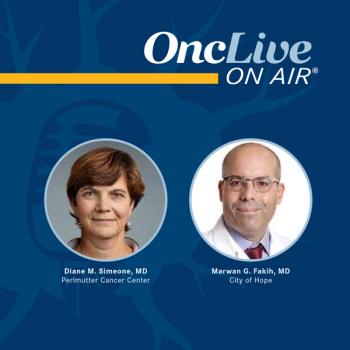
Drs Simeone and Fakih discuss the main objective and design of the observational BASECAMP-1 study and how it functions alongside the EVEREST-1 study, which is evaluating the autologous CAR T-cell therapy A2B530 in patients with CEA-expressing solid tumors that have lost HLA-A*02 expression.
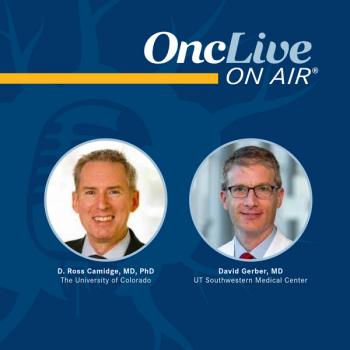
Drs Camidge and Gerber highlight the ways that a liberal arts education can lay the foundation for a successful career in academic medicine; the importance and various forms of mentorship; and how clinical investigators can use their experiences and data to drive national policy changes.
Drs Donington and Stiles discuss how the findings from the ADAURA trial with adjuvant osimertinib have changed thoracic surgery expectations, the potential surgical implications of the ALINA trial with adjuvant alectinib, and the importance of early-stage molecular testing in lung cancer.
Dr Abdou discusses how characteristics of patients with breast cancer impact ADC treatment selection and highlights some of the topline takeaways from breast cancer treatment to come out of the 2023 ASCO Annual Meeting.
Drs Hanna and Kandula discuss the significance of the FDA approval of toripalimab in nasopharyngeal carcinoma; pivotal data from the JUPITER-02 and POLARIS-02 trials; and how this regulatory decision increases the importance of multidisciplinary collaboration.
Drs Lunning and Jacobson discuss the characteristics of follicular lymphoma that may prompt aggressive treatment, the potential optimal role of CAR T-cell therapy in the third line and beyond, and how the toxicity profiles of different CAR T-cell products compare with each other.
Drs Camidge and McVeigh highlight the evolution of the clinical genetics field over time, the process of identifying pathogenic genetic variants, the difficulties of explaining genetic testing results to patients, and more.

Dr Dumbrava discusses the rationale and design of the PYNNACLE trial; phase 1 efficacy and safety findings with PC14586 in patients with p53 Y220C–mutated advanced solid tumors; and the next steps for this research.
Dr DiNardo discusses the the FDA approval of ivosidenib for patients with relapsed/refractory IDH1-mutant myelodysplastic syndromes, the unique mechanism of action of ivosidenib, and key efficacy and safety findings from the AG120-C-001 trial.
Dr Halmos discusses the ongoing investigation of the potent, selective, and irreversible EGFR inhibitor BDTX-1535 in patients with non–small cell lung cancer.
Dr Feigin discusses findings from a study on the varying effects of the benzodiazepines lorazepam and alprazolam on progression-free survival outcomes for patients with pancreatic cancer.
Dr Khouri discusses unmet needs in AL amyloidosis, the potential for birtamimab to become a new frontline standard of care, and the importance of confirming earlier post-hoc results from the VITAL trial in the AFFIRM-AL trial in patients with Mayo stage IV AL amyloidosis with cardiac involvement.