
Hot topics, emerging therapies, and tough cases from the front lines of patient care will be featured during the 9th Annual International Symposium on Ovarian Cancer and Gynecologic Malignancies, scheduled for October 5 in Philadelphia.
Hot topics, emerging therapies, and tough cases from the front lines of patient care will be featured during the 9th Annual International Symposium on Ovarian Cancer and Gynecologic Malignancies, scheduled for October 5 in Philadelphia.
Updates on new dosing strategies, formulations, and other information on treatments for patients with non-Hodgkin lymphoma, indolent B-cell non-Hodgkin lymphoma, and myelofibrosis.

Recently, Girish M. Shah's team has been using cellular and murine models to examine various therapeutic options, including inhibitor and gene knockout approaches against the DNA damage-responsive enzyme poly(ADP-ribose) polymerase 1 (PARP-1).

Research efforts are under way to improve the efficacy of hormone therapy in the management of advanced estrogen receptor-positive (ER) breast cancer, including new strategies for targeting the PI3K/ mTOR pathway.

Prostate cancer has a propensity to metastasize to bone. High turnover ultimately results in a net loss of bone tissue; prostate cancer treatment contributes to the loss of bone integrity, as androgen- deprivation therapy often causes abnormally low bone density

Trastuzumab is the clear standard of care for firstline therapy for nearly all HER2-positive breast cancers, and the oncology community has come a long way toward understanding how best to use the drug.
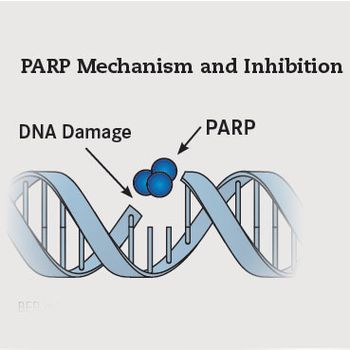
Anticancer agents that inhibit the poly (ADP-ribose) polymerase (PARP) family of enzymes have defined a new therapeutic paradigm known as synthetic lethality.

Since the mid-1970s, Rakesh K. Jain, PhD, has pursued an interest in the role that tumor microenvironment plays in drug delivery and efficacy.

Researchers are still at the drawing board when it comes to finding revolutionary solutions for the treatment of triple-negative breast cancer, but studies have shed light on the diversity of the disease and offered hints about the directions future inquiries should take.
Two teams of investigators report that analysis of germline polymorphisms yields valuable clues about which patients may experience adverse events from anticancer therapies.

High doses of interleukin-2 could be used to treat patients with melanoma whose disease has metastasized to the brain, potentially expanding options in a population facing a grim prognosis.