
In case you missed any, check out our recap of the episodes of OncLive On Air that aired in May 2026.
In case you missed any, check out our recap of the episodes of OncLive On Air that aired in May 2026.
Drs Camidge and Reckamp discuss Dr Reckamp's journey as an oncology specialist and now a caregiver for her husband, who has cancer.
Stephen J. Freedland, MD, discusses future avenues for research with enzalutamide in biochemically recurrent prostate cancer.
Stephen Freedland, MD, discusses how findings from the phase 3 EMBARK trial suggest a new standard of care in prostate cancer.
Stephen Freedland, MD, discusses how the efficacy findings of each arm of the phase 3 EMBARK trial in prostate cancer stacked up with one another.

The top 5 OncLive TV videos of the week cover insights in ovarian cancer, lung cancer, urothelial cancer, and prostate cancer.
Stephen Freedland, MD, discusses the rationale for conducting the phase 3 EMBARK trial evaluating enzalutamide plus leuprolide in high-risk prostate cancer.

Yuan Yuan, MD, PhD, discusses the use of sacituzumab govitecan in TNBC and remaining questions about the use of CDK4/6 inhibitors in ER-positive disease.
Karen L. Reckamp, MD, discusses the feasibility of future pragmatic clinical trials for patients with lung cancer.
Here is your snapshot of all therapeutic options that were approved by the FDA in May 2025 spanning tumor types.
Yuan Yuan, MD, PhD, discusses post-CDK4/6 inhibitor treatment options for HR-positive breast cancer and expansions of the definition of HER2 expression.
Yuan Yuan, MD, PhD, discusses the management of node-positive breast cancer and the need for guidance surrounding the use of ctDNA in breast cancer.

Yuan Yuan, MD, PhD, discusses radiation therapy approaches across various of breast cancer subtypes.
Yuan Yuan, MD, PhD, discusses key research evaluating adjuvant CDK4/6 inhibition in breast cancer.

Jun Gong, MD, discusses the benefits and limitations of PARP inhibitor–based regimens in metastatic castration-resistant prostate cancer.
Experts offer concluding remarks on castration-sensitive prostate cancer, sharing their perspectives on the evolving field and expressing their aspirations for future advancements in disease treatment.
Key opinion leaders outline a case study of a patient with metastatic castration-sensitive prostate cancer, detailing the chosen treatment approaches and the overall outcome of the case.
Jun Gong, MD, discusses the importance of molecular profiling when determining optimal treatments for patients with mCRPC.
Jun Gong, MD, discusses the variety of PARP inhibitor–based frontline treatment regimens that are FDA approved for patients with mCRPC.

Stephen J. Freedland, MD, discusses the effects of treatment suspension on HRQOL in nonmetastatic hormone-sensitive prostate cancer in the EMBARK trial.
Dr Reckamp discusses the definition of pragmatic clinical trials and ways that clinical trial investigators can make their research more pragmatic.
Enzalutamide alone and with leuprolide led to greater rates of undetectable PSA levels vs leuprolide alone in castration-sensitive prostate cancer.
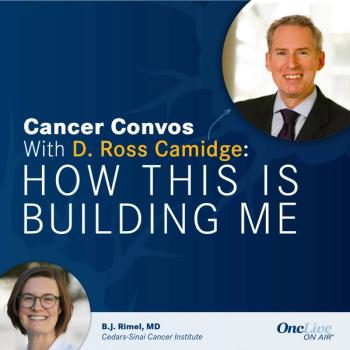
Drs Camidge and Rimel spotlight Dr Rimel’s career journey and the work she does to expand medical care for transgender patients.

Anthony T. Nguyen, MD, PhD, discusses the role of concurrent chemotherapy with trimodal therapy in patients with muscle-invasive bladder cancer.

Jun Gong, MD, discusses the significance of the phase 3 EMBARK study of enzalutamide in nonmetastatic castration-sensitive prostate cancer.
Anthony T. Nguyen, MD, PhD, discusses the methodology of trimodal therapy in patients with muscle-invasive bladder cancer.
Jun Gong, MD, discusses the current treatment armamentarium for patients with metastatic hormone-sensitive prostate cancer.
Jun Gong, MD, discusses efforts to address unmet needs in metastatic hormone-sensitive prostate cancer.

Stephen J. Freedland, MD, discusses the significance of the FDA approval of enzalutamide in nonmetastatic castration-sensitive prostate cancer.

Megan Hitchins, PhD, discusses the rationale for conducting an analysis on the prevalence of high-risk constitutional MLH1 methylation in patients with early-onset colorectal cancer and endometrial cancer.