
John A. Abraham, MD, FACS, discusses the clinical utility of pexidartinib in tenosynovial giant cell tumor.
John A. Abraham, MD, FACS, discusses the clinical utility of pexidartinib in tenosynovial giant cell tumor.
John A. Abraham, MD, FACS, discusses the surgical management of patients with tenosynovial giant cell tumor.
John A. Abraham, MD, FACS, discusses potential symptoms of tenosynovial giant cell tumor.
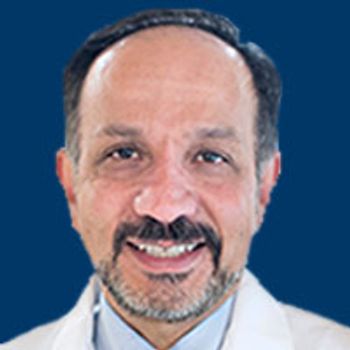
Hossein Borghaei, DO, MS, discusses the impact of COVID-19 on clinical practice and projected how the virus will change practice for the better in the long term.

We traveled to Pittsburgh, Pennsylvania, for a State of the Science Summit™ on Lung Cancer, which featured insights from the UPMC and Fox Chase Cancer Center faculty.
Hossein Borghaei, DO, MS, discusses immunotherapy alone or in combination with chemotherapy in combination with immunotherapy in patients with advanced NSCLC.
Hossein Borghaei, DO, MS, discusses immune-related adverse events in patients with lung cancer who received immunotherapy/chemotherapy combinations.
Hossein Borghaei, DO, MS, discusses emerging biomarkers of response to immunotherapy in non–small cell lung cancer (NSCLC).
Hossein Borghaei, DO, MS, chief, Division of Thoracic Medical Oncology, director, Lung Cancer Risk Assessment, professor, Department of Hematology/Oncology, co-director, Immune Monitoring Facility, Lung Cancer and Mesothelioma TRDG member, and Gloria and Edmund M. Dunn Chair in Thoracic Oncology, Fox Chase Cancer Center, discusses the clinical utility of PD-L1 in advanced non–small cell lung cancer (NSCLC).
Hossein Borghaei, DO, MS, chief, Division of Thoracic Medical Oncology, director, Lung Cancer Risk Assessment, associate professor, Department of Hematology/Oncology, Fox Chase Cancer Center, discusses necessary research and anticipated trials evaluating immunotherapy in advanced non–small cell lung cancer (NSCLC).
Robert G. Uzzo, MD, MBA, FACS, discusses the evolving yet relevant role of surgery in renal cell carcinoma.
Robert G. Uzzo, MD, MBA, FACS, discusses the evolving role of surgery in metastatic kidney cancer.
Hossein Borghaei, DO, discusses pivotal and ongoing trials driven by biomarkers in lung cancer.
Michael J. Hall, MD, Fox Chase Cancer Center, discusses the emergence of PARP inhibition in the armamentarium for patients with pancreatic cancer.
Each year, 10% to 15% of patients with soft-tissue carcinomas receive a diagnosis of rare retroperitoneal sarcoma (RPS), an aggressive disease that typically recurs in 26% of cases and has a 47% to 67% five-year overall survival rate. New radiation therapies hold potential to decrease treatment time and provide local control of RPS.
Hossein Borghaei, MD, highlights long-term single-agent pembrolizumab (Keytruda) data and the overall state of immunotherapy in non–small cell lung cancer, as well as the prospect of making clinical trial eligibility less restrictive.
Anthony J. Olszanski, MD, RPh, vice chair, Department of Hematology/Oncology, director, Early Drug Development Phase I Program, Fox Chase Cancer Center, discusses treatment advances in stage III melanoma.
Currently, there is no reliable way to identify who can safely avoid radical cystectomy following MIBC treatment. For this reason, Fox Chase Cancer Center researchers are trying to find the as-yet-elusive 30% by asking 3 important questions.
Within 6 months of receiving induction chemotherapy, consolidation treatment with autologous hematopoietic cell transplantation correlated with a significant improvement in progression-free survival in younger, fit patients with mantle cell lymphoma.
Hossein Borghaei, DO, MS, chief, Division of Thoracic Medical Oncology, director, Lung Cancer Risk Assessment, associate professor, Department of Hematology/Oncology, Fox Chase Cancer Center, discusses the current landscape of immunotherapy in non–small cell lung cancer (NSCLC).
Hossein Borghaei, DO, MS, chief, Division of Thoracic Medical Oncology, director, Lung Cancer Risk Assessment, associate professor, Department of Hematology/Oncology, Fox Chase Cancer Center, discusses molecular profiling in lung cancer.
Hossein Borghaei, DO, MS, chief, Division of Thoracic Medical Oncology, director, Lung Cancer Risk Assessment, associate professor, Department of Hematology/Oncology, Fox Chase Cancer Center, discusses the FDA approval of nivolumab (Opdivo) for the treatment of patients with small cell lung cancer with disease progression following 2 or more lines of therapy.
Hossein Borghaei, DO, MS, discusses the results of the subgroup analysis of the ongoing CheckMate-227 trial in metastatic non–small cell lung cancer.
Jessica Bauman, MD, addresses current and emerging therapeutic options for patients with BRAF, ROS1, and RET abnormalities in non–small cell lung cancer.
Jessica Bauman, MD, assistant professor, Department of Hematology/Oncology, associate program director, Hematology/Oncology Fellowship Training Program, Fox Chase Cancer Center, discusses treatments for patients with BRAF-mutant non–small cell lung cancer (NSCLC).
Although testing for some genetic defects has been incorporated into the treatment paradigm, the clinical utility of up-front tumor sequencing that would yield wide-ranging information has not yet been established.

Elizabeth Plimack, MD, director of Genitourinary Clinical Research at Fox Chase Cancer Center, discusses recent trials in kidney cancer.

Elizabeth Plimack, MD, director of Genitourinary Clinical Research at Fox Chase Cancer Center, discusses choosing a checkpoint inhibitor in bladder cancer.
Elizabeth Plimack, MD, director of Genitourinary Clinical Research at Fox Chase Cancer Center, discusses the approved checkpoint inhibitors for the second-line treatment of patients with bladder cancer.