Geoffrey T. Gibney, MD, provides an update on the evolution of frontline treatment in metastatic melanoma.
Geoffrey T. Gibney, MD, provides an update on the evolution of frontline treatment in metastatic melanoma.
Michael B. Atkins, MD, discusses the clinical impact of key adjuvant and neoadjuvant data in the melanoma space, as well as the risks and benefits of both approaches.
Catherine Lai, MD, MPH, discusses the potential benefits of venetoclax in acute myeloid leukemia.

John L. Marshall, MD, discusses the push toward precision medicine in colorectal cancer.
In our exclusive interview, Dr. Marshall provides his perspective on physician burnout in oncology, discusses the long-term personal and professional consequences of burnout, and shares ways to reduce oncology burnout on an individual and organizational level.
Filipa Lynce, MD, discusses remaining questions regarding the use of PARP inhibitors in breast cancer.
John L. Marshall, MD, reflects on recent advances in the field of metastatic colorectal cancer and discusses ongoing research efforts in the space.

OncLive, in conjunction with The Ruesch Center for the Cure of Gastrointestinal Cancers, honored five individuals with a 2020 Luminary Award in Gastrointestinal Cancers for their commitment to the gastrointestinal cancer community.
Filipa Lynce, MD, discusses the FDA approval of atezolizumab plus nab-paclitaxel for the frontline treatment of patients with unresectable locally advanced or metastatic PD-L1
Benjamin Weinberg, MD, discusses the role of cetuximab in treating metastatic colorectal cancer.
John L. Marshall, MD, discusses physician burnout in oncology.
Aiwu Ruth He, MD, discusses the combination regimen of bevacizumab and atezolizumab in patients with advanced-stage hepatocellular carcinoma.
Benjamin Weinberg, MD, discusses varying treatment options for patients with metastatic colorectal cancer.
Keith R. Unger, MD, discusses utilizing a multidisciplinary team to treat patients with gastroesophageal cancer.
Benjamin Weinberg, MD, discusses the treatment options available for the various subpopulations in metastatic colorectal cancer.
Benjamin Weinberg, MD, discusses treatment strategies for patients with different molecular subtypes of metastatic colorectal cancer.
Emil Israel Cohen, MD, an assistant professor at Medstar Georgetown University Hospital, discusses the criteria for ablation therapy in patients with liver cancer.
Stephen V. Liu, MD, discusses the impact of immunotherapy in the first-, second-, and third-line settings of small cell lung cancer, as well as novel agents and targets on the horizon.
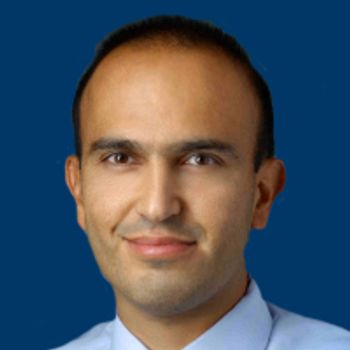
Emil Cohen, MD, discusses the locoregional therapies available for the treatment of patients with hepatocellular carcinoma and offers insight into optimal strategies.
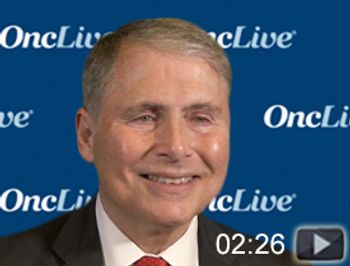
Louis M. Weiner, MD, director of the Georgetown Lombardi Comprehensive Cancer Center, discusses the criteria required to become an NCI-designated cancer center.
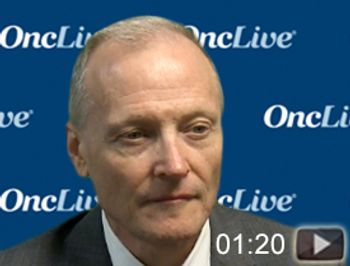
John L. Marshall, MD, chief, Division of Hematology/Oncology, Medstar Georgetown University Hospital director, Otto J. Ruesch Center for the Cure of Gastrointestinal Cancer, Georgetown-Lombardi Comprehensive Cancer Center, discusses HER2 amplification in colorectal cancer (CRC).
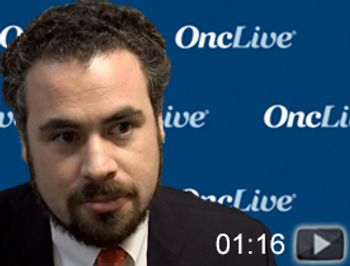
Benjamin Weinberg, MD, assistant professor of medicine, Division of Hematology and Oncology, Lombardi Comprehensive Cancer Center, Georgetown University, discusses the importance of broad molecular profiling in patients with gastrointestinal cancers.
Benjamin Weinberg, MD, discusses frontline standards of care in metastatic pancreatic cancer and highlights emerging agents targeting the stroma.
John L. Marshall, MD, chief, Division of Hematology/Oncology, Medstar Georgetown University Hospital director, Otto J. Ruesch Center for the Cure of Gastrointestinal Cancer, Georgetown-Lombardi Comprehensive Cancer Center, discusses personalized chemotherapy in the treatment of patients with colorectal cancer.
Aiwu Ruth He, MD, PhD, discusses the newly crowded treatment landscape of hepatocellular carcinoma and highlights next steps for research.
John L. Marshall, MD, discusses the current and future scope of metastatic colorectal cancer.
Benjamin Weinberg, MD, assistant professor of medicine, Division of Hematology and Oncology, Lombardi Comprehensive Cancer Center, Georgetown University, discusses the use of FOLFIRINOX in older patients with metastatic pancreatic cancer.
Subha Madhavan, PhD, discusses the role of data science and informatics in bringing novel clinical study designs to the field of oncology.
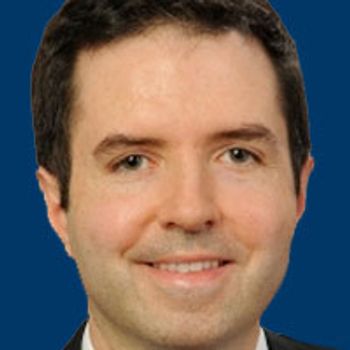
Patrick M. Forde, MBBCh, discusses the future of immunotherapy in early-stage non–small cell lung cancer.
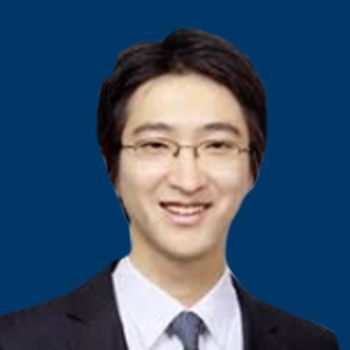
Chul Kim, MD, MPH, discusses the additions of EGFR inhibitors to the lung cancer armamentarium and how to best select therapy for these patients.