
A brief review of how circulating tumor DNA testing has impacted the real-world management of patients with metastatic colorectal cancer.
A brief review of how circulating tumor DNA testing has impacted the real-world management of patients with metastatic colorectal cancer.
A focused discussion on the respective roles of circulating tumor DNA and minimal residual disease testing in the management of patients with nonmetastatic colorectal cancer.
Expert panelists provide their perspective on the current state of molecular testing in metastatic colorectal cancer and how it impacts treatment pathways.
Stephen V. Liu, MD, highlighted the importance of next-generation sequencing in lung cancer, key trials that have shifted the non–small cell lung cancer treatment landscape, and detailed ongoing research at Georgetown University Lombardi Comprehensive Cancer Center.
Closing out their panel on immunotherapy in non–small cell lung cancer, expert oncologists share key takeaways on the selection of novel therapy in this setting.
Stephen V. Liu, MD, discusses the importance of next-generation sequencing in non–small cell lung cancer, and details trials that have continued to move this treatment arena forward.
A brief review of the POSEIDON trial, which analyzed durvalumab with or without tremelimumab in combination with chemotherapy in advanced NSCLC.
Key opinion leaders in the field of non–small cell lung cancer management discuss the role of immunotherapy in patients with concomitant KRAS and KEAP1/STK11 mutations.
A comprehensive discussion on combination chemotherapy + immunotherapy regimens available to patients with advanced non–small cell lung cancer.
Shared insight on the value that molecular testing and PD-L1 testing, respectively, have on determining optimal therapy for patients with advanced non–small cell lung cancer.
Switching their focus to advanced non–small cell lung cancer, panelists identify parameters that may influence the use of immune checkpoint inhibitors in this setting.
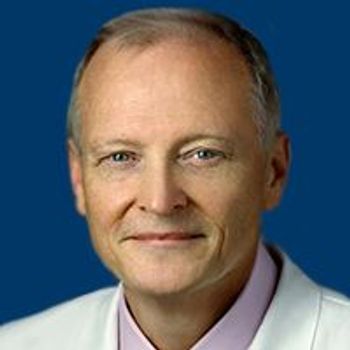
John L. Marshall, MD, discusses the identification of targetable subsets of patients with advanced CRC, unmet needs that remain to be addressed for patients with advanced CRC, and the continued need for a multidisciplinary approach in treating patients across the gastrointestinal cancer spectrum.
Switching their focus to the adjuvant setting of resectable NSCLC, expert panelists identify treatment options in this setting and review the clinical data behind them.
Shared insight from key opinion leaders on the value of molecular testing in patients with resectable non–small cell lung cancer and how it can be applied.
Expert oncologists reflect on key factors that aid in the selection of therapy for patients diagnosed with resectable non–small cell lung cancer (NSCLC).
Stephen V. Liu, MD, discusses the activity of trastuzumab deruxtecan in patients with HER2-mutated non–small cell lung cancer.
Michael B. Atkins, MD, discusses the rationale for launching the phase 2 HCRN GU16-260 trial in patients with advanced renal cell carcinoma.
Stephen V. Liu, MD, discusses the future of MET-targeted agents in non–small cell lung cancer based on the FDA breakthrough designation for telisotuzumab vedotin.
Stephen V. Liu, MD, discusses the effect of the FDA approval of atezolizumab on the development of other chemoimmunotherapy regimens and ongoing efforts to expand and individualize treatment options in small cell lung cancer.
The addition of cemiplimab and REGN3767 to paclitaxel improved pathologic complete response vs paclitaxel alone in patients with triple-negative and hormone receptor–positive, HER2-negative breast cancer, according to data from the phase 2 I-SPY2 trial.
Stephen V. Liu, MD, highlights the advantages of antibody-drug conjugates in lung cancer treatment, the current landscape of antibody-drug conjugate development, and several questions and considerations for continued investigation.
Stephen V. Liu, MD, discusses efforts to develop atezolizumab-based combination therapies for patients with small cell lung cancer.
OncLive® and The Ruesch Center for the Cure of Gastrointestinal Cancers at Georgetown Lombardi Comprehensive Cancer Center, have recognized 4 gastrointestinal physician-scientists and a prominent patient advocate, naming them as 2022 Luminary Awards in GI Cancers.
John L. Marshall, MD, provides an overview of esophageal squamous cell carcinoma and discusses several key updates to the treatment landscape, including putting data in the context of the treatment algorithm.
Findings from the DREAMseq trial indicate that nivolumab plus ipilimumab should be administered prior to the combination of a BRAF and MEK inhibitor in patients with advanced BRAF-mutant melanoma.
John L. Marshall, MD, discusses the evolution of genetic testing in gastrointestinal cancer.
Stephen V. Liu, MD and Neal E. Ready, MD, PhD, discuss the new data with nivolumab plus ipilimumab in treatment-naïve NSCLC and provide commentary on treatment considerations for patients who are eligible to receive these regimens.
The addition of durvalumab to gemcitabine and cisplatin demonstrated an improvement in overall survival vs gemcitabine and cisplatin plus placebo as frontline therapy in patients with advanced biliary tract cancer, regardless of primary tumor location.
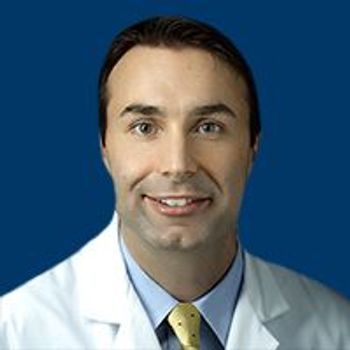
Geoffrey T. Gibney, MD, discusses current treatment options for patients with melanoma, clinical trials that have explored different agents and combinations, and developing treatment options in uveal melanoma.
Afatinib may prove effective and tolerable in patients with advanced or metastatic solid tumors with NRG1 gene fusions, according to the rationale for a prospective real-world outcomes study that was presented as a trial in progress at the 2022 ASCO Annual Meeting.