
Haejin In, MD, MPH, MBA, FACS, FSSO, discusses the importance of identifying individuals at high risk for developing gastric cancer.
Haejin In, MD, MPH, MBA, FACS, FSSO, discusses the importance of identifying individuals at high risk for developing gastric cancer.
Dr Eskander discusses the impact of social determinants of health on cancer clinical trial participation; effective strategies for considering and engaging diverse communities in the clinical trial process; and how community partnerships can be strengthened to eliminate these financial and logistical barriers.
Catherine Coombs, MD discusses the present CLL front-line treatment landscape, addressing considerations like choosing fixed-duration or continuous therapy and variations in first-line approaches based on age and ECOG status.
Press Release
Physician-scientists from Rutgers Cancer Institute of New Jersey and RWJBarnabas Health will present an extensive array of hematology/oncology data from their clinical research program at the 65th American Society of Hematology Annual Meeting and Exposition, being held in San Diego, California from December 9-12, 2023.
Press Release
Rutgers Cancer Institute of New Jersey and RWJBarnabas Health has appointed Louise Ligresti, MD, as chief of Cancer Survivorship at New Jersey’s leading cancer center and the only one in the state designated as a Comprehensive Cancer Center by the National Cancer Institute.
Adrienne Phillips, MD, MPH, discusses the impact of CAR T-cell therapy on the treatment paradigm for patients with large B-cell lymphoma, highlighting key advancements in the decision-making process for CAR T-cell therapy selection.
Shridar Ganesan, MD, PhD, discusses the current limitations and advantages of leveraging circulating-tumor DNA to detect minimal residual disease in patients with cancer, as well as how ctDNA assays may address mechanisms of resistance in clinical practice.
M. Hamza Habib, MD, JD, MBA, FACP, FAAHPM, FRCPI, MRCP, discusses the development of novel technology-based strategies to improve palliative cancer for patients with cancer.

Andrew Evens, DO, MBA, MSc, highlights key points presented during the 2023 Rutgers Cancer Institute of New Jersey’s Annual Oncology Clinical Practice and Research Summit, the clinical implications of these presentations, and lymphoma treatment innovations that Rutgers Cancer Institute is providing to patients throughout New Jersey.
Patrick Boland, MD, discusses the development of therapeutic strategies targeting KRAS G12C mutations in colorectal cancer.
Adrienne Phillips, MD, MPH, discusses the management of toxicities associated with CAR T-cell therapy across hematologic malignancies.
Haejin In, MD, MPH, MBA, FACS, FSSO, discusses the increased incidence of gastric cancer in minority patient populations, highlighting the disparities that lead to these patient outcomes in the United States.
Richard Lazzaro, MD, FACS, discusses the advantages of standard low-dose computed tomography scans in lung cancer screening in high-risk individuals, as well as future opportunities to integrate biomarker-based assays into screening protocols to improve early detection.
Bruce Haffty, MD, MS, discusses the significance of technical and biological advancements in approaches to radiotherapy, and how they engendered the de-escalation of radiotherapy for select patients with breast cancer.
RWJBarnabas Health, together with Rutgers Cancer Institute of New Jersey, has been named among Becker’s Hospital Review’s 100 Hospitals and Health Systems with Great Oncology Programs for 2023.
Renee Kurz, DNP, FNP-BC, AOCNP, discusses social determinants of health that can contribute to disparities in cancer care, highlighting examples seen throughout New Jersey that emphasize the need for further investigation into this landscape.
Press Release
The incidence of multiple myeloma, a rare and incurable cancer of a person’s plasma cells that fight infection and disease, is more than two times higher in Black people compared to white people according to the American Cancer Society’s 2022-2024 Cancer Facts & Figures for African American/Black People.
Howard S. Hochster, MD, discusses data from the phase 3 FRESCO-2 trial of fruquintinib plus best supportive care in metastatic colorectal cancer.

Sanjay Goel, MD, MS, discusses the safety profile of the TKI tinengotinib as a monotherapy and in combination with chemotherapy in patients with solid tumors.
Sanjay Goel, MD, MS, discusses the mechanism of action of tinengotinib and the efficacy of this agent in patients with cholangiocarcinoma.
Closing out their discussion on the management of relapsed/refractory diffuse large B-cell lymphoma, expert panelists highlight unmet needs and share excitement for future evolutions in the treatment landscape.
Press Release
Grants totaling $1.5 million have been awarded by the New Jersey Commission on Cancer Research to several investigators at Rutgers Cancer Institute of New Jersey, the state’s only National Cancer Institute-designated Comprehensive Cancer Center together with RWJBarnabas Health.
Key opinion leaders reflect on data from the 2023 ASCO meeting and how it may impact the management of diffuse large B-cell lymphoma.
Christina Glytsou, PhD, has received $600,000 over a three-year period from The V Foundation for Cancer Research, a premier cancer research charity, to support her research on mitochondrial dynamics adaptations in drug-resistant acute myeloid leukemia.
Sarah Weiss, MD, discusses the ongoing phase 2/3 TEBE-AM trial of tebentafusp with or without pembrolizumab in a subset of pretreated patients with non-uveal melanoma.
Press Release
Rutgers Cancer Institute of New Jersey, the state’s only National Cancer Institute-designated Comprehensive Cancer Center together with RWJBarnabas Health, has treated its first patient using genetically modified T-cells that were manufactured in its own state-of-the-art Good Manufacturing Practices facility, a fully commissioned clean space for manufacturing of viral vectors and cell products for human administration.
Sanjay Goel, MD, MS, expands on the findings from the phase 1b/2 trial, noting the potential benefit this approach may have for patients with cholangiocarcinoma, and detailed next steps for investigating tinengotinib.
Comprehensive insight on the optimal sequencing of novel therapies in patients with relapsed/refractory diffuse large B-cell lymphoma.
Shared insight from key opinion leaders in diffuse large B-cell lymphoma on the role of bispecific therapy in the relapsed/refractory space.
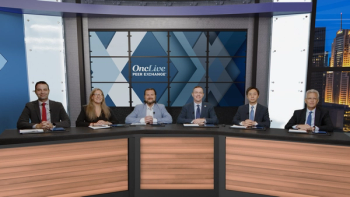
A brief review of what one can expect while managing a patient with relapsed/refractory diffuse large B-cell lymphoma on CAR T-cell therapy.