

Experts in hematologic malignancies review the role of BTK inhibitors and other therapies in patients with relapsed/refractory mantle cell lymphoma.
Experts in hematologic malignancies review the role of BTK inhibitors and other therapies in patients with relapsed/refractory mantle cell lymphoma.
A panel of experts in hematologic malignancies discuss the SHINE study, which looked at ibrutinib with bendamustine and rituximab in elderly patients with MCL.
Mridula George, MD, discusses the methods used to evaluate cardiotoxicity associated with adjuvant trastuzumab emtansine plus concurrent radiation therapy, and explains implications on the use of trastuzumab emtansine plus radiation in patients with early-stage HER2-positive breast cancer.
Mridula George, MD, discusses the evaluation of cardiotoxicity associated with adjuvant trastuzumab emtansine with concurrent radiotherapy in patients with HER2-positive breast cancer.
Press Release
Investigators from Rutgers Cancer Institute of New Jersey examined the microbiome of pancreatic tumors and identified particular microorganisms at single cell resolution that are associated with inflammation and with poor survival.
Press Release
Further enhancing its focus on providing outstanding, innovative and compassionate care for cancer patients, Rutgers Cancer Institute of New Jersey, the state’s leading cancer center and only NCI-designated Comprehensive Cancer Center together with RWJBarnabas Health, are welcoming a new leader to its team of internationally recognized physicians and researchers.
Press Release
Rutgers Cancer Institute of New Jersey and RWJBarnabas Health have appointed Matthew Matasar, MD, MS, as Chief of Blood Disorders at New Jersey’s leading cancer center and the only one in the state designated as a Comprehensive Cancer Center by the National Cancer Institute.
Research published in 2022 has advanced our understanding of the effect of neoadjuvant therapy on organ preservation for patients with locally advanced rectal cancer.
Press Release
Antoinette Stroup, PhD, shares personal and professional insight on the disaggregation of cancer health statistics regarding the Asian American and Pacific Islander community.

Press Release
Joan Hogan, DSW, LCSW, OSW-C, and Rosemarie Slirzewski, MSW, LCSW, expand on the unique needs and challenges of LGBTQ+ individuals who are faced with cancer.

Press Release
Robert Wood Johnson University Hospital, a RWJBarnabas Health facility, has been recognized as one of the top five hospitals in New Jersey and a top 20 Regional Best Hospital in the New York Metropolitan area by U.S. News & World Report in the annual Best Hospitals rankings.

Press Release
Coral Omene, MD, PhD, medical oncologist in the Stacy Goldstein Breast Cancer Center at Rutgers Cancer Institute of New Jersey, the state’s only National Cancer Institute-designated Comprehensive Cancer Center together with RWJBarnabas Health, has been awarded a $50,000 grant from the V Foundation for Cancer Research in partnership with ESPN to increase clinical trial awareness and enrollment of Black women with breast cancer.
Press Release
A world-class team of researchers assembled and led by Rutgers Cancer Institute of New Jersey and its Deputy Director and Chief Scientific Officer Eileen White, PhD, has been awarded a $25 million Cancer Grand Challenges grant to tackle the condition of cancer cachexia.
Press Release
The Rutgers Board of Governors has named Rutgers Cancer Institute of New Jersey Deputy Director Eileen White, PhD, the Board of Governors Professor of Molecular Biology and Biochemistry at the Rutgers School of Arts and Sciences for her contributions to science and leadership in the fields of apoptosis, autophagy and cancer metabolism.
Results from a study of individuals living with HIV show treatment of a precancerous condition known high-grade squamous intraepithelial lesions of the anus cuts the risk of developing anal cancer in this population by more than half.
Press Release
Ronald D. Ennis, MD, shares how radiotherapy is an excellent treatment for many men with prostate cancer, providing a minimally-invasive treatment with low adverse effect risks.
Mridula George, MD, discusses the clinical implications of the phase 3 DESTINY-Breast04 trial in breast cancer.
Mridula George, MD, discusses the background of the phase 3 DESTINY-Breast04 trial in breast cancer.
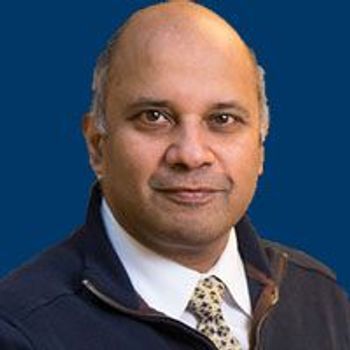
Press Release
Investigators from Rutgers Cancer Institute of New Jersey, New Jersey’s only National Cancer Institute-Designated Comprehensive Cancer Center, led a collaborative study to examine the patterns of druggable oncogenic fusions in colon cancer specimens including microsatellite-stable and unstable tumors.

Press Release
Rutgers Cancer Institute of New Jersey and RWJBarnabas Health have appointed Ira Braunschweig, MD, as chief, Section of Transplant and Cell Therapy at Rutgers Cancer Institute, chief of the Transplant and Cell Therapy Service of the RWJBarnabas Health Oncology Service Line, and director for Cell Therapy and Bone Marrow Transplantation at Robert Wood Johnson University Hospital.
Sanjay Goel, MD, MS, discusses the need for diverse representation in clinical trials.
Denalee O'Malley, PhD, sheds light on racial and ethnic disparities in colorectal cancer screening, and strategies that can be used to address existing barriers in the clinic and beyond.

Denalee O'Malley, PhD, discusses racial and economic barriers to colorectal screening in colorectal cancer.

Press Release
With the aid of a $3.5 million National Institutes of Health grant, investigators from Rutgers Cancer Institute of New Jersey, along with Holden Cancer Center at the University of Iowa, and the University of Texas MD Anderson Cancer Center, are collaborating on a project to address lung cancer screening disparities among individuals with a history of heavy smoking
Mridula George, MD, discusses efforts to address unmet needs in HER2-low breast cancer.

Rutgers Cancer Institute of New Jersey has named Sanjay Goel, MD, MS as director of its Phase I/Investigational Therapeutics Program.

Andrew M. Evens, DO, MSc, discusses the design of a retrospective analysis evaluating in relapsed/refractory classic Hodgkin lymphoma.
Deborah L. Toppmeyer, MD, discusses sequencing therapy in HER2-positive breast cancer.
Despite advances in treatments for T-cell acute lymphoblastic leukemia, patients have an extremely poor prognosis, highlighting the need to explore the genetic components that lead to the formation of the disease, as well as the need to discover new targeted therapeutic approaches and treatment resistance