
Jessica Layne Berger, MD, discusses chemotherapy delivery options for patients with ovarian cancer.
Jessica Layne Berger, MD, discusses chemotherapy delivery options for patients with ovarian cancer.
Adam M. Brufsky, MD, PhD, FACP, discusses the emergence of biosimilars in oncology and how he anticipates they will change the paradigm.

Sarah E. Taylor, MD, discusses molecular testing recommendations in ovarian cancer.
Michelle M. Boisen, MD, discusses the selection of neoadjuvant chemotherapy versus upfront surgery for women with newly diagnosed ovarian cancer.
Brian Orr, MD, an assistant professor in the Department of Obstetrics, Gynecology & Reproductive Sciences at University of Pittsburgh Medical Center, discusses ongoing biomarker research for immunotherapy in ovarian cancer.
Jessica Layne Berger, MD, discusses the frontline treatment options in newly diagnosed ovarian cancer.
Jason J. Luke, MD, FACP, discusses current and emerging treatment paradigms in metastatic melanoma.
Leisha A. Emens, MD, PhD, discusses a potential future with immunotherapy in ovarian cancer.
Adam M. Brufsky, MD, PhD, discusses the utility of trastuzumab biosimilars in breast cancer.
Robert L. Ferris, MD, PhD, discusses combining STING agonists with checkpoint inhibitors in head and neck cancer.
Antoinette Wozniak, MD, FACP, FASCO, discusses sequencing with immunotherapy and chemoradiation in select patients with stage III lung cancer.
Timothy F. Burns, MD, PhD, discusses methods of identifying genetic alterations in lung cancer.
Liza C. Villaruz, MD, discusses the data with immunotherapy in squamous non–small cell lung cancer.
We traveled to Pittsburgh, Pennsylvania, for a State of the Science Summit™ on Ovarian Cancer, which featured insights from the University of Pittsburgh Medical Center faculty.
Timothy F. Burns, MD, PhD, discusses the frontline standards of care in EGFR-, ALK-, and ROS1-positive non–small cell lung cancer, optimal sequencing strategies, and the nuances of tissue- and plasma-based sequencing.
Antoinette Wozniak, MD, FACP, FASCO, discusses the promise of immunotherapy in lung cancer and shared ongoing research efforts further exploring this approach.

Bernard Fisher, MD, a world-renowned physician/scientist and the chair of the National Surgical Adjuvant Breast and Bowel Project for more than 27 years, has died at the age of 101.
Leisha A. Emens, MD, PhD, discusses the rationale behind the KATE2 study and the results that may signal clinical significance.
Robert L. Redner, MD, a medical oncologist and hematologist, and professor of medicine, at the University of Pittsburgh Medical Center (UPMC) Hillman Cancer Center, discusses the activity of venetoclax (Venclexta) in acute myeloid leukemia (AML).

Alexander Olawaiye, MD, discusses the trials that led to the expanded approvals of PARP inhibitors as maintenance therapy in women with platinum-sensitive ovarian cancer.
James M. Rossetti, DO, hematologist, UPMC Hillman Cancer Center, discusses risk stratification in myeloproliferative neoplasms (MPNs).
Sarah E. Taylor, MD, discusses the role of somatic and germline testing for patients with ovarian cancer and their family members to create more personalized treatment and prevent disease.
Adam M. Brufsky, MD, PhD, professor of medicine, associate chief, Division of Hematology/Oncology, co-director, Comprehensive Breast Cancer Center, associate director, Clinical Investigation, University of Pittsburgh, discusses cost mitigation practices that can be implemented before more biosimilars reach the United States market.
Rachel C. Jankowitz, MD, discusses the range of risk associated with HR-positive, HER2-negative breast cancer and the importance of communicating with patients about associated adverse events.
Shannon L. Puhalla, MD, discusses some of the advances being made in systemic treatment for patients with brain metastases from breast cancer.
Terry L. Evans, MD, discusses the impact of CDK4/6 inhibitors in the metastatic breast cancer space and challenges that still need to be addressed.
Adam M. Brufsky, MD, PhD, professor of medicine, associate chief, Division of Hematology/Oncology, co-director, Comprehensive Breast Cancer Center, associate director, Clinical Investigation, University of Pittsburgh, addresses biosimilar skepticism.
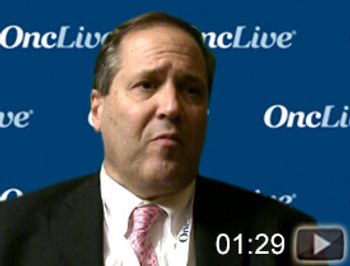
Adam M. Brufsky, MD, PhD, associate director, Clinical Investigation, University of Pittsburgh, discusses genomic assays for breast cancer.
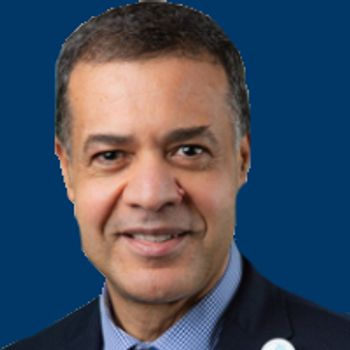
Pembrolizumab has emerged as a reliable frontline treatment option for patients with metastatic non–small cell lung cancer, but thoracic oncologists need to be aware of potentially severe immune-related adverse events.
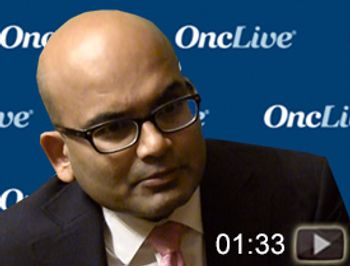
Vikram C. Gorantla, MD, clinical assistant professor, UPMC Hillman Cancer Center, addresses the unanswered questions following the APHINITY trial in HER2-positive breast cancer.