
Kathleen A. Dorritie, MD, discusses 5-year of follow-up data from the CAPTIVATE trial in chronic lymphocytic leukemia and/or small lymphocytic lymphoma.
Kathleen A. Dorritie, MD, discusses 5-year of follow-up data from the CAPTIVATE trial in chronic lymphocytic leukemia and/or small lymphocytic lymphoma.
Adam M. Brufsky, MD, PhD, FACP, discusses the unique design of the allogeneic GM-CSF–secreting breast cancer vaccine SV-BR-1-GM.
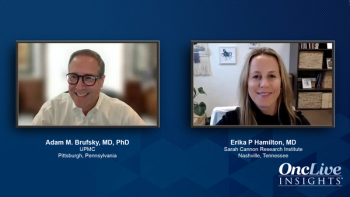
Adam M. Brufsky, MD, PhD, and Erika P. Hamilton, MD, share their perspectives on the future landscape of HR+/HER2- locally advanced or metastatic breast cancer treatment and provide essential insights to summarize the key points of their discussion.
Medical experts address the challenges of managing adverse events in the treatment of HR+/HER2- locally advanced or metastatic breast cancer.
Key opinion leaders discuss other clinical trials, including the EMERALD study, and targeted therapies for the treatment of HR+/HER2- locally advanced or metastatic breast cancer in later lines of therapy.
Erika P. Hamilton, MD, discusses the CAPItello-291 trial, which investigated the combination of capivasertib and fulvestrant in advanced HR+, HER2- locally advanced or metastatic breast cancer and led to its FDA approval, emphasizing the improved progression-free survival observed in patients with PIK3CA, AKT1, and PTEN alterations.
Kathleen A. Dorritie, MD, discusses unmet needs regarding upfront treatment selection in chronic lymphocytic leukemia.
The panel examines how resistance mutations influence the efficacy of subsequent treatment lines and delves into the process of selecting later-line therapies based on next-generation sequencing results.
Key opinion leaders explore the mechanisms of resistance that can develop after endocrine therapy and CDK4/6 inhibitor treatment in HR+/HER2- locally advanced or metastatic breast cancer, emphasizing the uncertain etiology of resistance and current hypotheses, while also examining biomarkers that may predict resistance to CDK4/6 inhibitors and endocrine therapy.
Adam M. Brufsky, MD, PhD, and Erika P. Hamilton, MD, delve into the most clinically significant genomic tests and biomarker assays employed in HR+/HER2- breast cancer, focusing on BRCA mutations, PIK3CA alterations, AKT1 alterations, and PTEN alterations, which play crucial roles in determining prognosis and guiding treatment decisions.
Medical experts share their strategies for choosing initial treatment options for HR+/HER2- locally advanced or metastatic breast cancer, debating the most effective frontline therapies based on clinical trial evidence, while also discussing their aspirations for a new standard of care, and the challenges of managing disease progression.

Peter Forsyth, MD, discusses a study of intrathecal dendritic cells in patients with leptomeningeal disease from TNBC or HER2-positive breast cancer.
Kathleen A. Dorritie, MD, discusses long-term data from trials in chronic lymphocytic leukemia presented at the 2023 ASH Annual Meeting.
Julia Foldi, MD, PhD, discusses the utility of of T-DXd and sacituzumab govitecan in the treatment of metastatic HER2-low and triple-negative breast cancer.
Julia Foldi, MD, PhD, discusses the evolving role of antibody-drug conjugates in the treatment paradigm for metastatic HER2-positive breast cancer.
Julia Foldi, MD, PhD, discusses interstitial lung disease associated with the use of T-DXd in HER2+ breast cancer.
Kathleen A. Dorritie, MD, discusses the significance of results from the phase 3 NCRI-FLAIR study in previously untreated chronic lymphocytic leukemia.
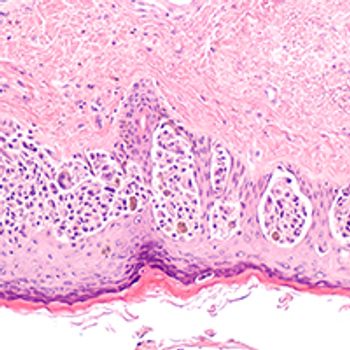
Immunogenomic information displays predictive capability in terms of immunotherapy resistance in metastatic uveal melanoma.
John M. Kirkwood, MD, discusses the significance of the FDA approval of adjuvant nivolumab for patients with resected stage IIB or IIC melanoma.
Julia Foldi, MD, PhD, discusses the evolving role of treatment with T-DXd in metastatic HER2-positive breast cancer.
Adam M. Brufsky, MD, PhD, FACP, discusses the remaining questions following the FDA approval of capivasertib/fulvestrant in HR+/HER2- breast cancer.
To close, Dr. Saeed and Dr. Singal share their excitement for the future landscape, emerging agents and treatment strategies for patients with HCC.
Drs Saeed and Singal discuss additional data presented at AASLD 2023 related to frontline systemic therapies and emerging combinations in unresectable HCC.
Expert oncologists review real-world data and discuss the impact on treatment selection in uHCC.
Adam M. Brufsky, MD, PhD, FACP, discusses the significance of the FDA approval of capivasertib in combination with fulvestrant for patients with hormone receptor-positive, HER2-negative, locally advanced or metastatic breast cancer harboring 1 or more PIK3CA, AKT1, or PTEN alterations.
An expert analysis in data surrounding treatment outcomes in combination regimens, noting immune-mediate adverse events and overall impact on treatment response.
Dr. Saeed outlines the use of combination tremelimumab plus durvalumab in uHCC, discussing updates from the HIMALAYA trial presented at AASLD 2023.
A comprehensive review of clinical data of atezolizumab plus bevacizumab for the treatment of unresectable HCC.
Anwaar Saeed, MD, and Amit Singal, MD, discuss the evolving treatment landscape for hepatocellular carcinoma, highlighting FDA approvals and the utility of clinical biomarkers.
While progress in outcomes has been greater in non–small cell lung cancer, recent advances, including molecularly targeted therapies against EGFR and ALK, checkpoint inhibitors that boost immune response, improved staging, and video-assisted surgery have all contributed to progress in treatment of all types of lung cancer, including in SCLC.