UPMC Hillman Cancer Center | Strategic Alliance Partners
Latest from UPMC Hillman Cancer Center
Jason Luke, MD, FACP, discusses the background of the phase 3 KEYNOTE-716 trial of pembrolizumab vs placebo as adjuvant therapy in patients with stage IIB or IIC melanoma, highlighting previous data from the trial that led to the 36-month follow-up report.
Combination Therapy Approaches With Chemotherapy and Immunotherapy in ES-SCLC
ByTaofeek K. Owonikoko, MD, PhD; UPMC Hillman Cancer Center,Anne Chiang, MD, PhD, Yale School of Medicine Smilow Cancer Hospital,Jacob Sands, MD, Dana-Farber Cancer Institute,Konstantinos Leventakos, MD, PhD Mayo Clinic Panel experts discuss strategies aimed at preventing and managing potential adverse events with first-line combination therapy approaches in extensive stage small-cell lung cancer.
Expert Insights on First-line Treatment Strategies in SCLC
ByTaofeek K. Owonikoko, MD, PhD; UPMC Hillman Cancer Center,Anne Chiang, MD, PhD, Yale School of Medicine Smilow Cancer Hospital,Jacob Sands, MD, Dana-Farber Cancer Institute,Konstantinos Leventakos, MD, PhD Mayo Clinic An overview of first-line treatment options in SCLC with expert insights on important considerations in guiding treatment selection.
Pembrolizumab led to sustained improvements in recurrence-free survival and distant metastasis–free survival vs placebo as adjuvant therapy in patients with resected stage IIB or IIC melanoma
Jason Luke, MD, FACP, discusses the final analysis of distant metastasis–free survival in the phase 3 KEYNOTE-716 trial of pembrolizumab vs placebo as adjuvant therapy in patients with stage IIB or IIC melanoma.
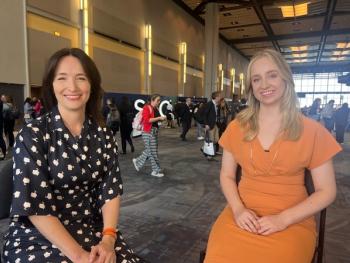
Breaking Down the Data in Genitourinary, Gastrointestinal, and Breast Cancers, Plus Sarcoma and Melanoma at ASCO 2023: Drs Rini, Lewis, Trent, Luke, Kunz, and Lustberg
ByCaroline Seymour,Brian Rini, MD,Jonathan C. Trent, MD, PhD,Maryam Lustberg, MD, MPH,Pamela L. Kunz, MD,Jason Luke, MD,Mark A. Lewis, MD OncLive® will be LIVE with OncLive® News Network: On Location at the 2023 ASCO Annual Meeting. Each day, we will broadcast a series of interviews with top thought leaders, to learn their thoughts and reactions to data presented across hematologic oncology during the conference.
Practical Advice on the Evolving Management of CSCC
ByNikhil Kushalani, MD,Martin Dietrich, MD, PhD,Jason J. Luke, MD, FACP, UPMC Hillman Cancer Center,Vishal A. Patel, MD, FAAD, FACMS Closing out their discussion on the management of cutaneous squamous cell carcinoma, expert panelists share clinical pearls and excitement for the future.
CSCC: Escalating Therapy for High-risk Patients
ByNikhil Kushalani, MD,Martin Dietrich, MD, PhD,Jason J. Luke, MD, FACP, UPMC Hillman Cancer Center,Vishal A. Patel, MD, FAAD, FACMS Dr Vishal Patel shares a surgeon’s perspective on MDC, followed by a discussion on how intensifying treatment after surgery may improve outcomes for higher-risk patients with CSCC.
Best Practices in Multidisciplinary Care for CSCC
ByNikhil Kushalani, MD,Martin Dietrich, MD, PhD,Jason J. Luke, MD, FACP, UPMC Hillman Cancer Center,Vishal A. Patel, MD, FAAD, FACMS Experts in the field of CSCC revisit the concept of multidisciplinary care and consider best communication strategies.
Jason J. Luke, MD, FACP, discusses initial results from the phase 1 GLIMMER-01 trial of E-602 in advanced solid tumors.
Other Emerging Treatment Modalities in Cutaneous Squamous Cell Carcinoma
ByNikhil Kushalani, MD,Martin Dietrich, MD, PhD,Jason J. Luke, MD, FACP, UPMC Hillman Cancer Center,Vishal A. Patel, MD, FAAD, FACMS Shared insight on novel treatment modalities in the setting of cutaneous squamous cell carcinoma and how they may be triaged moving forward.
CSCC: Translating Cemiplimab Data Into Practice
ByNikhil Kushalani, MD,Martin Dietrich, MD, PhD,Jason J. Luke, MD, FACP, UPMC Hillman Cancer Center,Vishal A. Patel, MD, FAAD, FACMS Following their review of recent clinical data, expert panelists consider how neoadjuvant cemiplimab will fit into the real-world treatment paradigm of resectable CSCC, including the possibility of delaying or avoiding surgery in patients who have an adequate response to cemiplimab.
Neoadjuvant IO Therapy Trials in Resectable CSCC and Cemiplimab Data Updates
ByNikhil Kushalani, MD,Martin Dietrich, MD, PhD,Jason J. Luke, MD, FACP, UPMC Hillman Cancer Center,Vishal A. Patel, MD, FAAD, FACMS A brief overview of clinical trials evaluating the potential use of neoadjuvant immune checkpoint inhibitors—pembrolizumab, atezolizumab, and cemiplimab—in CSCC, followed by a focused discussion of recent cemiplimab trial data.
Lessons Learned in Other Cancers and Suggested Endpoints in Future Trials
ByNikhil Kushalani, MD,Martin Dietrich, MD, PhD,Jason J. Luke, MD, FACP, UPMC Hillman Cancer Center,Vishal A. Patel, MD, FAAD, FACMS Key opinion leaders take time to review how immune checkpoint inhibitors have transformed outcomes in rectal cancer and non-cutaneous squamous cell cancers and consider how to better structure clinical trial endpoints in CSCC.
Clinical Experience With Neoadjuvant IO Therapy in Melanoma
ByNikhil Kushalani, MD,Martin Dietrich, MD, PhD,Jason J. Luke, MD, FACP, UPMC Hillman Cancer Center,Vishal A. Patel, MD, FAAD, FACMS Shared insight on the use of immune checkpoint inhibitors in other patient populations within the skin cancer paradigm, and how lessons may be applied to patients with CSCC.
Evolving Treatment Paradigm of Resectable CSCC
ByNikhil Kushalani, MD,Martin Dietrich, MD, PhD,Jason J. Luke, MD, FACP, UPMC Hillman Cancer Center,Vishal A. Patel, MD, FAAD, FACMS Expert panelists consider the broader evolution of therapy in resectable stage II-IV cutaneous squamous cell carcinoma.
Real World Experience With Resectable Cutaneous Squamous Cell Carcinoma
ByNikhil Kushalani, MD,Martin Dietrich, MD, PhD,Jason J. Luke, MD, FACP, UPMC Hillman Cancer Center,Vishal A. Patel, MD, FAAD, FACMS Expert perspectives on real-world, in-practice identification and management of patients with resectable CSCC.
Staging and Risk Stratification’s Impact on Treatment Approach in CSCC
ByNikhil Kushalani, MD,Martin Dietrich, MD, PhD,Jason J. Luke, MD, FACP, UPMC Hillman Cancer Center,Vishal A. Patel, MD, FAAD, FACMS Panelists round out their review of staging and risk stratification in CSCC by considering how each affects the selection of optimal surgical strategies.
Defining Resectability in CSCC
ByNikhil Kushalani, MD,Martin Dietrich, MD, PhD,Jason J. Luke, MD, FACP, UPMC Hillman Cancer Center,Vishal A. Patel, MD, FAAD, FACMS Following their discussions on staging and risk stratification in CSCC, key opinion leaders work to define resectability in cutaneous squamous cell carcinoma.
Optimal Risk Stratification in Patients With Cutaneous Squamous Cell Carcinoma
ByNikhil Kushalani, MD,Martin Dietrich, MD, PhD,Jason J. Luke, MD, FACP, UPMC Hillman Cancer Center,Vishal A. Patel, MD, FAAD, FACMS Expert panelists share their perspectives on best strategies to risk stratify patients diagnosed with cutaneous squamous cell carcinoma.
Yvonne Chao, MD, PhD, discusses key trials leading to FDA approvals in metastatic non–small cell lung cancer.
Timothy Burns, MD, PhD, discusses the evolving use of antibody-drug conjugates in HER2-mutant non–small cell lung cancer.
Available Staging Systems for Cutaneous Squamous Cell Carcinoma
ByNikhil Khushalani, MD,Martin Dietrich, MD, PhD,Jason J. Luke, MD, FACP, UPMC Hillman Cancer Center,Vishal A. Patel, MD, FAAD, FACMS A review of current staging systems used to categorize CSCC, particularly those from the American Joint Committee on Cancer and Brigham and Women's Hospital.
Cutaneous Squamous Cell Carcinoma: Incidence and Risk Factors
ByNikhil Khushalani, MD,Martin Dietrich, MD, PhD,Jason J. Luke, MD, FACP, UPMC Hillman Cancer Center,Vishal A. Patel, MD, FAAD, FACMS Opening their discussion on resectable cutaneous squamous cell carcinoma (CSCC), expert panelists elucidate its current incidence and known risk factors.
Anwaar Saeed, MD, discusses biomarkers that signal the potential efficacy of frontline immunotherapy regimens in patients with advanced esophageal squamous cell carcinoma.
Yvonne Chao, MD, PhD, discusses the study of various PD-L1 inhibitors in patients with non–small cell lung cancer.

Timothy Burns, MD, PhD, discusses the evolution of EGFR-targeted non–small cell lung cancer treatments, the importance of delineating small cell lung cancer subtypes, and the advantages of continued antibody-drug conjugate development across all areas of lung cancer.
The combination of the p38 MAPK inhibitor ARRY-614 plus nivolumab with or without ipilimumab was well tolerated and elicited disease control in high-risk, PD-(L)1–refractory patients with advanced solid tumors.
A new study pinpoints how LAG3 modulates T cell activity, providing important insights for development of other LAG3-blocking therapies for cancer and autoimmune disorders.
Treatment with lisocabtagene maraleucel resulted in a high rate of durable overall and complete responses as second-line therapy in frail patients with relapsed/refractory large B-cell lymphoma for whom hematopoietic stem cell transplantation was not intended, according to preliminary findings from the phase 2 PILOT study.
