Heinz-Josef Lenz, MD, FACP, discusses optimal sequencing strategies for the treatment of patients with colorectal cancer.
Heinz-Josef Lenz, MD, FACP, discusses optimal sequencing strategies for the treatment of patients with colorectal cancer.
Anthony B. El-Khoueiry, MD, discusses the frontline treatment landscape of hepatocellular carcinoma.
Renowned oncologist and cancer researcher will begin inaugural position in September.
Heinz-Josef Lenz, MD, FACP, discusses updated results from the phase II CheckMate-142 trial in metastatic colorectal cancer.
Anthony B. El-Khoueiry, MD, associate professor of clinical medicine, Keck School of Medicine, USC Norris Comprehensive Cancer Center, discusses research on biomarkers in hepatocellular carcinoma (HCC).
Anthony B. El-Khoueiry, MD, associate professor of clinical medicine, Keck School of Medicine, USC Norris Comprehensive Cancer Center, discusses immunotherapy combination in hepatocellular carcinoma (HCC).
Anthony B. El-Khoueiry, MD, associate professor of clinical medicine, Keck School of Medicine, USC Norris Comprehensive Cancer Center, discusses choosing between immunotherapy agents and TKIs in hepatocellular carcinoma (HCC).
Anthony B. El-Khoueiry, MD, associate professor of clinical medicine, Keck School of Medicine, USC Norris Comprehensive Cancer Center, discusses the role of ramucirumab in advanced hepatocellular carcinoma.
Heinz-Josef Lenz, MD, associate director for Adult Oncology and co-leader of the Gastrointestinal Cancers Program, USC Norris Comprehensive Cancer Center, discusses next steps with immunotherapy in metastatic colorectal cancer.
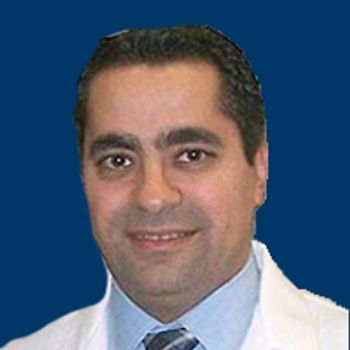
Anthony B. El-Khoueiry, MD, provides insight on the rapidly evolving treatment options in hepatocellular carcinoma.
Heinz-Josef Lenz, MD, associate director for Adult Oncology and co-leader of the Gastrointestinal Cancers Program, USC Norris Comprehensive Cancer Center, discusses frontline nivolumab plus ipilimumab in metastatic colorectal cancer.
Anthony B. El-Khoueiry, MD, associate professor of clinical medicine, Keck School of Medicine, USC Norris Comprehensive Cancer Center, distinguishes between lenvatinib and sorafenib for the frontline treatment of advanced hepatocellular carcinoma.
Bing Xia, MD, discusses the latest immunotherapy developments in nonsquamous non–small cell lung cancer, as well as sequencing strategies for patients with ALK-positive disease.

USC Norris Comprehensive Cancer Center has launched a study to determine how financial assistance for costs associated with clinical trial participation might increase enrollment, particularly among low-income patients and racial and ethnic minorities.

David I. Quinn, MD, PhD, associate professor of medicine, section head, Genitourinary Oncology, Division of Cancer Medicine and Blood Diseases, Keck School of Medicine, discusses the current state of biomarkers in renal cell carcinoma.
David I. Quinn, PhD, MBBS, discusses the molecular diagnosis of renal cell carcinoma and also highlights emerging therapies in the treatment of patients with different subtypes of prostate cancer.
Heinz-Josef Lenz, MD, associate director for Adult Oncology and co-leader of the Gastrointestinal Cancers Program, USC Norris Comprehensive Cancer Center, discusses the potential for immunotherapy in metastatic colorectal cancer.
Michael Pulsipher, MD, director of cellular therapy and stem cell transplantation, professor of pediatrics, USC Keck School of Medicine, discusses the role of MRD testing in pediatric patients treated with CAR T-cell therapy.
Heinz-Josef Lenz, MD, discusses his study of molecular variations between small bowel adenocarcinomas, right-sided colon cancers, and gastroesophageal cancers.
Heinz-Josef Lenz, MD, FACP, associate director for Adult Oncology and co-leader of the Gastrointestinal Cancers Program, USC Norris Comprehensive Cancer Center, discusses the need for new treatment strategies in colorectal cancer.
Heinz-Josef Lenz, MD, FACP, associate director for Adult Oncology and co-leader of the Gastrointestinal Cancers Program, USC Norris Comprehensive Cancer Center, discusses combinations with targeted agents in colorectal cancer.
David I. Quinn, MD, MBBS, associate professor of Medicine, medical director of USC Norris Cancer Hospital, on the future of treatments for patients with renal cell carcinoma (RCC).
Barbara J. Gitlitz, MD, associate professor of Clinical Medicine, Keck Hospital of USC Norris Comprehensive Cancer Center, discusses treating patients with EGFR exon 20 insertion mutations in lung cancer.

Fresh insights into outcomes for patients with low-risk, HER2-positive breast cancer suggest that adjuvant chemotherapy regimens with or without trastuzumab (Herceptin) should be considered as options for managing this growing population
Debu Tripathy, MD, co-leader, Women's Cancer Program, University of Southern California Norris Comprehensive Cancer Center, discusses new personalized therapies on the horizon for advanced breast cancer.
Debu Tripathy, MD, co-leader, Women's Cancer Program, University of Southern California Norris Comprehensive Cancer Center, discusses markers of resistance in patients with HER2+ breast cancer.
The notion of commandeering the immune system to treat cancer actually dates back more than a century with intratumoral bacterial injections to try and elicit tumor regression.
Debu Tripathy, MD, co-leader, Women's Cancer Program, Norris Comprehensive Cancer Center, University of Southern California, discusses integrative oncology
A cocktail of herbs and vitamins lowered PSA in more than a third of patients with biochemically recurrent prostate cancer, and thus may be a good alternative to observation in this population.
Agustin A. Garcia, MD, associate professor of medicine, Keck School of Medicine of the University of Southern California, discusses the future role of PARP inhibitors for patients with ovarian cancer and breast cancer.