
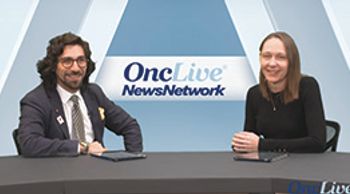
George Yaghmour, MD, and Rachel Elizabeth Rau, MD, discuss first-line treatment considerations for pediatric ALL.
George Yaghmour, MD, and Rachel Elizabeth Rau, MD, discuss first-line treatment considerations for pediatric ALL.
George Yaghmour, MD, and Rachel Elizabeth Rau, MD, on blinatumomab as consolidation therapy in older patients with newly diagnosed ALL.
George Yaghmour, MD, and Rachel Elizabeth Rau, MD, on alloHCT outcomes from the ECOG ACRIN E1910 trial of blinatumomab.
George Yaghmour, MD, and Rachel Elizabeth Rau, MD, on factors for frontline treatment in adult and pediatric acute lymphoblastic leukemia.

Press Release
Researchers find evidence that simultaneously targeting the innate and adaptive immune systems holds promise for treating aggressive colon cancer cases.

Press Release
The new USC Norris location will feature new-to-market technology not yet available in Orange County
Jorge J. Nieva, MD, details the role of telemedicine for patients with non–small cell lung cancer and a first-of-its-kind study examining atezolizumab given subcutaneously at home.
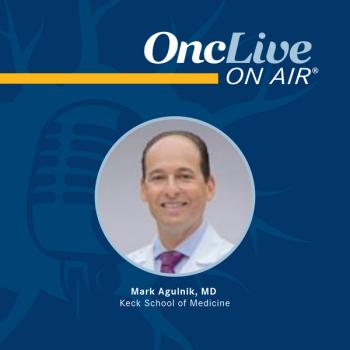
Dr Agulnik spotlights key updates from across the GIST landscape ahead of GIST Awareness Day on July 13.
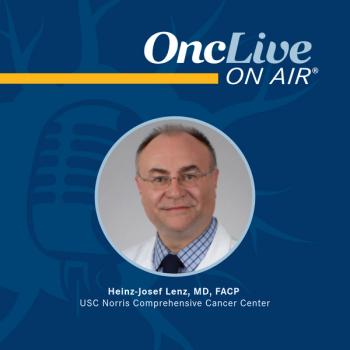
Lenz discusses the link between HER2 expression and responses with mCRC treatment regimens and how HER2 expression can guide treatment decision-making.

A new study may open life-saving opportunities for Hispanic patients, who are one-third less likely to find a fully matched donor from the national registry than white patients.

Heinz-Josef Lenz, MD, FACP, discusses the association between HER2 expression and treatment outcomes in metastatic colorectal cancer.

HER2 gene expression is associated with prognostic and predictive value in patients with metastatic colorectal cancer.
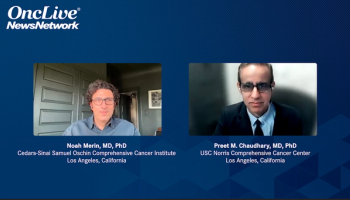
Dr. Chaudhary and Dr. Merin discuss potential areas for exploration and unmet needs in the chronic GvHD treatment landscape.
Discussion centered around real-world data following the approval of ruxolitinib as a treatment option for patients with chronic GvHD as well as discussing treatment selection for patients with chronic GvHD, with special consideration for treatment sequencing.
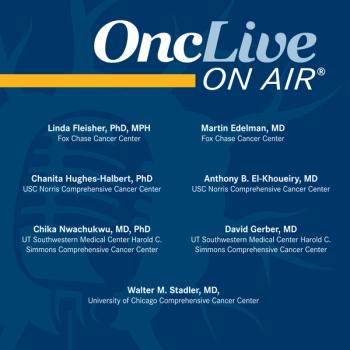
Faculty across 4 institutions discuss their participation in a 4-team initiative launched by Stand Up To Cancer® that focuses on expanding access to cancer care and research.
To expand access to cancer care and research, Stand Up To Cancer® has launched a 4-team initiative across the United States designed to fill in these gaps in care and remove barriers to entry.
Siamak Daneshmand, MD, shed light on the phase 2 THOR-2 study evaluating different cohorts of patients with recurrent NMIBC, key findings from cohorts 2 and 3, and how ongoing research seeks to move the needle forward with novel drug delivery methods.

Anthony B. El-Khoueiry, MD, and Chanita Hughes-Halbert, PhD, discuss their role within the Stand Up To Cancer® 4-team initiative, focusing on diversity in early-phase clinical trials.

Christopher W. Ryan, MD, discusses the role of adjuvant pembrolizumab in renal cell carcinoma, the use of immunotherapy-based combinations in the frontline setting for metastatic renal cell carcinoma, and key data presented at the 2023 Genitourinary Cancers Symposium in bladder cancer and prostate cancer.
A panel of hepatobiliary tumor experts discuss several pivotal phase 3 clinical trials examining combination approaches that have expanded or are anticipated to expand the treatment armamentarium for treatment-naïve patients with unresectable hepatocellular carcinoma.

Heinz-Josef Lenz, MD, discusses the safety and efficacy of nivolumab plus standard of care in patients with metastatic colorectal cancer, shares additional insight from the CheckMate-9X8 trial, and alludes to next steps with further exploring the regimen in specific subsets who appear to derive benefit from this approach.
The addition of nivolumab to mFOLFOX6 and bevacizumab failed to demonstrate a statistically significant improvement in progression-free survival vs mFOLFOX6 and bevacizumab alone in previously untreated patients with metastatic colorectal cancer, according to findings from the phase 2/3 CheckMate 9X8 trial.

Syma Iqbal, MD, shares the main highlights from an IPC meeting, which centered on the evolving landscapes and importance of implementing best practices for patients with hepatobiliary cancers, locally advanced and advanced pancreatic cancer, advanced gastric/gastroesophageal junction cancer, and metastatic colorectal cancer.
With the rapid uptake of novel therapies, including immunotherapy and targeted therapy, shifts in treatment strategies are anticipated in hepatobiliary cancers, locally advanced and advanced pancreatic cancer, gastric/gastroesophageal junction cancers, and metastatic colorectal cancer.

Syma Iqbal, MD, discusses determining whether to start with regorafenib (Stivarga) or trifluridine/tipiracil (TAS-102; Lonsurf) in metastatic colorectal cancer (mCRC).
The combination of nivolumab and low-dose ipilimumab resulted in a deep and durable clinical benefit when used in the first-line treatment of patients with microsatellite instability–high and mismatch repair deficient metastatic colorectal cancer.
Germline variation could play a role in racial disparities related to prostate cancer risk, with individuals of African descent having a higher mean genetic risk score compared with men of European ancestry.

William W. Tseng, MD, discusses the goals of the Transatlantic Australasian Retroperitoneal Sarcoma Working Group analysis in retroperitoneal sarcoma.

William W. Tseng, MD, discusses the significance of the Transatlantic Australasian Retroperitoneal Sarcoma Working Group analysis in retroperitoneal sarcoma.
A retrospective analysis of data from the CELESTIAL trial has demonstrated the potential role for cabozantinib in patients with advanced hepatocellular carcinoma and Child-Pugh B liver cirrhosis.