Vanderbilt-Ingram Cancer Center | Strategic Alliance Partners
Latest from Vanderbilt-Ingram Cancer Center
The addition of fruquintinib to best supportive care improved overall survival compared with BSC alone in patients with metastatic colorectal cancer who progressed on standard chemotherapy and relevant biologic agents, and who had progressed on or were intolerant to trifluridine/tipiracil and/or regorafenib.
Vanderbilt University Medical Center and the University of Zambia are partnering on a program to develop a cadre of researchers and educators to lead cancer epidemiology research and training in Zambia and to encourage U.S.-based researchers to engage in cancer research in low- and middle-income countries.
Brian I. Rini, MD, and Matthew Tucker, MD, sit down to discuss developing a career path and building a résumé, the value of writing review articles early in fellowship, the power of saying no, and the importance of saying yes.
Most hematology/oncology fellows will care for patients with venous thromboembolism throughout their training and long after their graduation from fellowship. Here are some practical considerations when treating a patient with an acute VTE.
Ben Ho Park, MD, PhD, summarizes exciting data regarding circulating tumor DNA testing, including its ability to determine the benefits of adjuvant chemotherapy, its successful preliminary use in detecting cancer prior to recurrence, and how it may help guide future therapies.

Guided approaches leveraging circulating tumor DNA status can reduce the number of patients who receive adjuvant chemotherapy without the risk of lowering recurrence-free survival rates for some patients with stage II colon cancer.

Wade T. Iams, MD, discusses the key implications of the phase 3 ADAURA trial in non–small cell lung cancer.
Liquid biopsies are critical in understanding oncogenic drivers and resistance mechanisms in patients with non–small cell lung cancer.
Wade T. Iams, MD, discusses the need to establish the clinical utility of circulating tumor DNA testing in lung cancer.
Kristen K. Ciombor, MD, MSCI, discusses data evaluating the utility of rechallenging with EGFR inhibitors in RAS/RAF wild-type colorectal cancer.
With an influx of new trials examining the use of anti-EGFR treatments in patients with advanced colorectal cancer, attention must be paid to finding the optimal window in which to give these therapies to maximize benefit.
Dr Gilbert discusses her new role as associate director for research, education, and professional development at Vanderbilt University Medical Center and shares some of her short- and long-term goals in this position.
Kristen K. Ciombor, MD, MSCI, discusses the use of panitumumab in the maintenance treatment of patients with RAS wild-type metastatic colorectal cancer.
Kristen K. Ciombor, MD, MSCI, discusses the use of anti-EGFR therapy for the frontline treatment of patients with metastatic colorectal cancer.
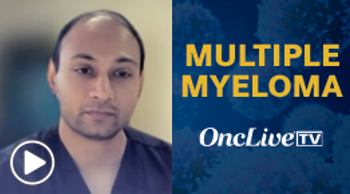
Bhagirathbhai Dholaria, MBBS, discusses patient characteristics in the phase 1 MagnetisMM-1 trial in relapsed/refractory multiple myeloma.
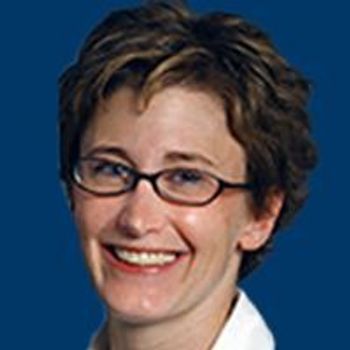
Jill Gilbert, MD, discusses overcoming imposter syndrome in fellowship.

Bhagirathbhai Dholaria, MBBS, discusses the rationale for the phase 1 MagnetisMM-1 trial in relapsed/refractory multiple myeloma.
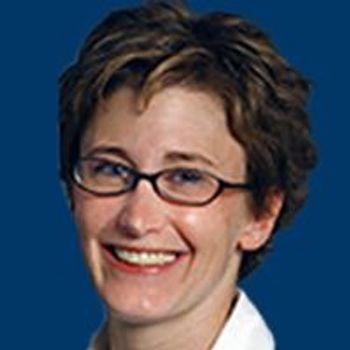
The ability to reflect and boldly choose a professional identity should be discussed, encouraged, and nurtured in every individual.
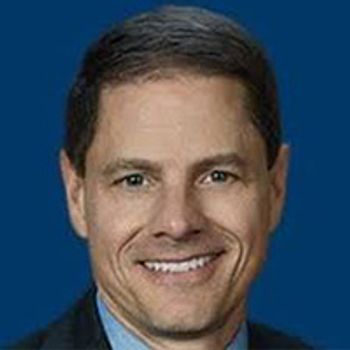
At a median follow-up of 42.8 months, frontline pembrolizumab plus axitinib continued to yield improved outcomes over sunitinib in patients with advanced clear cell renal cell carcinoma.
Dr. Mayer discusses the mechanism of action of SERDs in ER-positive breast cancer, highlighted data from the AMEERA-1 trial with amcenestrant and palbociclib, and details future research efforts with SERDs.
Dr. Rini discusses unique elements of the TIVO-3 trial, the significance of the FDA approval of tivozanib in advanced RCC, and potential next steps for research with the TKI in the paradigm.
Hematology/oncology programs can make it easier and more rewarding for would-be mothers to participate in fellowship.
Douglas B. Johnson, MD, discusses the rationale for examining chronic immune-related adverse effects associated with anti–PD-1 therapy in patients with high-risk resected melanoma.
Brian I. Rini, MD, discusses the results of an exploratory analysis of the phase 3 IMmotion151 trial in metastatic renal cell carcinoma.
Brian I. Rini, MD, discusses the mechanism of action of tivozanib in relapsed/refractory renal cell carcinoma.
Wade T. Iams, MD, discusses the efficacy and safety of lurbinectedin in patients with small cell lung cancer, the impact of its approval on the paradigm, and remaining questions regarding its use.
Cathy Eng, MD, FACP, FASCO, discusses the rising incidence of early-onset colorectal cancer.
Douglas B. Johnson, MD, discusses the risks and benefits associated with anti–PD-1 therapy in patients with stage III resected melanoma.
Carlos del Rio, MD, discusses the reactogenicity of the COVID-19 vaccines.
Cathy Eng, MD, FACP, FASCO, discusses the ongoing phase 3 FRESCO-2 trial in metastatic colorectal cancer.
