
Brian I. Rini, MD, FASCO, discusses the significance of the FDA approval of belzutifan for the treatment of patients with advanced renal cell carcinoma
Brian I. Rini, MD, FASCO, discusses the significance of the FDA approval of belzutifan for the treatment of patients with advanced renal cell carcinoma
Brian Rini, MD, discusses the impact of real-world outcomes on treatment selection, highlighting frontline combination axitinib plus pembrolizumab in advanced RCC.
A comprehensive discussion on toxicity management and patient tolerability for combination regimens in the setting of advanced RCC.
Brian Rini, MD, and Hans Hammers, MD, PhD, discuss the evolution of management for advanced renal cell carcinoma (RCC), noting the role of biomarkers and its use in practice.
Precise stratification of hormone receptor–positive, HER2-negative breast cancer using BluePrint and MammaPrint assays revealed comparable 3-year recurrence-free survival rates between Black and White patients despite observed racial differences in the distribution of molecular subtypes.
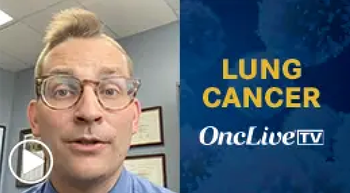
Wade T. Iams, MD, discusses the impact of adagrasib on the treatment of patients with KRAS G12C-mutant NSCLC in the second line, as well as its integration into clinical practice.
Expression of DLL3, an inhibitor ligand of the Notch pathway associated with tumorigenesis, has emerged as a target of interest for drug development.
Although renal cell carcinoma remains a difficult-to-treat disease, with patients with clear cell histology experiencing a median overall survival of approximately 13 months and a 5-year overall survival rate of less than 10%, updated results from clinical trials examining emerging therapeutic strategies have spurred optimism.
Wade T. Iams, MD, discusses the impact of the phase 3 FLAURA2 trial in patients with EGFR-mutant non–small cell lung cancer, highlighting the notable improvements in progression-free survival that the approach elicits.
Most fellows are incredibly busy and face emotional challenges as they navigate the path of cancer diagnosis to death with patients.
Mariana X. Byndloss, DVM, PhD, discusses how the gut microbiome influences human health, highlighting the relationship between the gut microbiome and a person’s risk for developing gastrointestinal cancers, as well as characteristics of a healthy gut microbiome.
Bhagirathbhai Dholaria, MBBS, discusses next steps for investigating subcutaneous talquetamab and daratumumab in relapsed/refractory multiple myeloma based on data from the phase 1 TRIMM-2 trial.
Brian C. Grieb, MD, PhD, discusses unmet needs for patients with colorectal cancer, including the identification of novel pan-CRC biomarkers for drug development.
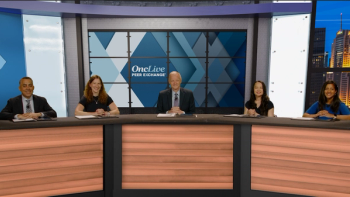
Closing out their panel on metastatic colorectal cancer, expert oncologists consider ongoing challenges and future evolutions within the treatment landscape.
Shared insight on the evolving state of renal cell carcinoma management and hope for future growth in the treatment landscape.
Focusing their discussion on a real-world patient scenario, expert panelists discuss treatment options in the setting of advanced non-clear cell renal cell carcinoma.
Brian I. Rini, MD, FASCO, highlights key clinical trial updates from the genitourinary cancers landscape presented at the 2023 ASCO Annual Meeting, details the implications of the CONTACT-03 data, expands on the long-term data from the phase 3 KEYNOTE-426 trial in clear cell RCC, discusses findings from the phase 3 TALAPRO-2 trial in patients with metastatic castration-resistant prostate cancer, and more.
Focused discussion on clinical trial data with trastuzumab deruxtecan in the setting of HER2+ metastatic colorectal cancer.
A panel of oncologists shares comprehensive insight to clinical trial data with tucatinib in patients with HER2+ metastatic colorectal cancer.
Switching their focus to HER2+ metastatic colorectal cancer, panelists discuss best practices in testing HER2 to aid in the timely selection of best available therapies.
Expert perspectives on novel combination and immunotherapy strategies within BRAF-mutated metastatic colorectal cancer management.
Shared insight to the importance of tumor sidedness and its impact on the selection of EGFR-targeted therapy in metastatic colorectal cancer.
Key opinion leaders in metastatic colorectal cancer management review data from the BREAKWATER study in BRAF-V600E–mutated disease.
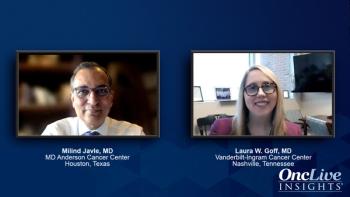
Closing out their discussion on biliary tract cancers, Milind Javle, MD, and Laura Goff, MD, highlight current treatment guidelines and unmet needs as the landscape continues to evolve.
Expert perspectives on the KEYNOTE-966 and IMbrave151 clinical trials and novel chemoimmunotherapy combination strategies in biliary tract cancers.
Expert perspectives on the adverse event profiles of first-line combination therapies in the advanced clear cell renal cell carcinoma space.
Centering discussion on patients with BRAF-V600E mutations in metastatic colorectal cancer, panelists reflect on the treatment armamentarium in this setting.
A brief review of how circulating tumor DNA testing has impacted the real-world management of patients with metastatic colorectal cancer.
Centering discussion on data from TOPAZ-1, Milind Javle, MD, and Laura Goff, MD, reflect on the value of chemoimmunotherapy combinations in biliary tract cancer management.
Drs Javle and Goff review standard of care treatment strategies for the management of biliary tract cancer and discuss recent NCCN guideline updates for the combination of durvalumab + cisplatin + gemcitabine.