
Opinion|Videos|October 21, 2026
Access, Community Implementation, and Guideline Updates in Relapsed/Refractory Multiple Myeloma
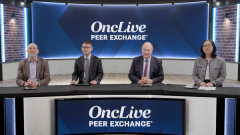
The panel discusses geographic access, community-based treatment, and evolving guideline recommendations for BCMA-directed therapies in relapsed/refractory multiple myeloma.
Advertisement
Episodes in this series
The panel discusses geographic access, community-based treatment, and evolving guideline recommendations for BCMA-directed therapies in relapsed/refractory multiple myeloma. Dr. Douglas Sborov highlights the challenges faced by patients who live far from major myeloma centers, noting that prolonged travel can make CAR T-cell therapy difficult, while off-the-shelf bispecific antibodies and antibody-drug conjugates may provide additional treatment options closer to home. Dr. Paul Richardson discusses the perspectives of community hematologists and the need for alternatives to cellular therapy, including approaches that can be administered safely in outpatient settings. Dr. Hans Lee describes how supportive-care strategies, including prophylactic tocilizumab, may facilitate outpatient administration of bispecific antibodies and potentially expand access in community oncology practices. The discussion then turns to evolving US treatment guidelines and regulatory considerations for belantamab mafodotin-containing regimens. Dr. Richardson highlights the increasing availability of BCMA-directed options across different lines of therapy and discusses emerging efforts to combine belantamab mafodotin with other agents, including CELMoDs and additional immunotherapeutic approaches.
Advertisement
Related to this article
Fadi Haddad, MD, discusses TKI adherence barriers, adverse effect management, and the role of alternative TKI formulations in CML.
Updated ARC-20 data showed casdatifan activity as monotherapy and in combinations across treatment lines in advanced clear cell RCC.

The designation covers QTX3034 plus cetuximab with or without FOLFOX; phase 1 data showed a 25% confirmed ORR with the doublet in CRC and PDAC.

MimiVax and Roswell Park announced phase 2b SURVIVE trial results evaluating the SurVaxM vaccine in newly diagnosed glioblastoma.

Faculty at an OncLive Scientific Interchange and Workshop discussed individualizing frontline immune checkpoint inhibitor selection in metastatic NSCLC.

The FDA granted fast track designation to MC001 for pancreatic cancer.
The NCCN update adds locally advanced CSCC to the category 2A listing cosibelimab received in metastatic disease in 2025.

In TASKIN, the 12-month OS rate was 61.3% with vilamakitug vs 55.7% with placebo plus trifluridine/tipiracil.
Advertisement
Advertisement
Trending on OncLive
1
QTX3034 Plus Cetuximab Receives FDA Fast Track Designation in KRAS G12D–Mutated CRC
2
FDA Grants Fast Track Designation to MC001 in Pancreatic Cancer
3
PD-L1, Histology, and Safety Profile Guide ICI Selection in NSCLC
4
Casdatifan Demonstrates Activity in Advanced Clear Cell RCC
5