Shailender Bhatia, MD, discusses next steps for adjuvant therapy research in light of the phase 3 ADAM trial data and broader implications for Merkel cell carcinoma.

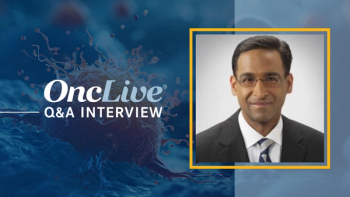
Manish Patel, DO, discusses early evidence suggesting that AR inhibition may enhance the efficacy of immunotherapy in salivary gland cancer.
A single-arm trial demonstrated durable responses and manageable safety with goserelin-based androgen deprivation therapy (ADT) combined with immunotherapy in patients with advanced salivary gland cancer, according to Manish Patel, DO.
Data from the phase 2 BTCRC HN17-111 trial (NCT03942653) presented at the 2026 Multidisciplinary Head and Neck Cancers Symposium showed that among efficacy-evaluable patients with advanced-stage, androgen receptor (AR)–positive salivary gland carcinoma (n = 18), the combination of ADT and pembrolizumab (Keytruda) elicited a confirmed overall response rate (ORR) of 27.7%; an additional 4 patients experienced unconfirmed partial responses.1 Additionally, the disease control rate (DCR) was 78%, and the median duration of treatment was 12.1 months (95% CI, 8.3-21.4).
“The study took a long time to develop, so [the field has] changed as we’ve [received] new data [during] this study,” Patel said in an interview with OncLive®. “It is exciting that we have therapies that are effective for this disease now, as opposed to standard chemotherapy regimens. Using an ADT and immunotherapy combination seems like a better way forward for these patients.”
In the interview, Patel discussed the critical treatment gap for patients with rare salivary gland cancers and delved into early evidence suggesting that targeting ARs may enhance the efficacy of immunotherapy.
Patel is a medical oncologist at the University of Minnesota Health and an associate professor of medicine in the Division of Hematology, Oncology, and Transplantation in the Department of Medicine at the University of Minnesota Medical School in Minneapolis.
Prefer to watch?
Patel: It’s a rare cancer type, and within salivary gland cancers, there are multiple different histotypes, so there is not an established standard of care [SOC] for patients who have advanced or recurrent disease. That’s [why] we started this study. There have been small clinical trials and retrospective studies using immunotherapy for salivary gland cancers, and the overall history has been that the response rates have been low. [The BTCRC HN17-111 study] came about because we were seeing patients in clinic, [we] were trying to get treatments approved for them, and insurance was denying every [treatment suggestion] we put forward other than cytotoxic chemotherapy. We saw there was a critical gap in the understanding of what treatments could be effective for this patient population.
It’s a single-arm study using ADT with goserelin, which is an FDA-approved gonadotropin-releasing hormone antagonist that has been used in breast cancer and prostate cancer. [Some] subsets of salivary gland cancers have high expression of AR, and at least from the data we had when we started the study, we knew there was some potential therapeutic benefit of inhibiting the AR; inhibiting androgens can also increase immune response. Some laboratory data and clinical data have suggested that this was the case. Our thought was to use ADT as a way of enhancing immune therapy responses in this disease.
In this patient population, there was a 27.7% [confirmed] ORR. In most patients, there were decreases in tumor burden after we administered this therapy. For the 5 patients who had a confirmed response, the response was durable, and as of today, 3 of the 5 patients have not progressed, even off therapy. There was a signal of efficacy. The DCR was [78%] in the study. Most patients had stable disease for more than 3 months after starting this treatment.
We didn’t see any increased safety concerns. We saw patients develop immune-related toxicities that we expect with pembrolizumab. Three patients had to discontinue pembrolizumab because of toxicity concerns. It’s notable that those patients continued to receive ADT despite [discontinuing pembrolizumab].
Secondly, we saw toxicities that we would expect with goserelin as well, such as hot flashes. However, the frequency of the adverse effects was not worse than what we would expect with either of the drugs alone.
This regimen will hopefully be a good option for patients. The data we have would support using this combination in patients. It’s hard to know how this compares with other treatment regimens.
Our data set only had 19 patients, so it was a small study in a rare tumor type. I’m not sure that [these data] go to the level of saying that this is a new SOC, but it’s a good treatment option. The data being out there now will be helpful for maybe getting this type of regimen approved, but it’s going to require more study.
Two studies over the past few years have used combined androgen blockade [in patients with salivary gland cancer], and the efficacy results were fairly similar [to those from BTCRC HN17-111] without the immunotherapy. What we’d like to understand is: What is the role of the pembrolizumab in this study? We are planning on conducting correlative studies and reporting those with the final manuscript to see whether there are definite changes in the immune response after treatment that would identify a group of patients that might respond or might benefit from using immunotherapy separate from just the androgen deprivation. [For these findings] to be definitive, we need a randomized controlled trial, but [these findings so far] provide an avenue for further development of ADT in combination with immune therapy for this disease.
Disclosures: Patel reported that the study was funded by Merck, Sharp and Dohme and supported by TerSera Therapeutics, LLC. Patel’s disclosures unrelated to this study include receiving research funding/consultant fees from AstraZeneca and serving on the Bayer advisory board.