
Opinion|Videos|October 28, 2026
Care-Team Ownership, Communication Gaps, and the Role of Telemedicine
This segment explores who owns each part of the transition and how teams keep patients safe once care moves closer to home.
Advertisement
Episodes in this series
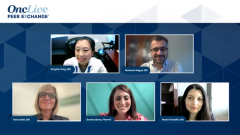
This segment explores who owns each part of the transition and how teams keep patients safe once care moves closer to home. Faculty describe transplant physicians initiating the plan, pharmacists ensuring correct orders across settings, and nurse triage supporting follow-up, while the treating team retains responsibility even after patients move to local or home infusion. Communication gaps are discussed frankly, particularly delays in receiving labs drawn outside the center, one reason faculty keep patients close through the early weeks. Telemedicine emerges as a valuable but imperfect tool: faculty use virtual visits to maintain oversight and manage steroid tapers between in-person assessments, while acknowledging it cannot replace the physical exam chronic GVHD requires. Practical workarounds are shared, including patient-submitted photographs for skin assessment. Faculty also note real-world limits, from clinician preference for in-person contact to rural connectivity challenges that turn many intended video visits into telephone encounters.
Advertisement
Related to this article

The FDA received a BLA for etentamig in relapsed/refractory multiple myeloma, based on response and PFS gains in the phase 3 CERVINO trial.

Judy E. Garber, MD, MPH, of the Dana Farber Cancer Institute is the recipient of the 2026 Basser Global Prize.

The European Commission approved T-DXd for patients with HER2+ breast cancer who have residual invasive disease after neoadjuvant treatment.

Elranatamab improved PFS vs 3 standard regimens in relapsed/refractory multiple myeloma in the phase 3 MagnetisMM-32 trial.

INCB161734 plus chemotherapy was tolerable and elicited responses in updated data from a trial of patients with KRAS G12D–mutated pancreatic cancer.

Adjuvant pembrolizumab continued to extend DFS in resected stage IB to IIIA NSCLC, though OS did not differ from placebo.

Longer DeLLphi-304 follow-up showed sustained OS, PFS, and response durability with tarlatamab in second-line small cell lung cancer.

Rinatabart sesutecan significantly improved PFS and OS vs investigator’s-choice chemotherapy in platinum-resistant ovarian cancer.
Advertisement
Advertisement
Trending on OncLive
1
FDA Receives BLA for Etentamig in R/R Multiple Myeloma
2
Elranatamab Meets Phase 3 PFS End Point in R/R Myeloma After Anti-CD38 Therapy and Lenalidomide
3
T-DXd Gains EU Approval in Residual HER2+ Early Breast Cancer
4
Breaking Down Key Lung Cancer Data at ESMO 2026 With Drs Santos and Halmos
5