
Opinion|Videos|October 14, 2026
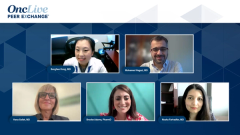
Individualizing Treatment Selection in Steroid-Refractory Chronic GVHD
This segment brings the approved therapies side by side and asks what actually drives treatment selection.
Advertisement
Episodes in this series
This segment brings the approved therapies side by side and asks what actually drives treatment selection. Faculty agree there is rarely a single deciding factor, weighing organ involvement, prior exposure, route and frequency of administration, comorbidities, and access together. A key caution emerges: because pivotal trials did not restrict agents to specific manifestations, choosing a drug on organ involvement alone is not well supported by evidence. Instead, faculty describe individualizing therapy around the patient in front of them, often leading with a toxicity-first philosophy, asking not only which drug a patient is most likely to respond to, but which they are least likely to tolerate. Access and patient preference frequently become the determining factors, since a therapy only helps if the patient can reliably receive it. The discussion also reframes goals of therapy, emphasizing that in refractory disease a durable partial response supporting daily function can be as clinically meaningful as complete response.
Advertisement
Related to this article

Experts in gynecologic oncology overview top research being presented at the 2026 ESMO Congress.
Matthew P. Goetz, MD, explores menopausal status, recurrence risk, and adjuvant CDK4/6 inhibitor selection in HR-positive breast cancer.
First-line IO-based combination regimens were increasingly used and associated with longer observed survival in advanced renal cell carcinoma.

Tenumomeran/raplemomeran plus pembrolizumab missed the PFS end point in HPV16-positive HNSCC.
Matthew P. Goetz, MD, explores first-line treatment selection, emerging targeted therapies, and unmet sequencing needs in metastatic breast cancer.
AI-assisted scoping review of code sharing in clinical prediction model research
Omar Castaneda Puglianini, MD, discusses earlier CAR T-cell therapy use, sequencing with bispecific antibodies, and access barriers in multiple myeloma.

Readers share their opinions on some of the most talked-about breast cancer abstracts they’re looking forward to seeing at ESMO 2026.
Advertisement
Advertisement
Trending on OncLive
1
Earlier CAR T-Cell Therapy Use Highlights Sequencing and Access Considerations in Myeloma
2
Dr Fradley on Real-World Atrial Fibrillation and Cardiovascular Outcomes in CLL
3
CDK4/6 Inhibitors Anchor First-Line Metastatic Breast Cancer Care, But Oral SERDs May Fall Short
4
Real-World, First-Line IO-Based Combos Are Associated With Improved OS vs TKI Monotherapy in Advanced RCC
5