
Opinion|Videos|May 25, 2026
Choosing First-Line Therapy in PLGG: Chemotherapy, Targeted Agents, and Tumor Biology
Experts debate how to define true radiographic progression in pediatric optic pathway tumors, using 25% growth and vision risk to guide therapy.
Advertisement
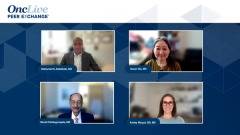
In this segment, Dr. Chintagumpala, Dr. Chi, Dr. Margol, and Dr. Abdelbaki discuss first-line treatment selection for pediatric low-grade glioma (PLGG) harboring BRAF fusions or BRAF V600E mutations, and the unanswered question of tumor senescence.
The current regulatory landscape includes FDA approval of dabrafenib plus trametinib for newly diagnosed BRAF V600E-mutant PLGG and tovorafenib for BRAF-altered tumors in the recurrent setting. No targeted therapy is approved as first-line for BRAF-fusion PLGG, and head-to-head comparisons with chemotherapy are still underway.
The panel agrees that carboplatin and vincristine remains the evidence-based standard for newly diagnosed BRAF-fusion PLGG but acknowledges that extenuating circumstances—distance from the treatment center, family burden, inability to place a port, or a child's anxiety about intravenous therapy—can make a first-line MEK inhibitor such as selumetinib a reasonable alternative. Dr. Abdelbaki shares a case of a 14-year-old with a spinal cord pilocytic astrocytoma whose family refused port placement, leading to first-line selumetinib. The panel emphasizes that when targeted agents are used upfront, families must understand that chemotherapy remains the standard, that long-term outcomes with targeted agents are not yet established, and that chemotherapy may still be needed subsequently.
The discussion also highlights that chemotherapy continues to produce excellent responses, including vinblastine, and that stable disease is itself a meaningful outcome. The panel raises the critical question of tumor senescence: PLGG tumors are expected to "burn out" at some age, but it is unknown whether targeted inhibitors alter this biologic clock, potentially prolonging the overall treatment course compared to conventional chemotherapy.
For BRAF V600E-mutant tumors, the panel notes that dabrafenib plus trametinib has demonstrated superiority over both chemotherapy and single-agent trametinib but has not been compared to single-agent dabrafenib. Some panelists favor starting with single-agent dabrafenib for typical-appearing low-grade gliomas, citing favorable outcomes with single-agent BRAF inhibitors including vemurafenib on the PNOC study, and reserving the combination for tumors with additional concerning molecular alterations or more aggressive histology such as pleomorphic xanthoastrocytoma (PXA).
In the next episode, "Clinical Trial Endpoints in PLGG: Rebound Regrowth, and the Unanswered Question of Tumor Senescence," the panel debates which endpoints best capture treatment benefit and confronts persistent gaps in long-term survivorship data.
Advertisement
Related to this article

Did you catch all of this week's top oncology news? Test your knowledge with OncLive's Weekly News Quiz.

A new life-years-saved methodology found blood cancer treatments saved million years of life since 1949, with future gains reliant on funding and access.

Tycel Phillips, MD, discusses sonrotoclax’s FDA approval for mantle cell lymphoma and why the BCL2 inhibitor opens more possibilities.

Daraxonrasib produced a 42% overall response rate and 16.0-month median OS in previously treated RAS-mutant NSCLC in a phase 1/2 trial.

Ivonescimab significantly improved OS vs pembrolizumab at a prespecified interim analysis of the HARMONi-2 trial in first-line PD-L1–positive NSCLC.

Alcohol-attributable cancer deaths in the U.S. doubled from about 11,400 in 1990 to more than 23,100 in 2023.

Experts break down SOHO 2026 and topics at the meeting that will shape hematologic oncology for the rest of the year.

Etentamig improved ORR and PFS vs standard therapies in triple-class exposed relapsed/refractory multiple myeloma.
Advertisement
Advertisement
Trending on OncLive
1
Ivonescimab Meets OS End Point vs Pembrolizumab in First-Line PD-L1+ NSCLC
2
Etentamig Meets PFS, ORR Primary End Points in Triple-Class Exposed R/R Myeloma
3
FDA Grants Breakthrough Therapy Designation to JBS-003 for Radiation De-Escalation in HPV+ Oropharyngeal Cancer
4
Daraxonrasib Yields Durable Responses in Previously Treated RAS-Mutant NSCLC
5