
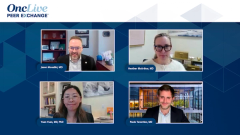
Opinion|Videos|March 2, 2026
Clinical Pearls for Community Oncologists: Optimizing ADC Use in TNBC
Experts discuss the potential of antibody-drug conjugates in treating triple-negative breast cancer, highlighting ongoing trials and emerging therapies.
Advertisement
Antibody–drug conjugates (ADCs) have transformed the treatment landscape for triple-negative breast cancer (TNBC), offering targeted efficacy with manageable toxicity. For community oncologists, several practical insights can guide optimal use. First, careful patient selection based on HER2 expression, prior therapies, and comorbidities is essential to maximize benefit. Proactive adverse event management—including monitoring for neutropenia, interstitial lung disease, ocular toxicity, and stomatitis—helps maintain dose intensity and treatment continuity. Understanding sequencing strategies and potential combinations with immunotherapy or targeted agents can further enhance outcomes. Additionally, staying informed about emerging ADCs, novel targets, and evolving clinical trial data enables timely adoption of new options. By integrating these strategies, community oncologists can deliver personalized, evidence-based care, improve tolerability, and optimize clinical outcomes for patients with advanced TNBC.
Advertisement
Related to this article
Jay M. Lee, MD, discusses how NAUTIKA1 compares with ALNEO and LORIN, why full genomic profiling is now essential before starting chemoimmunotherapy, and how tumor boards will manage early-stage NSCLC in 5 years.
Jay M. Lee, MD, discusses the primary analysis of the ALK+ cohort of NAUTIKA1, what MPR status adds to risk stratification, and whether neoadjuvant alectinib is ready for patients today.
David R. Gandara, MD, discusses why PD-L1 scoring in NSCLC undercounts immunotherapy benefit and where TMB and plasma proteomics fit alongside it.

The final OS analysis of PAPILLON did not reach statistical significance in the ITT population, but a pre-specified crossover-adjusted analysis showed a 43% reduction in the risk of death.

An exploratory landmark analysis of the phase 3 ADAURA trial showed 8-year OS rates of 79% versuss 64% with placebo, with benefit maintained across stages and subgroups.
Frontline zidesamtinib produced a 94% response rate and 100% intracranial response rate in TKI-naive ROS1-positive advanced NSCLC.

First-line trastuzumab deruxtecan reduced the risk of progression or death by 37% compared with pembrolizumab plus chemotherapy in HER2-mutant non–small cell lung cancer.
Edgardo S. Santos Castillero, MD, discusses MAVERICK, B7-H3 ADC data, and tarlatamab sequencing in SCLC, plus molecular testing in a value-based practice.
Advertisement
Advertisement
Trending on OncLive
1
DESTINY-Lung04 Showcases PFS Benefit With First-Line T-DXd in HER2-Mutant NSCLC
2
Adjuvant Osimertinib Keeps OS Benefit at 8 Years in Resected EGFR-Mutated Stage IB to IIIA NSCLC
3
Intercalated Gefitinib Plus Chemotherapy Improves DFS in Resected EGFR-Mutant NSCLC
4
PAPILLON: Frontline Amivantamab Plus Chemotherapy Yields 34.3-Month Median OS in EGFR Exon 20 Insertion–Positive NSCLC
5