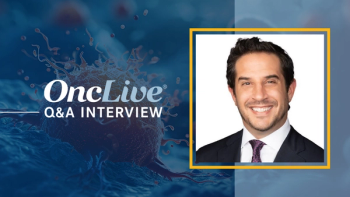
Immune checkpoint inhibitors have transformed treatment strategies in melanoma, but their long-term effects are still emerging, according to Michael A. Postow, MD.
He added that these late toxicities, which can range from endocrine dysfunction to persistent inflammatory conditions, present new challenges in diagnosis, monitoring, and long-term management.
Despite their growing clinical relevance, there is limited standardization for tracking and managing these effects once patients transition off therapy. In response to this knowledge gap, Postow and colleagues published a review paper in the Journal for ImmunoTherapy of Cancer that provided guidance on potential pathways for immune-related adverse effect (irAE) surveillance, coordination, and management across multidisciplinary teams and stages of care.1
“It’s important [to recognize] that these drugs, permanently, in some situations, rewire the immune system, and that can lead to chronic inflammatory type AEs that we’re just beginning to understand. Doctors and patients need to be aware that AEs could linger for a long period,” Postow said in an interview with OncLive®. “We all need to be thinking about what the best way is to manage these types of situations and help make the proper diagnosis and treat the patients to the best of our ability.”
In the interview, Postow discussed the timing of late-onset and chronic irAEs, the challenges of distinguishing them from comorbid conditions, and the need for coordinated survivorship care models and real-world data collection to guide long-term management.
Postow is the chief of the Melanoma Service and codirector of the Melanoma Disease Management Team at Memorial Sloan Kettering Cancer Center in New York, New York.
Managing irAEs Beyond Treatment
- Immune-related adverse effects may appear months or even years after treatment discontinuation, with some persisting long-term.
- Endocrinologists, dermatologists, and rheumatologists often play ongoing roles as chronic toxicities require extended management.
- The lack of standardized monitoring and longitudinal data underscores the need for registries and for better real-world evidence collection.
OncLive: In the paper, you highlight that irAEs can occur months or years after discontinuation of therapy. What is important to know about the typical timing patterns for delayed or reemergent irAEs, and which toxicities are most likely to appear after treatment is stopped?
Postow: There are a lot of discussions about adverse effects when we start treatment, and once treatment gets underway, some patients have AEs, and some don’t, and we [see AEs] at varying severities. One of the interesting aspects of immune checkpoint inhibition is that because those drugs modulate the immune system, some of the AEs…don’t just happen when the patients are getting the treatment, or they don’t happen early in the treatment. They can happen even a year after the patient has started the treatment, or even more than 3 months after discontinuation of the treatment. Delayed toxicities are those that happen over a year after starting treatment. Chronic AEs are those that continue beyond 3 years after the last dose.
One major challenge identified in the paper is the lack of standardization for toxicity management after treatment discontinuation. What does the ideal post–immune checkpoint inhibitor monitoring framework look like?
Once someone finishes treatment with a checkpoint inhibitor, they’re usually continuing surveillance with the medical oncologist [who] delivered the treatment. That relationship with the oncologist is important to maintain, certainly in the immediate aftermath of discontinuing an immune checkpoint inhibitor. Many times, that comes under the auspices of continuing cancer surveillance with CAT scans, PET scans, or MRIs. When the doctor sees those patients, it’s important to talk to them and feel out other symptoms, other issues that they may be having, [because] they could be experiencing one of these delayed or chronic irAEs.
Many of these patients have also added other care members to their team, [such as] an endocrinologist to help with hormone deficiencies or a dermatologist to help with skin toxicities. So over time, sometimes the medical oncology interventions decrease a bit. As patients come off treatment, they don’t see their medical oncologist as frequently, but it is important to maintain care with the specialists [who] might be maintaining the immune therapy–related toxicity treatments for skin-related AEs or joint-related AEs [from a] rheumatologist, for example, because sometimes those can be long-standing. Those relationships…patients have with those additional providers are critical in maintaining the best possible quality of life.
Oncology is very important in these relationships, but over time, [the touch points] do space out a bit as the cancer-related visits decrease and surveillance continues. But many of these specialists do remain involved with the medical care of these patients long-term, and those are great relationships that need to continue in many cases.
What is your advice for distinguishing between late-onset irAEs and underlying comorbidities that are unrelated to treatment?
It’s often tricky from a diagnostic perspective because many patients will come into treatment with different medical conditions. Patients are getting older and have been through treatment, and sometimes the cancer itself causes impediments to quality of life or disease-related symptoms. Trying to tease all these issues out is very challenging. Close communication with multidisciplinary providers is critical, and that’s one of the aspects that this paper highlights. Many times, that does exist within a single institution, and that’s great when that can be provided to those patients, but many times it’s hard because different doctors are at different institutions. Sometimes they share electronic health records, but sometimes they don’t. Those are logistical barriers that will be overcome, hopefully, with better integration of electronic health records and communication platforms. These challenges sometimes arise when we are trying to figure out whether a cardiac condition is related to the patient’s coronary artery disease that they had before treatment. And flash forward to 4 years later, now there are other ongoing issues. Was there some contribution from the immune therapy that they got? Did the cancer create a new issue? Talking to each other as much as possible is the best way to try to get [the answers] to these diagnostic uncertainties and the best care for those patients.
The paper underscores that survivorship care for patients treated with immune checkpoint inhibitors requires multidisciplinary coordination. What practical steps can institutions take to improve this coordination?
There are a lot of gaps that can happen in this type of situation, because a lot of medical professionals exist in their own world of expertise. The oncologist likes to focus on whether the cancer is causing an issue. If the cancer is in great response, then it can’t be the cancer [that’s causing the issue], but it’s important for those individuals to be mindful of chronic or delayed irAEs if the patient has been exposed to an immune checkpoint inhibitor. Similarly, other providers [who] have been involved with the patient’s care, even predating the patient’s condition with cancer, have to be [mindful] of the possibility that something with an underlying chronic medical condition that predated the immune therapy could be different afterwards.
This is where the communication needs to be as strong as possible so that we can all learn from each other. It’s very difficult sometimes when doctors are in different health care systems, and patients may see an oncologist in one health care system, their primary care doctor in another health care system, and their rheumatologist for their joint pain from immune therapy in another system. Trying to get all these people aligned is a little bit of a challenge. But [using] some electronic health records that are bringing people together and using common communication platforms [is helping to] improve [those gaps]. Hopefully, that will continue to improve as technology improves.
What principles should guide long-term management of chronic irAEs?
For patients [who] have come off treatment and are still dealing with lingering AEs, there’s a lot that we still don’t know about in the long-term. We call a lot of things permanent, but permanent in many of these clinical trials is just [based on] a few years of follow-up. We don’t really know what happens in 10, 20, 30 years after discontinuing these drugs, so [we need] to try to learn as much as possible about what happens long-term.
Many of these AEs do seem to linger for several years. Sometimes [we see] hormone deficiencies that occur with checkpoint inhibition, like lowering of the thyroid level or lowering of the adrenal [gland’s] ability to produce cortisol if there’s a pituitary issue, for example. Those [events] do typically require long-term hormonal supplementation under the care of an endocrinologist. It’s critical to stay on top of monitoring labs and how patients are feeling, and remember that these patients do have some new chronic medical conditions. Arthralgias or achiness in the joints is another lingering irAE that sometimes does require long-term management with low doses of prednisone, hydroxychloroquine, or other types of treatments like methotrexate, [which] sometimes the rheumatologist can be involved with. There are a lot of new strategies out there.
Trying to think about new studies and trials [examining] the ways that we can treat these chronic toxicities is a whole other area of research that we’ve just started to tap into. Now, we don’t really know what the best management strategy is, even in the acute phase of some of these toxicities, let alone the chronic phase, but as more patients enter into this chronic phase of dealing with these AEs, there’s a whole patient population that would be ripe for exploring what the best management strategies are. These are the kinds of activities that I know are of interest to grant funders and other organizations.
A key recommendation from the paper is the development of a comprehensive irAE registry. What data are needed for that registry, and how might better longitudinal data change counseling and monitoring for patients receiving immunotherapy?
We need to learn from each patient…we treat. We learn a lot from patients in clinical trials, and we learn a lot from our own clinical experience in patients treated outside of clinical trials, but there are so many patients…getting treatment for whom we don’t capture the data in the right way. With the increasing use of better technological platforms, this will get better, and we’ll be able to retain patient experiences in new ways. Instead of only logging toxicities for patients when they come in and talk to their doctor or nurse about their AEs, patients could submit patient-reported outcomes data. They could use their activity trackers at home to monitor their sleep,…mobility, and step count with all these kinds of wearables.
Hopefully, technology will allow for better integration of all of those data, so that we can put that type of information in registries that are shared, whether it be through patient advocacy organizations, governmental organizations like the National Cancer Institute, or other foundational approaches, such that we can then mine those data with different research questions. What happens when people have immune therapy–related diarrhea and get better from that acute issue? What happened 6 months later? How are their bowels? How is their appetite? What does their weight look like, and how did they recover in the long term? What are they eating now? Patients could potentially track some of this information, and we could study…their lives…in an entirely different way. Registries to capture real-world patient outcomes are critical. There’s a lot of opportunity that still needs to be realized on this front, as well as the added challenges of who is going to collect the data, how it is going to be collected, who’s going to pay for it, et cetera. But we should try to learn from every patient and maximize our holistic understanding of this problem.
It’s important for patients to be their own advocates in that if they know that something is not right, to go back to their medical oncologist [even if it’s been] a year or 2. A lot of other medical providers might not be as aware of these immune therapies, and everyone is still learning about them because they’re… relatively new to the world of medicine. It’s good for patients to wonder [whether an AE] could be related to immune therapy. [If you have to ask whether you] should bring this up with your oncologist, the answer is probably yes. If nothing else, the medical oncologist can integrate with the other providers that that patient might have in their multidisciplinary care team, and we can all share knowledge as we move forward with this new and emerging patient population.
Reference
Flores TF, Tonorezos ES, Bhatia S, et al. Where is the data? delayed and chronic irAE surveillance and management after cessation of ICIs: expert insights from SITC on survivorship care and the need for long-term data. J Immunother Cancer. 2026;14(3):e012823. doi:10.1136/jitc-2025-012823