
Opinion|Videos|October 6, 2026
Dose Modifications, Subcutaneous Amivantamab, and Monitoring Strategies in EGFR-Mutated NSCLC
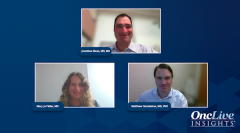
Dr. Riess addresses dose modification frequency in MARIPOSA: dose interruptions in 83% of patients, dose reductions in 59%, and any-agent discontinuation in 35%, with only 10% discontinuing all agents due to treatment-related adverse events.
Advertisement
Episodes in this series
Dr. Riess addresses dose modification frequency in MARIPOSA: dose interruptions in 83% of patients, dose reductions in 59%, and any-agent discontinuation in 35%, with only 10% discontinuing all agents due to treatment-related adverse events. Dr. Fidler emphasizes that the 10% all-agent discontinuation rate is strikingly low and comparable to osimertinib monotherapy discontinuation rates. Critically, MARIPOSA data demonstrated that dose interruptions and reductions did not appear to compromise clinical benefit, enabling her to dose reduce and hold freely as needed for toxicity management while reassuring patients that their outcomes are not jeopardized.
She describes nuanced dose management with the subcutaneous amivantamab formulation, noting that the fixed dose levels for subcutaneous administration do not always align precisely with individual patient needs, particularly for patients weighing under 80 kg. She has switched one patient back to the intravenous formulation to achieve an intermediate dose level not available in the subcutaneous ladder.
Dr. Gumbleton describes upfront counseling about dose adjustments as distinct between patients on clinical trial versus standard-of-care treatment, noting that standard-of-care patients have generally been accepting of dose reductions when framed as optimization rather than treatment failure, with the option to re-escalate if tolerated. On subcutaneous amivantamab, he describes it as a game-changer that has fundamentally transformed the logistics and tolerability of this regimen: first-dose infusion reactions that previously prompted multiple calls from the infusion center are essentially eliminated. His program uses every-4-week subcutaneous amivantamab for all patients, substantially improving feasibility for patients traveling long distances. He highlights the PALOMA-3 data showing statistically significantly improved OS with subcutaneous versus intravenous amivantamab as a compelling reason to default to subcutaneous administration. Dr. Fidler adds that monitoring for dermatologic toxicity is unchanged with every-4-week dosing, with patient self-reporting reinforced and telemedicine, nursing, and pharmacist check-ins supplementing clinic visits.
Advertisement
Related to this article
Carotuximab plus apalutamide demonstrated longer median progression-free survival than apalutamide alone in an interim phase 2 analysis in mCRPC.

Mayo Clinic researchers led a multicenter study that found dividing radiation into several treatments, known as fractionated stereotactic radiosurgery, reduced the risk of cancer returning after surgery

Ruxolitinib 1.5% cream outperformed placebo vehicle in reducing lesional skin involvement in patients with epidermal or superficially sclerotic cutaneous chronic GVHD.

Lung cancer experts discuss emerging strategies after immunotherapy in advanced squamous NSCLC, including updated PRESERVE-003 data from WCLC 2026.

Most patients treated with talquetamab at a single center would not have qualified for MonumenTAL-1, yet responses were similar regardless of trial eligibility.

Epcoritamab plus R-CHOP reduced the risk of progression or death by 51% vs R-CHOP alone in newly diagnosed DLBCL.

The 19-year veteran of CU Anschutz will be the fourth director in the 41-year history of Colorado’s only NCI-designated comprehensive cancer center.
The estimated 3-year OS rate with botensilimab plus balstilimab was 48% in heavily pretreated recurrent ovarian cancer in the phase 1b C-800-01 trial.
Advertisement
Advertisement
Trending on OncLive
1
Epcoritamab Plus R-CHOP Meets PFS End Point in Newly Diagnosed DLBCL
2
Botensilimab Plus Balstilimab Yields Durable OS in Recurrent Ovarian Cancer
3
FSHR-Directed CAR T-Cell Therapy Yields Instance of Stable Disease in Recurrent Ovarian Cancer
4
‘Our Impact Will Be Broad and Transformative’: Wells Messersmith, MD, Takes the Reins at CU Anschutz Cancer Center
5